
Es befinden sich keine Produkte im Warenkorb.










What Are Exosomes and How Are They Transforming Skincare in 2025

You see new breakthroughs in skincare every year, but exosomes stand out in 2025. Exosomes act as tiny messengers that help your skin repair itself, boost hydration, and fight signs of aging. Their ability to speed up healing and reduce wrinkles attracts attention from both scientists and beauty experts. The market for exosome-based skincare keeps growing, with a projected value of $417.8 million in 2025 and expected to reach $809.5 million by 2032.
Year | Market Size (USD Million) | Projected Value (USD Million) |
|---|---|---|
2025 | 417.8 | 809.5 |
You should always consider safety, regulation, and ethical sourcing before choosing these products. Exosomes in Skincare offer exciting possibilities, but you need reliable scientific evidence to make smart choices.
Wichtige Erkenntnisse
Exosomes are tiny messengers that help your skin heal, stay hydrated, and fight aging. They play a crucial role in skin health.
Look for exosome products backed by clinical studies. This ensures safety and effectiveness for your skincare routine.
Choose exosomes from reliable sources. Plant-derived exosomes are often safer and more sustainable than animal-derived options.
Exosomes enhance the absorption of other skincare ingredients. They help active components penetrate deeper and work more effectively.
Always check for safety certifications and transparent sourcing when selecting exosome skincare products. This helps ensure quality and ethical practices.
Exosomes in Skincare: Definition and Sources
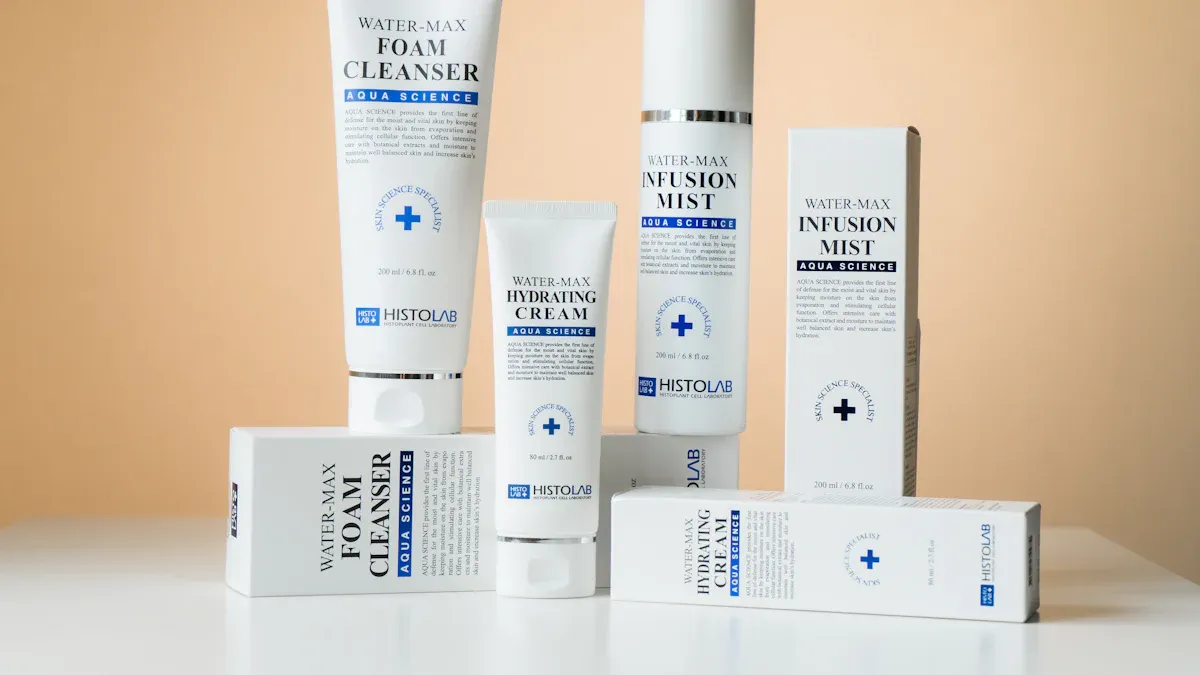
What Are Exosomes?
You may wonder what exosomes are and why they matter for your skin. Exosomes are tiny bubbles, much smaller than a cell, that carry important signals between cells. Scientists call them small extracellular vesicles, and they measure about 30 to 150 nanometers across. Your skin cells release exosomes to send messages and deliver nutrients. These messengers help your skin heal, stay healthy, and fight off damage.
Exosomes were once thought to be waste, but now you know they play a key role in cell communication. In dermatology, exosomes help control how your skin responds to injury, repair itself, and manage inflammation.
Here are some important facts about exosomes:
Exosomes move between cells and carry proteins, lipids, and genetic material.
They help your skin repair itself and stay strong.
Exosomes in Skincare products use these natural messengers to boost skin health.
How Exosomes Work in Skin
Exosomes in Skincare work by helping your skin cells talk to each other. They deliver signals that tell your skin to heal, grow new cells, and calm down when irritated. You can see how exosomes help your skin in several ways.
Mechanism | Beschreibung |
|---|---|
Intercellular communication | Exosomes help skin cells and immune cells share information, which can affect skin health. |
Modulation of inflammation | Exosomes lower inflammation and help your skin recover from redness or irritation. |
Tissue regeneration | Exosomes support skin repair and renewal, making your skin look fresher and younger. |
Immune response modulation | Exosomes help control immune reactions, which can reduce flare-ups in sensitive skin. |
When you use products with exosomes, you give your skin extra support for healing and renewal. Exosomes in Skincare can make your skin stronger and more resilient.
Main Sources of Exosomes
You can find exosomes from different sources in skincare products. Each source has unique benefits for your skin.
Source Type | Characteristics | Best Used For |
|---|---|---|
Easy to get, gentle effects | Everyday skincare, mild anti-aging | |
Umbilical Cord-Derived Exosomes | Packed with growth factors, strong repair abilities | Deep skin renewal, wrinkle reduction |
Stem Cell-Derived Exosomes | Rich in active compounds, excellent for tough skin problems | Deep wrinkles, scars, stubborn skin issues |
You may also see exosomes from plants, animals, or made in labs. Plant exosomes are safe for all skin types and contain antioxidants and vitamins. They help your skin repair itself and stay hydrated. Plant exosomes also have a strong lipid layer, which helps carry nutrients deep into your skin. Animal exosomes can cross barriers in your body and help with drug delivery, but plant exosomes are better for boosting collagen and calming inflammation.
Tip: Plant exosomes adapt well to changes and can communicate with your skin cells, making them a smart choice for many people.
Here are some ways companies extract exosomes for skincare:
Ultrafiltration: Fast and good for simple sources, but may not be pure enough for complex ones.
Ultracentrifugation: Gives high-purity exosomes, but takes more time and costs more.
Size-Exclusion Chromatography: Keeps exosomes intact and pure, but needs advanced labs.
Microfiltration and Polymer Isolation: Offers high purity for delicate exosomes, but takes longer and uses special techniques.
When you choose Exosomes in Skincare, you should check the source and extraction method. Plant-derived exosomes are often safer and more sustainable. Animal-derived exosomes may help with special skin needs. Synthetic exosomes can solve safety and production problems, but you should look for products with clear information.
Skin Benefits of Exosomes

Regeneration and Healing
You want your skin to heal quickly and look fresh. Exosomes in Skincare help your skin repair itself by sending signals that boost cell growth and renewal. Clinical studies show that exosomes can make a big difference in skin healing and regeneration.
A Mayo Clinic study in 2022 tested human platelet extract serum on 56 people aged 40 to 85. After six weeks, participants saw fewer wrinkles, less redness, and brighter skin.
Researchers studied adipocyte stem cell-derived exosomes on three people. After eight weeks, their pores looked smaller and their skin texture improved.
In a split-face trial with 28 subjects, scientists applied adipose-derived stem cell exosomes after microneedling. The treated side showed better skin elasticity, more hydration, and fewer wrinkles than the control side.
Another split-face trial for acne scars found a 32.5% improvement on the side treated with exosomes, compared to 19.5% on the untreated side. The treated area also healed faster.
You can see how exosomes help your skin bounce back from damage and look healthier.
Collagen and Barrier Support
Collagen keeps your skin firm and smooth. The skin barrier protects you from dryness and irritation. Exosomes in Skincare support both by helping your skin make more collagen and strengthen its barrier.
HDF-derived exosomes boost collagen production and help your skin barrier work better by balancing matrix metabolism and lowering inflammation.
3D HDF-derived exosomes restore type I procollagen levels and activate the TGF-β pathway, which is important for collagen growth and skin health.
Milk-derived exosomes help fibroblasts make more collagen and reduce inflammation, which repairs and renews your skin.
Bovine colostrum-derived exosomes increase collagen and hydration in skin cells. This keeps your skin moist and helps reduce wrinkles.
Tip: Strong collagen and a healthy barrier make your skin look younger and feel softer.
Anti-Inflammatory Effects
Inflammation can cause redness, irritation, and flare-ups. Exosomes calm your skin and help control inflammation. Scientists have found that exosomes lower harmful cytokines and support immune balance.
Evidence Type | Findings | Mechanism |
|---|---|---|
MSC-Exosomes | Lower pro-inflammatory cytokines (IL-1β, TNF-α) | Block NF-κB pathway, help cells survive |
ADSC-Exosomes | Cut pro-inflammatory cytokines (IL-4, IL-13, TNF-α) by 30-50% | Help treat atopic dermatitis |
MSC-Exosomes | Raise Treg production, balance immune responses | Shift macrophages, control B-cell actions |
You can use exosome products to soothe sensitive skin and reduce flare-ups.
Enhanced Absorption and Synergy
You want your skincare products to work well and reach deep into your skin. Exosomes act as tiny carriers that wrap around active ingredients. This helps these ingredients get through your skin barrier and stay active longer. You get better absorption and stronger results.
Exosomes in Skincare also work well with other ingredients. When you combine exosomes with polynucleotides, you get firmer and brighter skin. This mix boosts collagen and elastin, speeds up cell turnover, and lowers inflammation. You can see better scar reduction and even support for hair growth when exosomes team up with other actives.
Effect | Beschreibung |
|---|---|
Enhanced Skin Rejuvenation | Polynucleotides boost collagen and elastin. Exosomes speed up cell renewal and calm inflammation. Skin looks firmer and more radiant. |
Scar Reduction | Exosomes and polynucleotides help remodel tissue and repair skin. Scars fade and skin texture improves. |
Hair Loss Treatments | Polynucleotides feed hair follicles and improve blood flow. Exosomes help cells regenerate, making hair regrowth possible. |
Note: Exosomes help your favorite skincare ingredients work better and faster.
Comparing Exosomes to Other Ingredients
Exosomes vs. Retinoids and Peptides
You may wonder how exosomes stack up against popular ingredients like retinoids and peptides. Retinoids help your skin renew itself and fight wrinkles. Peptides signal your skin to make more collagen. Exosomes work differently. They act as messengers, telling your skin cells to heal, grow, and calm down. You get a broader range of benefits from exosomes.
Here is a quick comparison:
Treatment Type | Benefits | Notes |
|---|---|---|
Exosomes | Improve wound healing, collagen deposition, overall skin appearance | Not FDA approved, but shows promise in skin rejuvenation |
Peptide | Stimulate collagen production, improve skin texture, reduce fine lines and wrinkles | Efficacy questioned due to skin barrier penetration issues |
Retinoids can cause dryness or irritation. Peptides sometimes struggle to get through your skin barrier. Exosomes support healing and renewal with fewer side effects for most people.
Exosomes vs. Growth Factors
Growth factors and exosomes both help your skin look better, but they work in different ways. You get more targeted and lasting results from exosomes.
Growth factors activate many signaling pathways, which can cause unwanted effects.
Exosomes release bioactive molecules slowly for long-lasting results.
Growth factors give a quick boost, but the effects fade fast.
Exosomes help with many skin issues, while growth factors focus on specific actions.
You can see that exosomes offer a smarter and more versatile approach to skin health.
Synergy in Skincare Routines
You do not have to choose just one ingredient. Exosomes work well with other actives in your routine. When you combine exosomes with ceramide-rich creams, you get both immediate barrier support and long-term skin regeneration. Exosomes also pair well with prebiotics and postbiotics. This mix keeps your skin calm and healthy.
Evidence Description | Key Points |
|---|---|
Integration of exosomes with established treatments | Enhances overall outcomes and provides immediate barrier support and long-term regeneration when combined with ceramide-rich formulations. |
Synergistic effects with microbiome-supporting ingredients | Exosomes’ anti-inflammatory properties work well with prebiotics and postbiotics to maintain skin health. |
Relevance for sensitive skin conditions | Exosomes support barrier repair and structural proteins, making them beneficial for conditions like rosacea and chronic barrier dysfunction. |
Tip: You can boost your results by using exosomes with other proven ingredients. This approach helps your skin stay strong, smooth, and balanced.
Safety, Regulation, and Ethics
Safety Considerations
You want to know that exosome skincare is safe for your skin. Exosome products can cause problems if not tested well. Some risks include toxicity, allergies, infection, immune reactions, and irritation. Companies must test for these issues before selling products.
Safety Concern | Beschreibung |
|---|---|
Potential toxicity | Exosomes may contain toxic components, so toxicology studies are needed. |
Allergic reactions | Some ingredients can trigger allergies, so allergenicity tests are important. |
Infection risk | Pathogens may contaminate exosomes during production, so sterility tests are required. |
Immune response | Exosomes may provoke immune responses, so immunological research is needed. |
Skin irritation | Exosomes may cause irritation, so tests must check for this effect. |
Tip: Always check if a product has passed safety and purity tests before you use it.
Regulatory Status
Exosome skincare faces strict rules in many countries. In the United States, the FDA regulates exosome products as drugs, devices, or biological products. Europe classifies them as advanced therapeutic medicinal products or biological products. Japan treats them like biologics, similar to vaccines.
Region | Regulatory Body/Act | Classification |
|---|---|---|
United States | US FDA’s Center for Biologics Evaluation and Research (CBER) | Drugs, devices, and/or biological products |
Europe | European Medicines Agency (EMA) | Advanced therapeutic medicinal products (ATMPs) or biological products |
Japan | Ministry of Health, Labour and Welfare (MHLW), PMDA | Biologics, similar to vaccines and blood products |
You should know that most exosome skincare products are not FDA-approved for cosmetic use. Brands must follow strict rules to protect your health.
Scientific Evidence
You want proof that exosome skincare works and is safe. Clinical studies show positive results. For example, Park et al. studied 28 people using exosomes with microneedling. They saw better skin, more collagen, fewer wrinkles, and improved hydration after 12 weeks. Proffer et al. tested a serum with human platelet-derived exosomes on 56 people. After six weeks, participants had less redness, fewer wrinkles, and healthier skin.
Study | Participants | Treatment | Results |
|---|---|---|---|
Park et al. | 28 | HACS with microneedling | Improved skin aesthetics, collagen, wrinkle reduction, elasticity, hydration, dyspigmentation |
Proffer et al. | 56 | Topical serum with human platelet exosomes | Improved skin health, reduced redness, wrinkles, and melanin production |
Note: Look for products backed by clinical trials and peer-reviewed studies.
Ethical Sourcing
You care about where exosomes come from. Sourcing can raise ethical questions, especially with animal-derived exosomes. Fetal Bovine Serum (FBS) comes from bovine fetuses taken during slaughter. The extraction method can cause pain to animals. Scientists must consider these issues.
Plant-derived exosomes face challenges with safety and environmental impact. There are no clear rules for their use, and long-term effects are unknown.
Standard protocols for clinical use of plant exosomes are not well established.
You should look for products with certifications like Good Manufacturing Practices (GMP), ISO standards, Certificates of Analysis (CoA), FDA compliance, and third-party testing. These certifications show that brands care about quality and ethics.
Certification Type | Beschreibung |
|---|---|
Good Manufacturing Practices (GMP) | Strict quality controls to minimize contamination risks |
ISO Certifications | International quality management standards |
Certificates of Analysis (CoA) | Verification of purity and concentration, confirming no contaminants |
FDA Compliance | Meets safety and efficacy standards set by the FDA |
Third-party Testing | Independent lab reports confirm biological activity and markers |
Choosing ethically sourced exosome products helps protect animals, the environment, and your skin.
Choosing Exosome Skincare Products
What to Look For
You want to make smart choices when picking exosome skincare. Focus on the product’s source, research, and how it is made. Reliable brands share clear information about their products. Look for clinical studies and positive user feedback. The table below shows key criteria to help you decide:
Criteria | Beschreibung |
|---|---|
Source and type of exosomes | Check if exosomes come from human or plant sources. Human stem cell exosomes often support skin repair best. Learn about the culture conditions used. |
Clinical evidence and research | Choose products with strong clinical trials. Look for proof of safety and results like better skin texture or hydration. Peer-reviewed studies are best. |
Formulation considerations | Review if the product is for treatment or home use. Make sure exosomes stay stable and active during the product’s shelf life. |
User experience and feedback | Read reviews and check the brand’s reputation. Trusted brands usually offer safer and more effective products. |
Tip: Products with certifications and transparent sourcing often give you better results.
Questions for Providers
Before you buy or use exosome skincare, ask your provider important questions. This helps you understand the product’s safety and quality.
Are any blood products used during the culture?
What was the cell source for the exosomes and why?
What method was chosen to purify exosomes?
How has exosome purity been measured?
Has exosome integrity been measured?
How is exosome integrity maintained or preserved?
How have the exosomes been stored before delivery?
What functional testing has been done?
Are there additional ingredients that could be functional?
Asking these questions helps you avoid unsafe or low-quality products.
Who Should Use or Avoid
Exosome skincare works well for many people, but not everyone should use it. The table below shows who may benefit and who should avoid these products:
Individuals to Avoid | |
|---|---|
Healthy individuals with a balanced diet and regular exercise | Individuals with active infections or open wounds |
Non-smokers | Pregnant or breastfeeding women |
Those without active skin conditions | Individuals with severe uncontrolled acne |
You may also benefit if you have inflammatory skin disorders like eczema or psoriasis, need skin rejuvenation, or want help with hair growth. Avoid exosome skincare if you have infections, open wounds, or if you are pregnant or breastfeeding. Always talk to a healthcare provider if you have concerns.
Exosomes change how you care for your skin in 2025. You see new therapies that help with healing, anti-aging, and scar management. Experts remind you to check for safety and real scientific proof before you choose a product.
Look for clinical trials and transparent sourcing.
Remember, no exosome skincare has FDA approval yet.
“It’s not as though there’s an overwhelming amount of safety and efficacy data,” says Turner.
Stay curious and watch for future innovations in personalized and affordable exosome treatments.
Häufig gestellte Fragen
What are exosomes in skincare?
Exosomes are tiny bubbles that help your skin cells talk to each other. They carry important signals and nutrients. You find them in some new skincare products because they help your skin heal, stay strong, and look younger.
Are exosome skincare products safe to use?
Most exosome skincare products are safe for healthy people. You should always check for clinical testing and certifications. If you have sensitive skin or allergies, test a small area first. Ask your doctor if you have concerns.
Can you use exosome products with other skincare ingredients?
Yes, you can use exosome products with other ingredients like vitamin C or hyaluronic acid. Exosomes often help these ingredients work better. You should follow the instructions on each product for the best results.
Who should avoid exosome skincare?
You should avoid exosome skincare if you are pregnant, breastfeeding, or have open wounds or infections. People with severe skin conditions should talk to a doctor before using these products.
How do you know if an exosome product is high quality?
Look for products with clinical studies, clear ingredient lists, and certifications like GMP or ISO. Trusted brands share how they source and test their exosomes. Reading reviews can also help you choose the best option.

Ähnliche Beiträge

Importing cosmetics from China: regulatory compliance, supplier checks, quality assurance, logistics, cost control, and market entry tips for success.

International beauty and personal care exhibitions connect professionals, sellers, and enthusiasts for networking, market growth, and trend insights.

Orange peel skin causes rough, bumpy texture. Find out what triggers it, how to prevent it, and the best treatments for smoother, healthier skin.
Retinol in der Hautpflege: Wissenschaftliche Erkenntnisse, Vorteile für Anti-Aging und Akne, sichere Anwendung, Mythen, Produkttrends und Tipps für alle Hauttypen.


Kommentar hinzufügen