


脱毛に最適なワックス:ハードワックス vs ソフトワックス 美容ブランドガイド
Introduction: Defining the Best Wax for Your Product Line
For beauty entrepreneurs and private label distributors, defining the “best wax for hair removal” is not a matter of personal preference—it is a strategic business decision involving chemical formulations, service protocols, and profit margins. A common pain point for emerging brands is selecting a wax formula that balances efficacy with client comfort while maintaining a distinct market position. Misjudging the difference between hard and soft wax formulations can lead to high return rates from salons or poor reviews from end-users complaining of skin lifting or breakage.
The market is flooded with generic white-label options, making it difficult to discern high-quality resin usage from cheap fillers. This guide cuts through the marketing noise to provide a technical comparison of hard versus soft wax. We analyze melting points, polymer elasticity, and ingredient sourcing to help you procure the right SKUs for your target audience, whether you supply high-volume waxing centers or boutique spas.
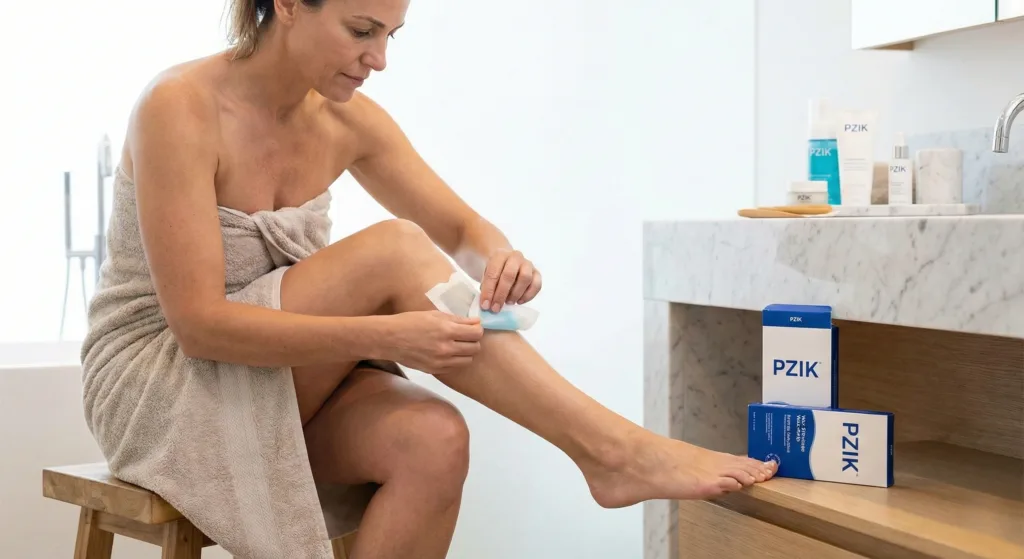
Overview Based on Competitor Insights
Most existing content on “hard vs. soft wax” is written for the retail consumer or the at-home user (DIY kits). Competitors typically focus on:
- Basic application differences (strips vs. no strips).
- Pain levels usually described with subjective adjectives like “gentle” or “ouch-free.”
What They Ignore:
- The Chemistry of Adhesion: Why certain rosins grip the skin while polymers shrink-wrap the hair.
- Melting Point variances: How Low-Temperature formulations affect service speed and energy costs for salons.
- Stabilizers and Plasticizers: The ingredients that prevent hard wax from snapping during removal.
This article ignores the consumer fluff. We focus on the formulation science that a brand owner needs to know to manufacture a superior product that outperforms competitors in a salon environment.
Deep Technical Explanation: Hard vs. Soft Wax Formulations
Hard Wax (Stripless): The Polymer Advantage
Hard wax is the standard for sensitive areas (face, bikini, underarms). From a manufacturing perspective, the definition of the “best wax for hair removal” in this category relies on elasticity.
- Mechanism: Hard wax does not stick to the skin; it adheres to the hair shaft by “shrink-wrapping” it as the wax cools and hardens.
- Key Ingredients:
- Base: Glyceryl Rosinate or Synthetic Resin (Hydrogenated Polycyclopentadiene). Synthetic options are preferred for hypoallergenic claims (Rosin-Free).
- Plasticizers: Cera Alba (Beeswax) or Paraffin to add flexibility. High-quality hard wax must remain pliable even when fully set; cheap formulas become brittle and crack.
- Polymers: Copolymer additives allow the wax to be applied in long, thin strips without breaking, maximizing product usage per service.
Soft Wax (Strip Wax): The Viscosity Factor
Soft wax is applied thinly and removed with a muslin or non-woven strip. It is used for speed waxing on large areas (legs, back).
- Mechanism: Soft wax adheres to everything it touches, including the skin’s top layer (exfoliation effect). The formulation must be essentially “tacky” but spreadable.
- Key Ingredients:
- Base: Often Colophonium (Pine Rosin) for superior tack.
- Solvents/Oils: Mineral oil or vegetable oils are used to keep the viscosity low so it spreads paper-thin.
- Risk Factor: Incorrect ratios of rosin to oil can cause the wax to be too sticky (lifting skin) or too runny (dripping and ineffective).
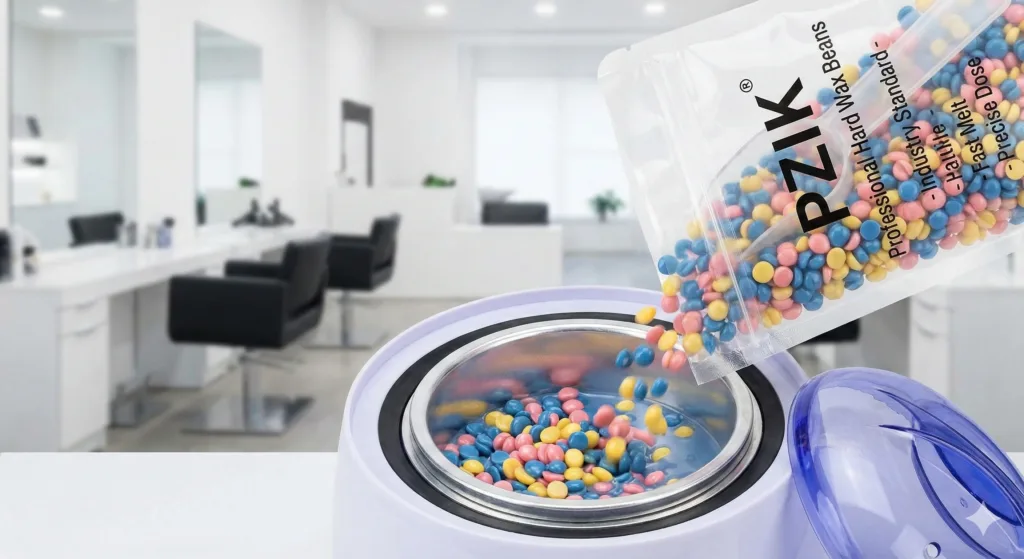
OEM & Customization Guide for Private Label
When developing your private label wax line with an OEM partner like PZIK, you can customize beyond just color and scent. Here are the customization levers that drive market value:
1. Melting Point Customization
Professional estheticians prefer Low-Melting Point waxes. These melt just above body temperature (around 40-45°C), preventing burns and reducing setup time. Requiring a “creamy” texture often involves adding Titanium Dioxide, which also acts as a buffer between the wax and the skin.
2. Functional Additives
To market your product as a premium solution, consider functional ingredients:
- Azulene or Chamomile: For anti-inflammatory properties in sensitive skin formulas.
- Tea Tree Oil: Popular in men’s waxing lines for its antiseptic qualities.
- Mica: For “shimmer” visuals popular on social media (Instagrammable wax).
3. Form Factor
- Beads/Beans: The industry standard for hard wax. Allows for faster melting and easier dosing.
- Blocks/Tablets: Lower manufacturing cost but harder for the end-user to portion.
- Tins (400g/800g): The standard for soft wax. Ensure your manufacturer uses rust-proof, high-gauge tins to prevent crushing during transit.

Buying Guide Checklist for Wax Procurement
Before placing a bulk order, use this checklist to validate your supplier’s quality:
- Elasticity Stress Test (Hard Wax): Ask for a sample. Apply a strip, let it cool completely, and try to bend it. If it snaps instantly, it has insufficient copolymer/plasticizers. It should bend without breaking.
- Spreadability Test (Soft Wax): The wax should spread ultra-thin without “dragging” the skin. Dragging indicates the formula is too thick or has poor thermal conductivity.
- Rosin-Free Certification: If targeting the “Hypoallergenic” market, verify that the base is Synthetic Resin, not modified pine rosin.
- Batch Consistency: Ask about QC protocols. Natural rosin varies by harvest; reliable manufacturers blend batches to ensure consistent color and adhesion year-round.
Comparison: Hard Wax vs. Soft Wax SKUs
Use this table to decide your product mix. Most successful brands carry both to serve full-body salon needs.
| 機能 | Hard Wax (Stripless) | Soft Wax (Strip) |
|---|---|---|
| Target Hair Type | Coarse, thick, or deeply rooted hair (Bikini/Brazilian) | Fine to medium hair (Legs, Arms, Back) |
| Skin Interaction | Adheres only to hair (Safer for sensitive skin) | Exfoliates skin (Higher risk of lifting) |
| Application Speed | Slower (Must cool/harden) | Fast (Apply and rip immediately) |
| Cost per Service | Higher (Uses more product per inch) | Lower (Apply thin layers) |
| Key USP for Brands | “Painless,” “Sensitive,” “No Strips Needed” | “Speed Waxing,” “Economical,” “Large Areas” |
結論
There is no single “best wax for hair removal”—there is only the best wax for a specific application. An effective product portfolio typically consists of a signature blue or clear hard wax for precision work and a creamy soft wax for speed services. The differentiator lies in the manufacturing quality: formulations that remain flexible, melt at low temperatures, and utilize high-grade resins.
For brands entering this space, the goal is to source formulations that reduce the esthetician’s effort. If your wax breaks or requires re-application, professionals will drop your brand for a more reliable competitor. Prioritize stability and elasticity over color and fragrance.
行動喚起
If you are looking for a reliable Cosmetics OEM/ODM Manufacturing & Private Label Skincare partner to produce salon-grade waxes, PZIK provides:
- Over 10 years of cosmetic manufacturing expertise, serving global beauty brands.
- Full customization capabilities (Custom elasticity, scents, and melting points).
- Fast sampling support to validate formulation quality.
- Export-ready packaging suitable for global distribution.
Contact us today to develop your custom waxing line:
📩 Email: sales@pzik.com
📱 WhatsApp: +1 3322600900







コメントを追加