









Visual Merchandising for Precision Skin Science: Customizing Dopamine-Color Hair Removal Cream Packaging for Trendy Retail Stores
Brand: PZIK – Global Strategic Supply Chain Integrator for Beauty & Personal Care
Исполнительное резюме
Retail shelves are increasingly curated as emotional experiences rather than simple product displays. In trend-forward drugstores, beauty boutiques, and lifestyle chains, the visual language of packaging must compete with social media feeds as much as with neighboring SKUs. Against this backdrop, “dopamine-color” design strategies—using bold, mood-lifting, saturated hues—have emerged as a powerful lever for driving shopper engagement, especially in personal care categories where differentiation is difficult.
For depilatory formats such as Крем для удаления волос, the stakes are even higher. Consumers demand efficacy, safety, sensorial elegance, and a clean, elevated aesthetic that aligns with aspirational self-care rituals. Simultaneously, retailers expect modular shelf-ready solutions, fast onboarding of private label lines, and compliance with increasingly complex regulatory frameworks across regions.
This white paper defines a complete B2B roadmap for customizing dopamine-color packaging for Hair Removal Cream in trendy retail environments, anchored in PZIK’s “Precision Skin Science” platform and our Smart Control Clean System (Clean, Protect, Slow Down). It is written for category managers, brand owners, and procurement leaders seeking to upgrade depilatory assortments with science-backed, merchandising-optimized solutions.
We begin with a technical deep dive into the formulation philosophy: high-purity calcium thioglycolate for controlled disulfide bond breaking, plant-derived growth inhibitors (Pinus pinaster and Salix alba) for hair regrowth modulation, and Skin-like Lipid Film technology to preserve barrier integrity. These functional pillars are integrated with Symrise-based scent-masking systems to neutralize the characteristic ammonia note that often undermines premium positioning in depilatories. Certified under National Special Cosmetic frameworks and FDA/CPNP-ready, the platform is engineered for global scale-up.
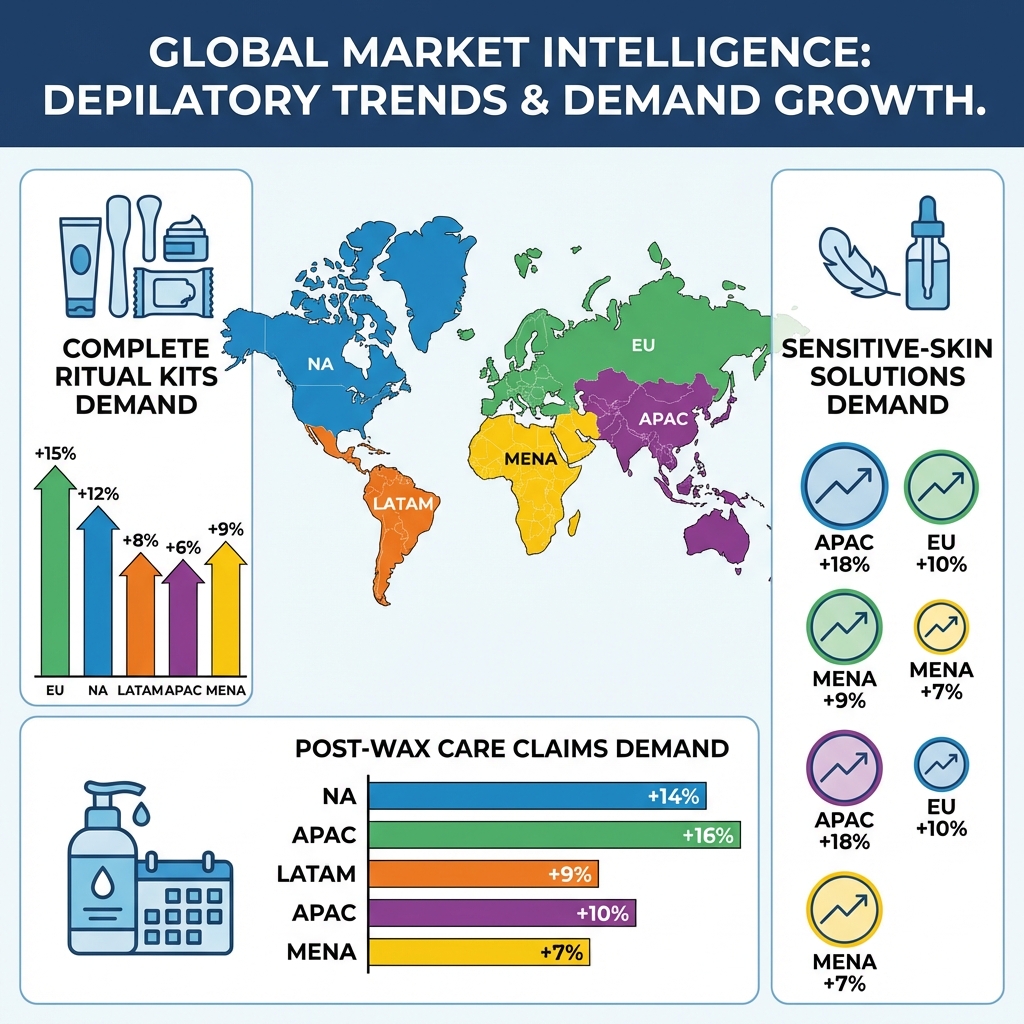
Building on this foundation, we examine market intelligence across key regions, focusing on evolving consumer expectations for “science plus joy”—high-performance depilation embedded in visually uplifting, dopamine-color packaging and social-ready unboxing moments. We discuss how color psychology, finish (matte/soft-touch versus gloss), and layout can signal claims such as “dermatologically tested”, “slow regrowth”, and “low odor” without cluttering the front-of-pack.
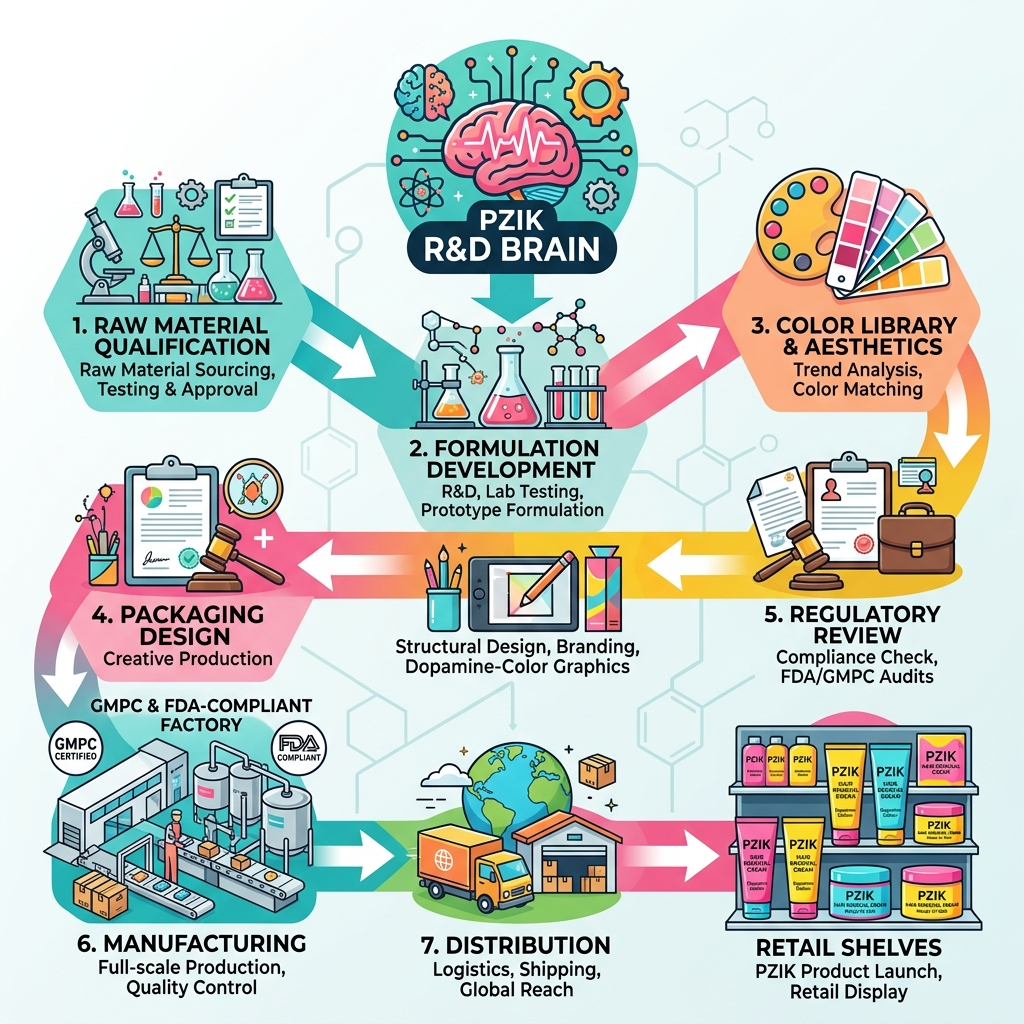
The paper then outlines PZIK’s manufacturing and supply chain architecture—the “R&D Brain”—which connects upstream raw material qualification, formulation scale-up, and regulatory documentation with downstream OEM/ODM packaging customization. Here, we demonstrate how retailers and brand owners can leverage Услуги OEM/ODM to rapidly deploy differentiated dopamine-color Hair Removal Cream and complementary Восковые полоски lines under cohesive visual identities.
Finally, we address safety and compliance in detail, including GMPC/FDA-aligned quality systems, toxicological assessments, and claims substantiation pathways. We conclude with a strategic roadmap for retailers and brand owners: how to phase in dopamine-color depilatory lines, structure A/B testing of treatments and packaging, and align merchandising strategies with emerging regulatory and ESG considerations. Throughout, the emphasis is on measurable outcomes: shelf impact, consumer conversion, repurchase rate, and regulatory robustness as a platform for long-term category growth.
Technical Deep-Dive: Precision Skin Science Behind Dopamine-Color Hair Removal Cream
1. Система Smart Control Clean: Очистка, защита, замедление
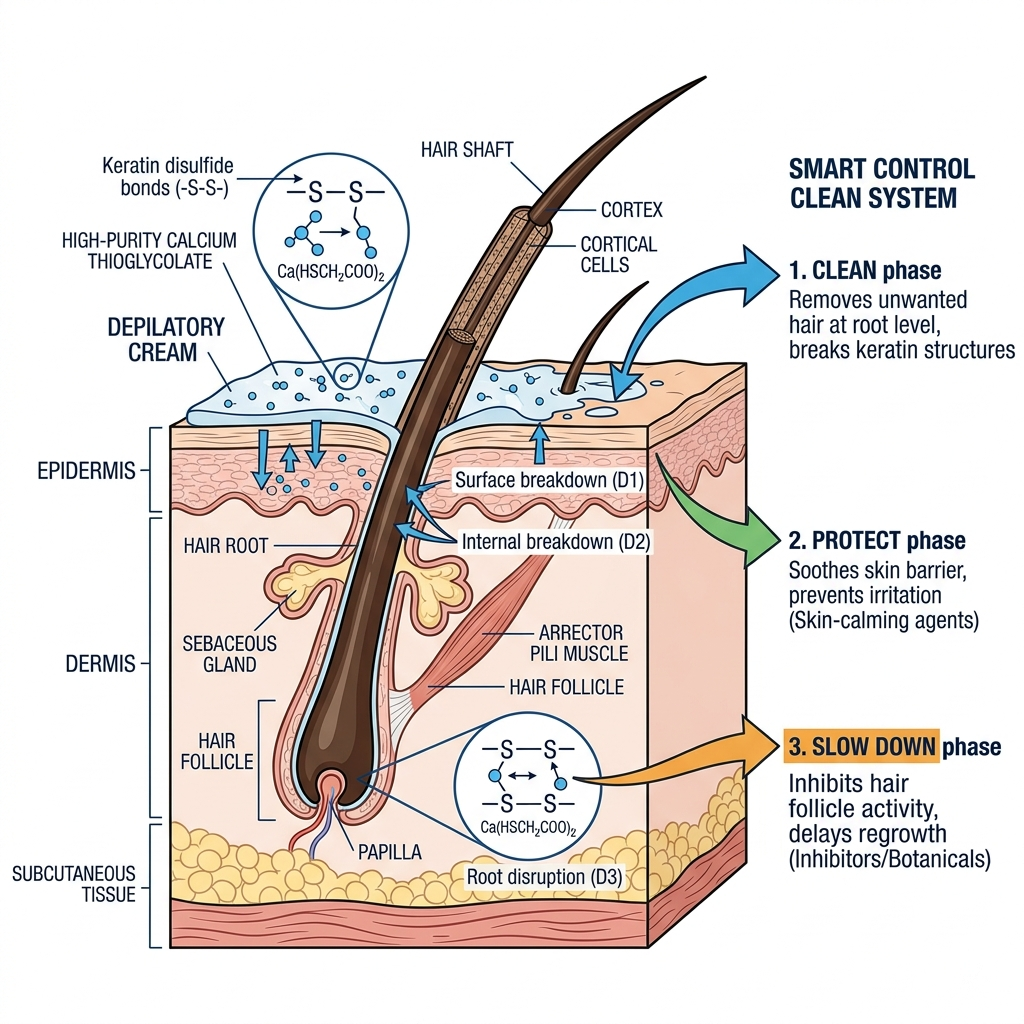
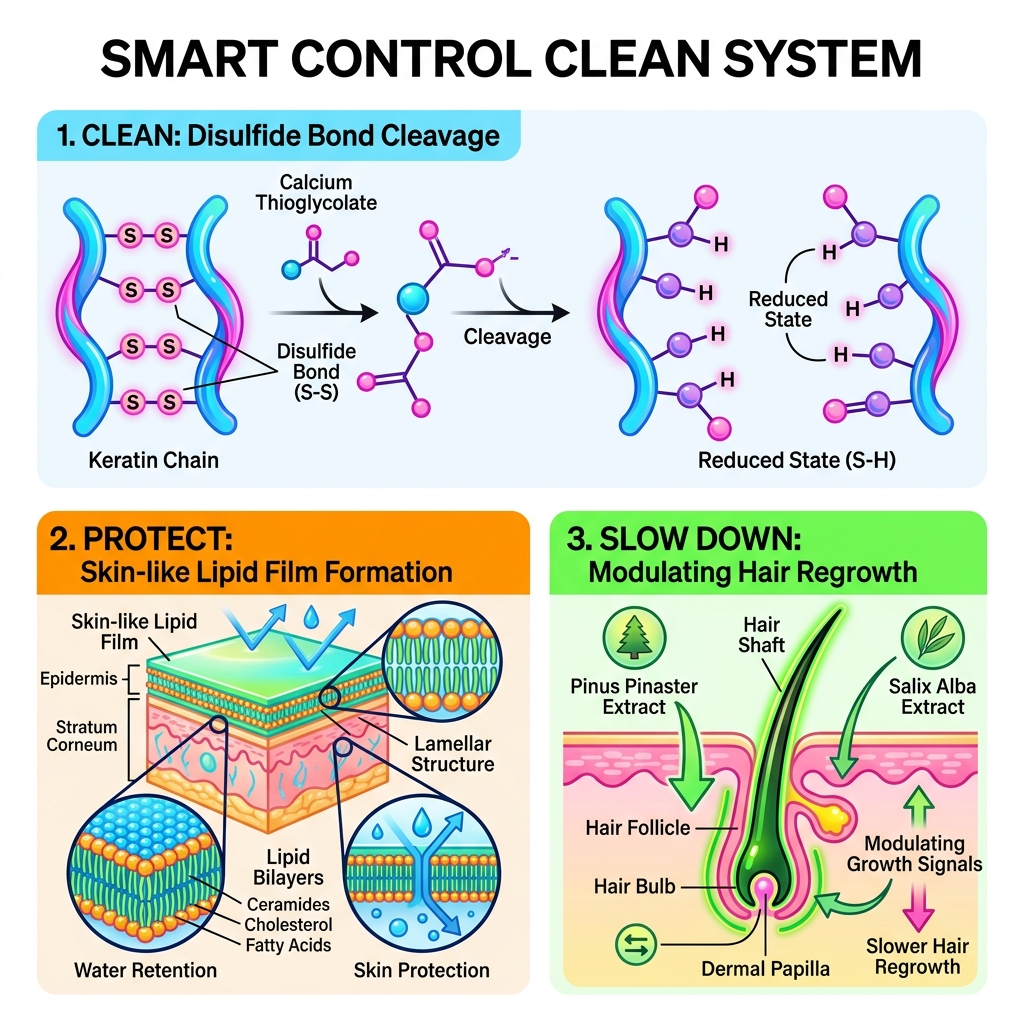
PZIK’s Smart Control Clean System is a three-axis formulation architecture designed for high-performance Hair Removal Cream that is gentle enough for frequent use while delivering visible improvements over multiple depilation cycles.
1.1 CLEAN – Controlled Disulfide Bond Disruption
The CLEAN dimension targets keratin disulfide (–S–S–) bonds within the hair shaft. Conventional depilatories often rely on commodity-grade thioglycolates and broad, non-specific alkalinity, leading to aggressive keratin degradation and potential irritation. PZIK deploys high-purity calcium thioglycolate with tight specification on impurity profiles, enabling more controlled reduction of disulfide bonds at the hair’s surface and near-follicular region.
Under alkaline conditions (pH typically 12–12.5 for standard depilatories, optimized within a safer, dermatologist-aligned window), calcium thioglycolate dissociates to release thioglycolate anions. These nucleophilic species attack disulfide bonds in keratin, converting them into two thiol (–SH) groups. The hair shaft loses structural integrity, enabling mechanical removal by rinsing or wiping. The key performance metrics in this step are time-to-break (depilation time), break-depth profile (surface vs. mid-shaft), and skin-adjacent irritation potential.
By calibrating thioglycolate purity, concentration, and the buffering system, PZIK’s R&D team balances depilation speed with barrier preservation. This makes it possible to align product usage instructions (e.g., 3–7 minutes) with the visual and textual cues on dopamine-color packaging—time icons, color-coded “intensity” bars, and QR-linked micro-content for application technique.
1.2 PROTECT – Skin-like Lipid Film Technology
The PROTECT axis centers on a biomimetic Skin-like Lipid Film designed to maintain stratum corneum integrity during and after exposure to alkaline depilatory agents. Traditional depilatories risk extracting epidermal lipids, increasing TEWL (transepidermal water loss) and causing tightness, erythema, or microflaking. PZIK integrates a lamellar lipid matrix composed of ceramide-analogues, cholesterol derivatives, and selected fatty acids configured to mimic native intercellular lipids.
This film forms a pseudo-occlusive layer at the skin surface, modulating the diffusion of actives and reducing transient irritancy. It simultaneously acts as a deposition platform for soothing components (e.g., allantoin, panthenol, and botanical extracts), which can be dialed in based on target market skin profile (e.g., sensitive-prone APAC consumers versus normal-to-dry in Europe). The lipid film concept enables a premium sensory narrative: “cream-to-skin veil”, “dermo-buffered comfort”, or “skin-similar barrier lock”—all of which can be reinforced in color-blocked messaging on dopamine-color packaging.
1.3 SLOW DOWN – Modulating Regrowth with Pinus Pinaster and Salix Alba
The SLOW DOWN axis addresses a key unmet need in depilation: reduced regrowth rate and softer regrowing hair. PZIK leverages plant-derived complexes sourced from Pinus pinaster (maritime pine) and Salix alba (white willow), both standardized for known bioactive markers. These ingredients are incorporated at efficacious yet regulatory-compliant levels, with in vitro and in-use testing frameworks designed to quantify impact on regrowth parameters (e.g., hair density, perceived regrowth speed, and roughness).
Pinus pinaster extracts, rich in procyanidins and phenolic acids, provide antioxidant support and may attenuate micro-inflammation around the follicle post-depilation. Salix alba contributes salicin and related derivatives, which can be enzymatically converted to salicylic acid analogues in the skin microenvironment, delivering mild keratolytic and soothing benefits. Together, they support a “calm follicle” environment that may favor less aggressive regrowth perception.
On-pack, the SLOW DOWN story can be visually coded with cooler dopamine hues (aquas, lilacs, “soft neon” greens) contrasted with warmer CLEAN cues, enabling consumers to intuit the benefit ladder: fast removal, comfortable skin, extended smoothness.
2. High-Purity Calcium Thioglycolate: R&D and Quality Control
Depilatory performance and tolerability are highly sensitive to the quality and impurity profile of calcium thioglycolate. PZIK enforces a multi-parameter QC regime covering metal ion content, residual solvents, thioglycolic acid content, and oxidative degradation markers. Indoor pilot reactors, micro-batch trials, and accelerated-stability models are used to predict color, odor, and viscosity drift over the product shelf life.
This scientific rigor supports B2B positioning as “Precision Skin Science” rather than commodity depilation. It also underpins robust claims for private label owners, such as “dermatologist-evaluated”, “optimized thioglycolate profile”, or “precision depilation in X minutes”, which can be articulated on dopamine-color cartons and tubes with high legibility and minimal regulatory risk.
3. Scent Innovation: Symrise-Based Ammonia Odor Neutralization
Consumer rejection of depilatories often centers on odor. Even when ammonia content is technically minimized, the combination of alkaline base and reducing agents generates a characteristic “salon perm/depilatory” olfactory profile. PZIK collaborates with Symrise to integrate multi-layered odor management strategies:
- Odor-masking accords that target specific sulfur and amine note clusters, rather than generic fragrance overlays.
- Encapsulation technologies (where permitted) to delay fragrance release until application, reducing headspace build-up in closed packaging.
- pH-tailored fragrance bases to maintain stability and avoid discoloration or off-notes over time.
This enables sensorial narratives such as “fresh spa”, “water-fruit clean”, or “soft botanical”, which align well with dopamine-color palettes—e.g., distinctive pastels for “comfort” variants, punchier neons for “express” versions—while maintaining clear product differentiation on crowded shelves.
4. Regulatory-Ready Science: National Special Cosmetic, FDA, and CPNP
PZIK operates under a regulatory framework aligned with National Special Cosmetic certification, positioning the Hair Removal Cream platform for markets where depilatories fall under heightened scrutiny. Dossiers include full formula listings, toxicological profiles, microbial challenge data, stability studies, and label compliance checks.
In parallel, formulations are pre-aligned with FDA (for OTC-style depilatories where applicable) and CPNP (EU Cosmetic Products Notification Portal) expectations. This includes adherence to permitted ingredient lists, concentration caps, labeling terminology, and required warnings. For partners seeking GMPC/FDA-compliant manufacturing environments, PZIK’s quality systems are documented and auditable; further details are available under our Соответствие требованиям GMPC/FDA resources.
This regulatory architecture enables fast onboarding of retailer brands and indie labels across multi-region footprints, with dopamine-color packaging adapted to local language and regulatory text requirements while preserving a unified visual-merchandising strategy.
Market Intelligence: Global Demand and Regulatory Trends for Dopamine-Color Depilatories
1. Shifting Consumer Expectations in Hair Removal
Across major beauty markets, three converging trends redefine the Hair Removal Cream category:
- From “functional” to “ritualized”: Consumers no longer view depilation as a purely utilitarian step; it is integrated into broader body-care rituals, often shared on social platforms.
- From “neutral” to “emotional”: Mood-enhancing aesthetics—bright color blocking, fluid gradients, and playful typography—are now critical purchase drivers, especially for Gen Z and young millennials.
- From “price-first” to “science-plus-joy”: Shoppers are willing to pay more for products that combine clinical credibility (dermatologist references, science imagery) with emotionally uplifting design cues.
These dynamics create a new strategic space for dopamine-color Hair Removal Cream packaging that signals both efficacy and delight. Retailers can segment shelf blocks by emotional territories: “Calm & Care” (muted dopamine pastels), “Express & Active” (vivid corals, limes), and “Pro Science” (clean, high-contrast pairings with lab-coding elements).
2. Regional Insights and Dopamine-Color Preferences
2.1 Europe
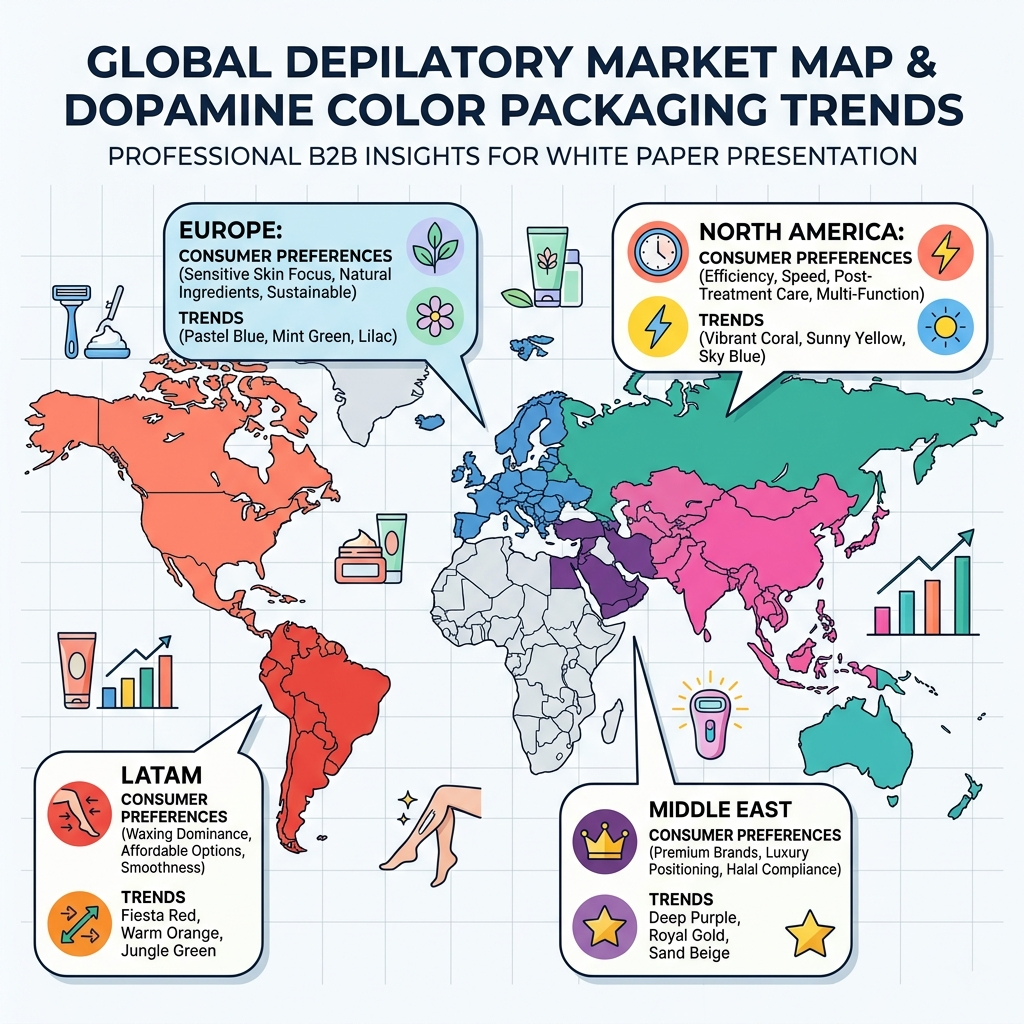
European markets prioritize safety, environmental considerations, and minimalist aesthetics. Dopamine-color strategies tend to favor softened, slightly desaturated tones combined with clean white space and regulatory clarity. Sustainability cues (recyclability icons, “reduced plastic” storytelling) are increasingly decisive in retailer listings. For Hair Removal Cream, opportunities lie in repositioning depilatories from “back-of-shelf” problem-solvers to front-of-aisle self-care enhancers, supported by skin science visuals and CPNP-compliant claim language.
2.2 North America
In North America, category fragmentation is high, with strong competition from razors, waxing, and device-based options. Dopamine-color design is especially effective in specialty retailers and DTC-driven brands that aim to own a distinct “vibe”—e.g., neon-on-pastel, nostalgic gradients, or graphic manga-inspired elements. Here, merchandising success depends on cross-category storytelling: Hair Removal Cream displayed alongside exfoliants, ingrown-hair serums, and complementary Восковые полоски, all unified by a coherent color system.
2.3 APAC
In APAC, depilation behavior is diverse. Markets such as Japan and Korea favor mild formulations and sensorial elegance, while Southeast Asia exhibits strong demand for express solutions suitable for humid climates. Dopamine-color trajectories in APAC often intersect with “cute” and “clean-lab” hybrids: soft, optimistic tones paired with clinical icons and technical infographics. Sensitive-skin and brightening claims are particularly salient, requiring rigor in both formulation and messaging.
2.4 LATAM, Middle East, and Emerging Markets
LATAM markets often embrace louder, high-saturation palettes, favoring energetic dopamine-color schemes that signal vibrancy and self-expression. The Middle East and North Africa, with higher overall hair density profiles, present strong demand for high-efficacy solutions but with increased concern around irritation on sensitive areas. Here, packaging must clearly segment usage zones (legs, arms, bikini, underarm) via color coding and iconography, while regulatory and cultural considerations shape imagery and copy choices.
3. Regulatory Trends Influencing Visual Merchandising
Regulatory bodies increasingly scrutinize claims, imagery, and even color usage where it might imply medical benefits or mislead consumers. Key trends impacting dopamine-color packaging include:
- Claim-substantiation alignment: “Slow regrowth”, “long-lasting smoothness”, and “clinically tested” must be backed by robust data; visual metaphors (e.g., slowed motion lines, clock icons) should not overstate effect magnitude.
- Ingredient transparency: Front-of-pack callouts (e.g., “with Pinus pinaster & Salix alba”) must match INCI declarations; icons or color codes representing “natural” should not suggest 100% natural origin unless supported.
- Sensitivity and inclusivity: Imagery and color choices should represent diverse skin tones and body types; over-sexualized visuals face increasing retailer and regulatory resistance.
These drivers require close collaboration between formulation, regulatory, and design teams when developing dopamine-color strategies for Hair Removal Cream. PZIK supports partners through structured design-governance frameworks, ensuring that pack creativity remains aligned with legal guidelines and target-market norms.
4. Data-Driven Shelf Optimization
Retailers and brands can leverage data analytics—such as sell-out velocity by colorway, variant mix, and shelf position—to iteratively optimize dopamine-color strategies. Techniques include:
- A/B testing of different color codes for the same formula across matched store clusters.
- Heatmap analysis of on-shelf eye-tracking studies to position key claims in the highest-visibility zones.
- Social-listening on user-generated content to identify which colorways and pack shapes drive the most shares, saves, and positive sentiment.
PZIK’s strategic advisory teams integrate these inputs into packaging refresh cycles, enabling continuous improvement of visual merchandising for depilatories over multi-year category plans.
Manufacturing & Supply Chain: PZIK’s R&D Brain and OEM Efficiency
1. The R&D Brain: Integrated Innovation-to-Shelf Architecture
PZIK’s “R&D Brain” is a digital-physical ecosystem linking upstream research to downstream packaging and logistics. For dopamine-color Hair Removal Cream rollouts, this architecture includes:
- Formulation modules for different use cases (sensitive skin, express, in-shower, men’s grooming) built on the Smart Control Clean System.
- Color-and-structure libraries that map specific dopamine-color palettes to target demographics, regions, and retailer formats.
- Regulatory templates for multi-region compliance, pre-configured with claim wording and mandatory warnings.
By treating formula and packaging as a single integrated system, PZIK shortens development lead times and ensures that visual merchandising choices (e.g., color, iconography) accurately reflect functional benefits and regulatory constraints.
2. OEM/ODM Packaging Customization for Trendy Retail Stores
Retailers and brand owners can engage PZIK through flexible Услуги OEM/ODM tailored to their category strategy and risk appetite. Typical collaboration modes include:
- Turnkey private label: PZIK supplies fully developed Hair Removal Cream SKUs with pre-validated dopamine-color designs, ready for retailer branding and minor localization.
- Co-created brand lines: Joint workshops define brand DNA, mood boards, color psychology frameworks, and claim hierarchies, leading to a unique, ownable depilatory range.
- White-label with differentiated packaging: Retailers adopt standardized formulas but deploy customized packaging/graphics to align with their specific shelf architecture.
Core manufacturing capabilities include high-shear emulsification, controlled pH processing, nitrogen-blanketed filling lines to minimize oxidative degradation, and a range of primary packaging formats (laminate tubes, mono-material tubes, airless pumps, sachets). Dopamine-color rendering is ensured via strict Pantone matching, print-density controls, and finish selection (gloss, semi-matte, soft-touch varnish).
3. Supply Chain Resilience and Global Distribution
PZIK’s global footprint enables distributed manufacturing and just-in-time (JIT) replenishment for large retail networks. Key features include:
- Multi-site production to reduce geopolitical and logistics risk.
- Standardized batch documentation aligned with GMPC and FDA expectations across facilities.
- Configurable packaging localization where base product is identical but outer cartons and language sleeves vary by market.
This architecture supports synchronized launches of dopamine-color Hair Removal Cream ranges in multiple regions, allowing retailers to maintain a unified global brand feel while accommodating local regulatory and cultural adjustments.
4. ESG and Sustainable Packaging Choices
Dopamine-color does not need to conflict with sustainability. PZIK helps partners evaluate:
- Mono-material tubes and caps designed for easier recyclability.
- Reduced-ink strategies that still achieve high chroma using optimized color separations.
- Post-consumer recycled (PCR) content incorporation without compromising barrier properties or aesthetics.
ESG performance metrics (e.g., % PCR, CO2 footprint per unit, recyclability index) can be codified visually on pack in a clear, non-claim-exaggerating manner, using standardized icons and color-coded badges. This supports retailer CSR commitments and resonates strongly with eco-conscious consumers.
Safety & Compliance: Engineering Trust into Dopamine-Color Depilatories
1. GMPC/FDA-Aligned Quality Systems
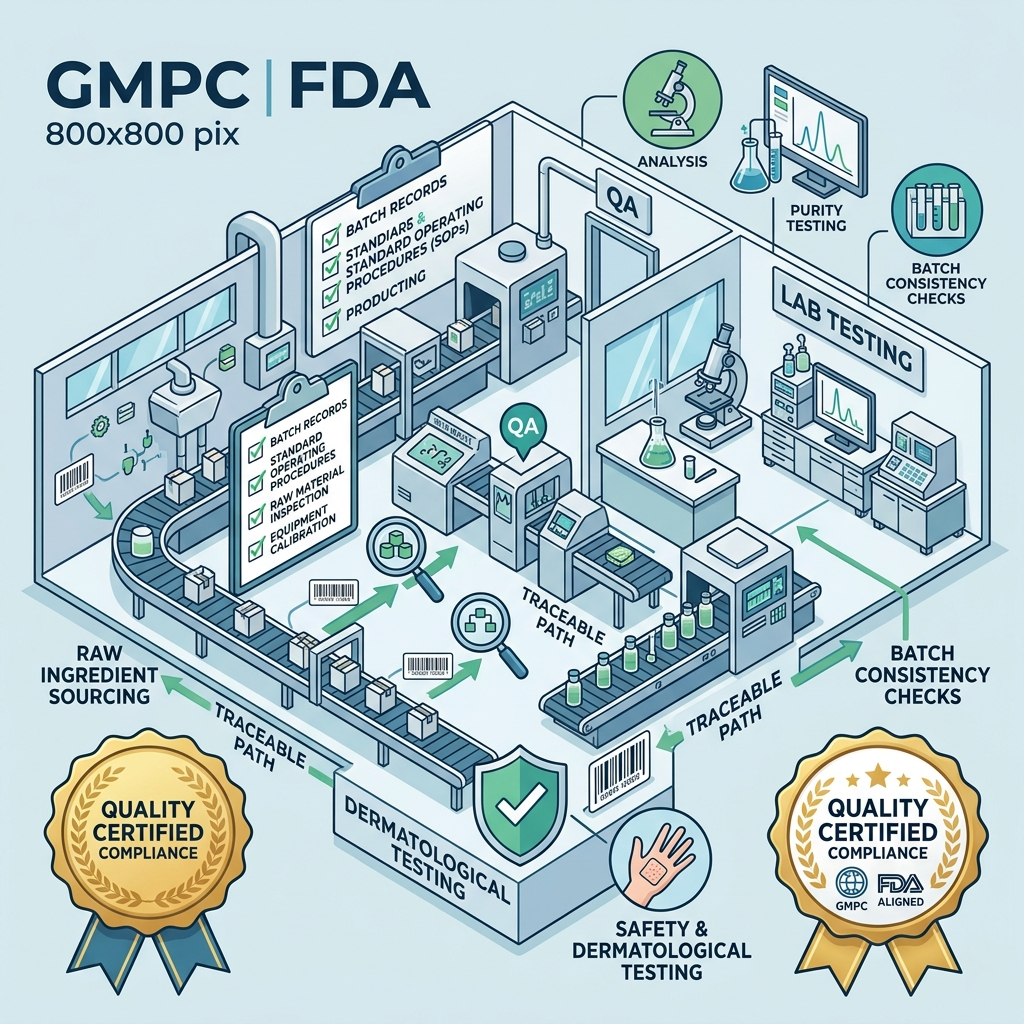
PZIK operates under Good Manufacturing Practice for Cosmetics (GMPC) frameworks aligned with FDA expectations. This includes validated cleaning procedures, environmental monitoring, batch-traceability systems, and CAPA (Corrective and Preventive Action) protocols. For partners, this means every dopamine-color Hair Removal Cream batch can be traced from raw-material sourcing to final packaged unit, with full audit trails.
2. Safety Assessment and Toxicological Profiling
Before commercialization, each formula undergoes structured safety evaluation, typically including:
- Ingredient-level toxicology review against major regulatory lists.
- Finished-product safety assessment by qualified experts, in line with EU and comparable frameworks.
- Dermatological testing (e.g., HRIPT, controlled-use tests) on healthy volunteers, with extended protocols for “sensitive skin” variants where needed.
Results inform not only regulatory documentation but also on-pack guidance and warnings. For instance, patch-test recommendations, contact time limitations, and body-area suitability are clearly articulated in copy and visual icons. Dopamine-color layouts must reserve sufficient contrast and whitespace to ensure legible safety information.
3. Labeling, Claims, and Visual Compliance
In multi-region launches, labeling is a primary compliance risk point. PZIK supports partners in aligning dopamine-color packaging with:
- Mandatory statements (e.g., “For external use only”, “Do not use on broken or irritated skin”).
- Allergen disclosure where fragrance and botanical components trigger specific reporting requirements.
- Usage instructions that are concise, pictogram-supported, and consistent with tested contact times.
Visual elements must not inadvertently imply medical or permanent hair removal. Icons such as “infinite” loops, medical cross symbols, or exaggerated hair-follicle destruction graphics are carefully moderated or avoided. Instead, PZIK encourages “precision science” visual cues: stylized molecular motifs, time gradients, or schematic skin-barrier illustrations that communicate mechanism without overpromising.
4. Complaint Handling and Post-Market Surveillance
Safety and compliance extend beyond pre-market checks. PZIK offers partners structured post-market surveillance support:
- Standardized complaint intake forms that categorize issues (irritation, odor, pack failure, etc.).
- Signal detection algorithms to identify clusters of similar complaints across regions.
- Action protocols ranging from IFU (Instructions For Use) clarification to formula or packaging adjustments.
Feedback loops into the R&D Brain ensure that learnings from real-world use inform next-generation formulas and packaging. For example, if certain dopamine-color variants are associated with misinterpretation of usage zones, iconography and typography can be quickly refined.
Conclusion & Strategic Roadmap: From Shelf Impact to Category Leadership
1. Reframing Hair Removal Cream as a Strategic Category
Depilatories are often treated as low-engagement, low-investment categories. Yet, with the right combination of precision skin science and dopamine-color visual merchandising, Hair Removal Cream can evolve into a growth engine within personal care portfolios. By integrating high-purity calcium thioglycolate systems, Skin-like Lipid Film technology, regrowth-modulating botanicals, and advanced scent-masking, PZIK provides a robust technical foundation for this transformation.
2. A Phased Roadmap for Retailers and Brand Owners
PZIK recommends a phased strategic roadmap:
- Phase 1 – Diagnostic: Audit current depilatory assortment, shelf allocation, and consumer feedback. Identify gaps in science communication, packaging differentiation, and sensory performance.
- Phase 2 – Concept Architecture: Define a branded or private-label depilatory platform with 2–4 core variants mapped to usage occasions and skin types. Establish dopamine-color guidelines (primary/secondary palettes, iconography, typography) aligned with retailer brand and target demographics.
- Phase 3 – Co-Development: Engage PZIK’s R&D Brain through Услуги OEM/ODM to lock formulas, packaging structures, and compliance texts. Run stability, safety, and consumer-acceptance tests; refine claims and visual hierarchy based on data.
- Phase 4 – Pilot Launch: Introduce the dopamine-color Hair Removal Cream range in prioritized retail clusters and digital channels. Conduct A/B testing on pack designs, shelf planograms, and messaging variants.
- Phase 5 – Scale and Extend: Roll out to additional regions and channels; extend the dopamine-color system to adjacent categories (e.g., Восковые полоски, after-care gels, ingrown-hair serums) under a unified visual and scientific narrative.
3. Key Success Metrics
To measure the impact of dopamine-color depilatory strategies, stakeholders should track:
- Shelf conversion uplift versus baseline packaging.
- Repeat purchase rates and variant mix (e.g., shift toward “Sensitive” or “Express” SKUs).
- Consumer satisfaction scores specific to odor, skin feel, and perceived regrowth speed.
- Regulatory and quality KPIs, including complaint rate and audit findings.
PZIK supports partners in designing measurement frameworks and incorporating learnings into continuous-improvement cycles.
4. Partnering with PZIK
As a global strategic supply chain integrator for Beauty & Personal Care, PZIK combines deep R&D capabilities, robust regulatory infrastructure, and agile OEM execution to help retailers and brand owners turn Hair Removal Cream from a functional necessity into a visually compelling, science-backed experience. From lab bench to dopamine-color shelf presence, we collaborate to build depilatory ranges that delight consumers and withstand regulatory scrutiny.
To explore custom dopamine-color Hair Removal Cream concepts, discuss regulatory pathways, or initiate a category audit, stakeholders are invited to Связаться с PZIK. Our teams can co-create pilot programs, technical workshops, and long-term roadmaps tailored to the specific ambitions and constraints of each partner, ensuring that precision skin science is not only formulated into the product—but also clearly and compellingly communicated at the shelf.








Добавить комментарий