


OEM Полоски для носа от угрей: Руководство по производству и поиску поставщиков
As a beauty brand owner or entrepreneur, you’ve seen the market demand for nose strips skyrocket. Yet, finding a manufacturer who delivers consistent quality, scalable low MOQs, and expert formulation advice is a major roadblock. The information online focuses on ready-to-sell brand products like Bioré, leaving you with crucial questions about materials, customization, and production workflows unanswered. This guide cuts through the noise, providing a factory-level decision framework for sourcing and customizing OEM nose strips for blackheads, based on over a decade of cosmetic manufacturing expertise.
Обзор на основе данных о конкурентах
The top-ranking search results for “best nose strips for blackheads” are overwhelmingly e-commerce listings (Amazon, Walmart, Walgreens) for retail brands like Bioré. This content serves end-consumers, highlighting instant pore unclogging and oil-free formulas. For B2B buyers, this creates a significant information gap. Competitor articles completely ignore the critical commercial and manufacturing questions: How are these strips actually made? What materials are best for my target market? What are the customization options and minimum order quantities? This fragmented landscape leaves beauty entrepreneurs guessing, leading to sourcing mistakes that affect cost, product efficacy, and brand reputation.
Deep Technical Explanation
An effective OEM nose strip is an engineered system, not just an adhesive patch. Its core function—extracting sebum and keratin plugs from pores—depends on the precise interplay of materials, active ingredients, and manufacturing tolerances. Understanding this technical stack is your first step to making an informed sourcing decision.
Core Structure & Materials
Nonwoven Fabric Backing: Acts as the structural support. Key considerations are density and fiber type. Lighter weight (15-25 gsm) allows for more flexibility and faster saturation with solution, while heavier weight (30-40 gsm) provides more rigidity for easier application and removal. Hydrophobic synthetic fibers (polyester, polypropylene) maintain strip shape when wet, but can be less comfortable. Hydrophilic blends (with cotton) improve skin feel. Your choice directly impacts feel and end-user experience.
Adhesive Layer & Polymer Matrix: This is the heart of the product. The hydrogel-forming polymers (PVA, sodium polyacrylate, carbomer) swell upon contact with water to create a sticky film that binds to oil and debris. The peel strength must balance effective adhesion without causing trauma upon removal. A polymer ratio targeting 30-40% water absorption in 10-15 minutes typically achieves optimal stripping force.
Active Ingredient System: This is what transforms a simple strip into a targeted solution.
- Chemical Exfoliants (Salicylic Acid AHA/BHA): Pre-soften keratin plugs. Salicylic acid concentration for over-the-counter cosmetics is typically 0.5-2%. It must be pre-formulated into the adhesive matrix to ensure stability and efficacy.
- Charcoal (Activated Carbon): Provides adsorption for surface oils and gives visual appeal. The particle size and loading percentage affect both the adsorptive capacity and the smoothness of the final film.
- Botanical Extracts (Witch Hazel, Tea Tree Oil): Offer astringent and anti-inflammatory claims. Ingredient solubility and compatibility with the polymer matrix are critical to prevent separation during shelf life.
Critical Quality & Export Standards
Sourcing for international markets requires strict compliance. Your manufacturing partner must ensure:
- Microbiological Standards: USP <61>/<62> or equivalent tests (Total Aerobic Microbial Count, Total Combined Yeasts/Molds, absence of specified pathogens). A standard preservative system (like phenoxyethanol/ethylhexylglycerin) is mandatory for water-based formulas.
- Heavy Metal & Impurity Testing: Compliance with EU Regulation (EC) No 1223/2009, US FDA requirements, and China’s CSAR for lead, arsenic, mercury, and cadmium.
- Испытания на стабильность: A minimum of 3-month accelerated stability testing (40°C/75% RH) to guarantee formula and packaging integrity during shipping and storage.
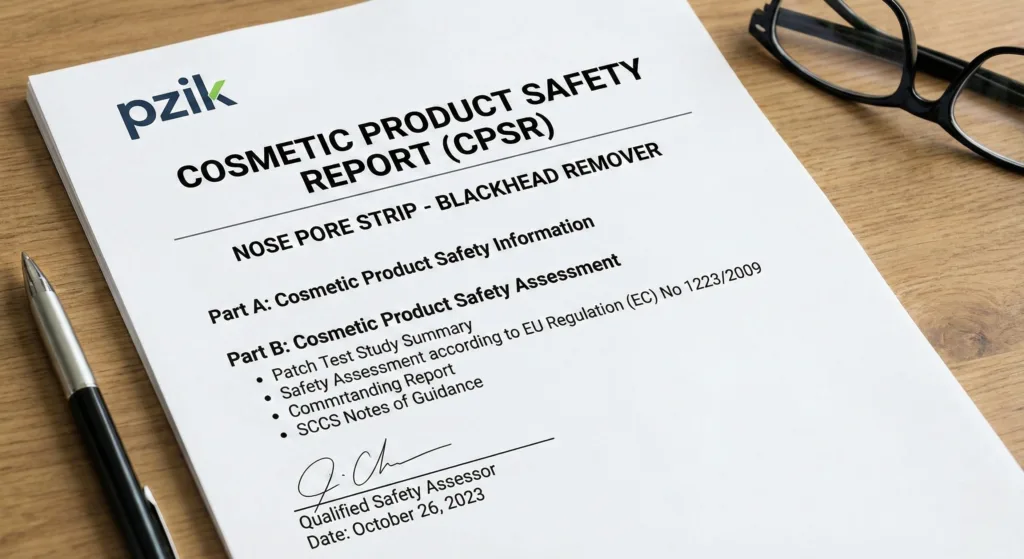
- Patch Test & Safety Assessment: A full cosmetic product safety report (CPSR) following the EU’s SCCS notes of guidance or equivalent is required for market access in Europe and other regulated markets.
OEM & Customization Guide
Customization is where your brand’s unique value proposition is built. Leading OEMs like PZIK guide you through a structured workflow, balancing creativity with production feasibility.
Customization Options Breakdown
| Component | Standard Option | Customization Scope | Cost & MOQ Impact | Decision Factor |
|---|---|---|---|---|
| Formula & Actives | Salicylic Acid + Charcoal | Active concentration, addition of peptides (e.g., Copper Tripeptide-1), soothing agents (Centella Asiatica), or premium extracts. | Medium. New raw material sourcing and stability testing required. MOQ may increase by 20-30% for novel actives. | Your target skin concern and desired price point. |
| Shape & Size | Standard T-zone shape | Die-cut custom shapes (e.g., butterfly, specific cheek/nose contours), varying size for different facial areas. | High. Requires a custom steel-rule die (one-time tooling cost: $300-$800). MOQ minimum usually applies to cover tooling cost. | Brand differentiation and user experience. Custom shapes are strong for social media. |
| Packaging (Primary) | Standard foil pouch | Custom printed pouches (matt/glossy finish), flow-wrap with custom print, or single-use sachets. | High. Printing plates must be made. Minimum print run for packaging often dictates overall MOQ. | Shelflife requirements and retail presentation needs. Foil provides best moisture barrier. |
| External Branding | Generic carton | Fully custom-branded folding cartons, display boxes, or blister packs. | High. Involves graphic design, plate making, and potentially longer lead time. Higher MOQ. | Your retail channel strategy (DTC vs. retail shelves). |
| Fragrance & Color | Unscented, off-white/black | Custom fragrances (herbal, fresh, citrus) or colorants (matching brand colors). | Low to Medium. Fragrance oils and colorants are easily incorporated but require IFRA compliance and stability check. | Brand identity and target market sensory preferences. |
The OEM Workflow: From Concept to Carton
- Brief & Consultation: Share your target market, desired claims (e.g., “oil-free,” “vegan”), price point, and any reference samples.
- Formula & Material Sourcing: The manufacturer provides 2-3 base formula options with a Bill of Materials (BOM) and cost breakdown.
- Prototyping & Sampling: Receive lab samples (typically 50-100 pcs) of the strip and proposed packaging for functional and aesthetic review. Expect 2-3 rounds of adjustments.
- Pilot Batch & Stability: A small pilot production run (e.g., 1,000-5,000 pcs) is manufactured for final approval and initiation of stability testing.
- Mass Production & QC: Full-scale production begins with in-process quality checks (weight, dimensions, adhesion) and final batch quality assurance testing.
Navigating MOQs: For a standard OEM nose strip project, realistic MOQs start from 5,000 pcs for simple customization (e.g., label on standard strip). For projects involving custom tooling (shape) and fully printed packaging, the MOQ typically begins at 10,000-20,000 pcs to absorb setup costs. For emerging brands, partnering with a manufacturer offering low MOQ programs starting from 1,000 pieces (albeit at a higher unit cost) can de-risk your initial launch.
Buying Guide / Checklist
Use this decision checklist to evaluate potential OEM partners and finalize your project specifications.
Supplier Qualification Questions
- Can you provide documentation for key raw material suppliers (e.g., polymer, activated charcoal, salicylic acid)?
- What is your standard quality control protocol during production? (Ask for a QC sheet sample).
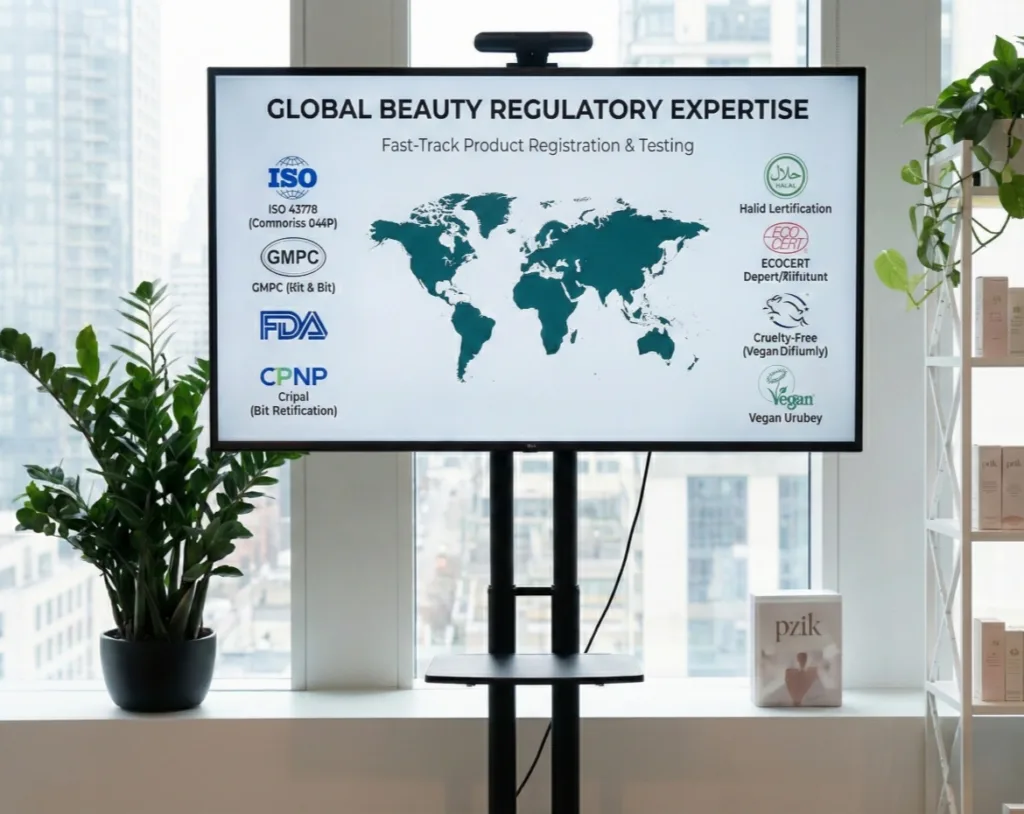
- Which international cosmetic regulations are your factory and products certified for? (e.g., ISO 22716:2007 GMP, FDA registration, EU compliant).
- Can you provide a sample of a Stability Study Report for a similar product?
- What is your standard lead time from confirmed order to delivery, and what are the payment terms?
Technical Specification Confirmation
- Request the exact composition (full ingredient list in INCI) and Material Safety Data Sheets (MSDS) for the base formula.
- Confirm the finished product’s weight tolerance (e.g., ± 0.1g) and dimensions.
- Define the peel adhesion strength range (in N/cm) and request test data from the pilot batch.
- Clarify packaging specifications: pouch seal strength, OTR (Oxygen Transmission Rate) if claimed to preserve actives.
Red Flags to Avoid
- Vague or Evasive Answers on Compliance: A reluctance to share certificates or testing reports is a major risk.
- Unrealistically Low Pricing: Deeply underpriced quotes often indicate lower-grade raw materials, lack of proper testing, or hidden costs.
- No Sampling Process or High Sampling Fees: Reputable manufacturers offer affordable sampling to prove their capability.
- Lack of Technical Support: If they cannot explain the function of different material choices, they are likely a trading company, not a manufacturer.
Comparison / Tips / FAQ
| Характеристика | Standard OEM Strip | Premium Custom Strip | Ideal Use Case |
|---|---|---|---|
| Key Actives | Salicylic Acid (1%), Charcoal | Salicylic Acid (2%) + BHAs, Copper Peptides, Botanical Extracts | Premium: Brand focusing on clinical, anti-aging, or sensitive skin claims. |
| Backing Material | Standard Nonwoven (25gsm) | Hydrophilic Blend (Cotton/Polyester), Softer Handfeel | Premium: Targeting comfort and a luxury experience. |
| Упаковка | Printed Foil Pouch | Custom Die-Cut Shape, Fully Printed Carton with Window | Custom: For strong shelf presence in retail or premium DTC unboxing. |
| Typical MOQ | 5,000 – 10,000 pcs | 20,000 – 50,000 pcs | Standard: For new brands testing the market. Custom: For established brands with proven demand. |
| Cost Per Unit (Est.) | $0.15 – $0.30 | $0.35 – $0.70+ | Aligns with your target retail price (typically 5x-10x COGS). |
Часто задаваемые вопросы
Q: How long does the entire OEM process take from initial inquiry to receiving goods?
A: A typical timeline is 8-12 weeks. This includes 2-3 weeks for sampling and approval, 4 weeks for production and QC, and 2-4 weeks for shipping (depending on destination and Incoterms). Custom tooling or complex packaging can extend this by 2-3 weeks.
Q: Can I make vegan or cruelty-free nose strips?
A: Yes. Ensure your formula uses synthetic or plant-derived polymers (not gelatin-based), plant-derived charcoal, and that the manufacturer does not test on animals. Request the supplier’s cruelty-free policy documentation.
Q: What are the most common quality defects I should inspect for in my order?
A: Inspect for inconsistent adhesive application (patchy areas), weak pouch seals leading to dried-out strips, misaligned printing on packaging, and deviation from the agreed strip weight and dimensions. AQL (Acceptable Quality Level) inspection is recommended for large orders.
Заключение
Sourcing OEM nose strips is a strategic investment. Success hinges on moving beyond generic retail product information and partnering with a manufacturer that provides transparent technical expertise. Focus on the material science behind the strip, verify compliance capabilities rigorously, and use a structured customization workflow. By understanding cost drivers like tooling and MOQs, you can make financially sound decisions that align with your brand stage—whether launching with a low-MQO trial or scaling a proven product with full custom branding.
Призыв к действию
If you are looking for a reliable OEM Cosmetics OEM/ODM Manufacturing & Private Label Skincare partner, PZIK provides:
- Over 10 years of cosmetic manufacturing expertise, serving global beauty brands
- Full customization capabilities from formula to finished packaging
- Fast sampling support with expert R&D guidance
- Export-ready packaging and comprehensive compliance support
📩 Email: sales@pzik.com
📱 WhatsApp: +1 3322600900


Добавить комментарий