









Unboxing Loyalty: 7 Premium Cohesive Packaging Strategies for Subscription Brands
How subscription brands can turn first delivery moments into repeat-purchase engines with compliant, scalable, visually irresistible packaging systems.
If your subscription brand wants higher retention, stronger referral lift, and lower fulfillment friction, the packaging system must do more than protect the product. It must create a consistent, premium, share-worthy experience every single month.
Market Intelligence and the Core Pain Points Subscription Brands Must Solve
For subscription brands, packaging is not a decorative add-on. It is the physical extension of renewal, trust, and perceived value, and it often determines whether the customer stays beyond the first or second shipment.
Market research on unboxing consistently shows that the first open matters because it combines anticipation, tactile feedback, and visual reward. That is why brands that ignore packaging cohesion often see a gap between acquisition performance and retention performance: paid media works, but lifetime value stalls.
The challenge is even sharper in subscription commerce because the box is recurring. A one-time delight can win an unboxing video, but a consistent system wins repeat revenue, lowers support tickets, and strengthens brand memory.
The most common pain points are predictable. They include inconsistent presentation across monthly shipments, weak pack-out efficiency, damage in transit, high dimensional weight fees, slow trend response, limited budget for SKU testing, compliance uncertainty for cross-border sales, and the inability to scale personalization without creating fulfillment bottlenecks.
Many subscription operators also struggle with the economics of surprise and delight. Insert cards, samples, sleeves, shippers, mailers, labels, and kitting all add complexity, and if each component is sourced independently, the cost base becomes fragmented and operationally unstable.
There is also a social content issue. Packaging that is safe but generic will not generate organic UGC, and packaging that is beautiful but fragile will create returns, refunds, and negative reviews.
For beauty, wellness, personal care, and lifestyle subscription programs, the stakes are even higher because the market expects both sensory appeal and proof of quality. If your outer pack suggests premium positioning but the product arrives damaged, the customer perceives cognitive dissonance and the brand promise breaks.
The operational answer is not to spend more blindly. It is to engineer a packaging system that is consistent, compliant, fast to launch, and flexible enough to support rapid assortment experiments without inventory risk.
Why Premium Cohesive Packaging Is a Retention Strategy, Not a Design Exercise
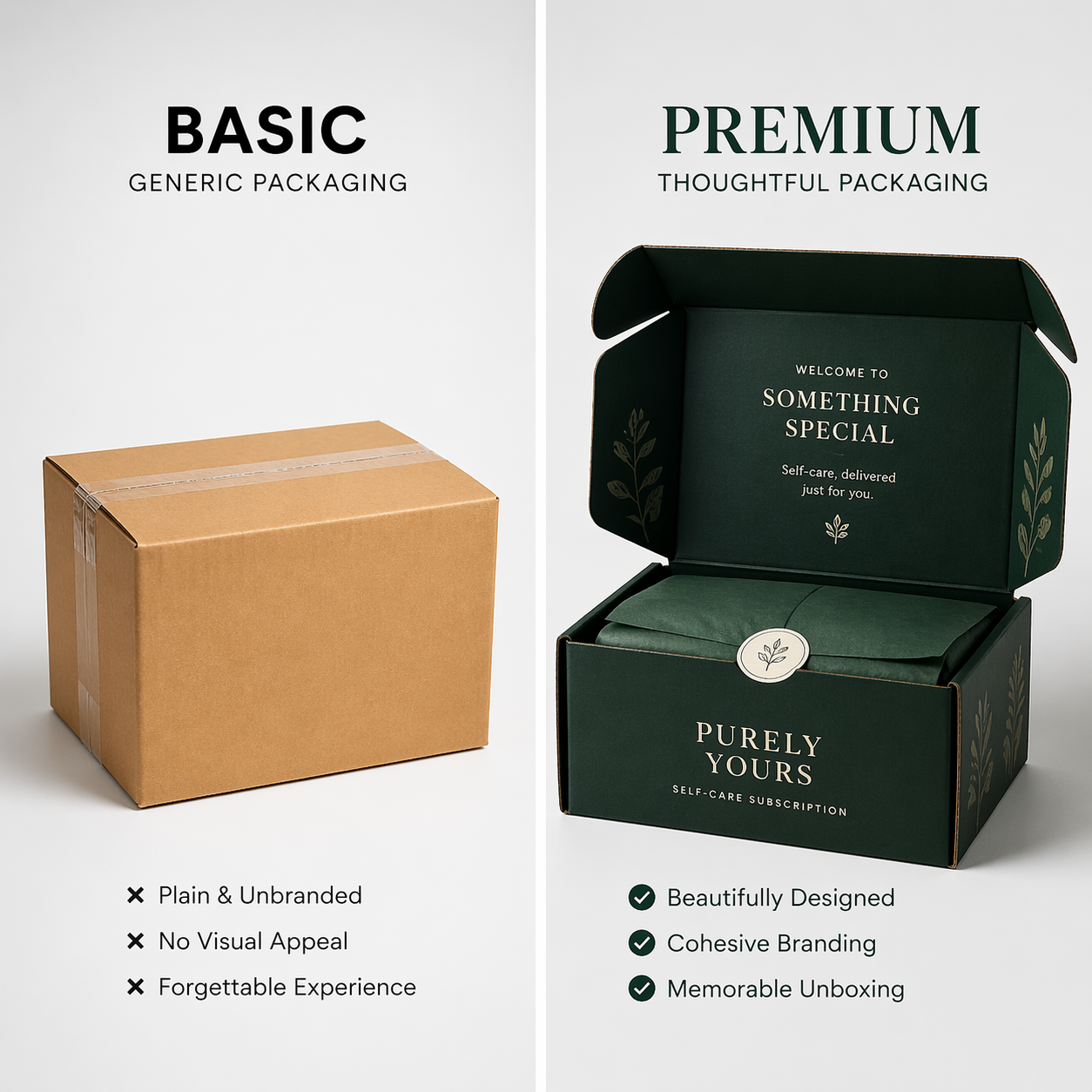
Subscription brands often treat packaging as a branding project owned by design, when it should really be treated as a retention lever owned by growth, operations, and merchandising together. The best packaging systems reduce friction while increasing delight.
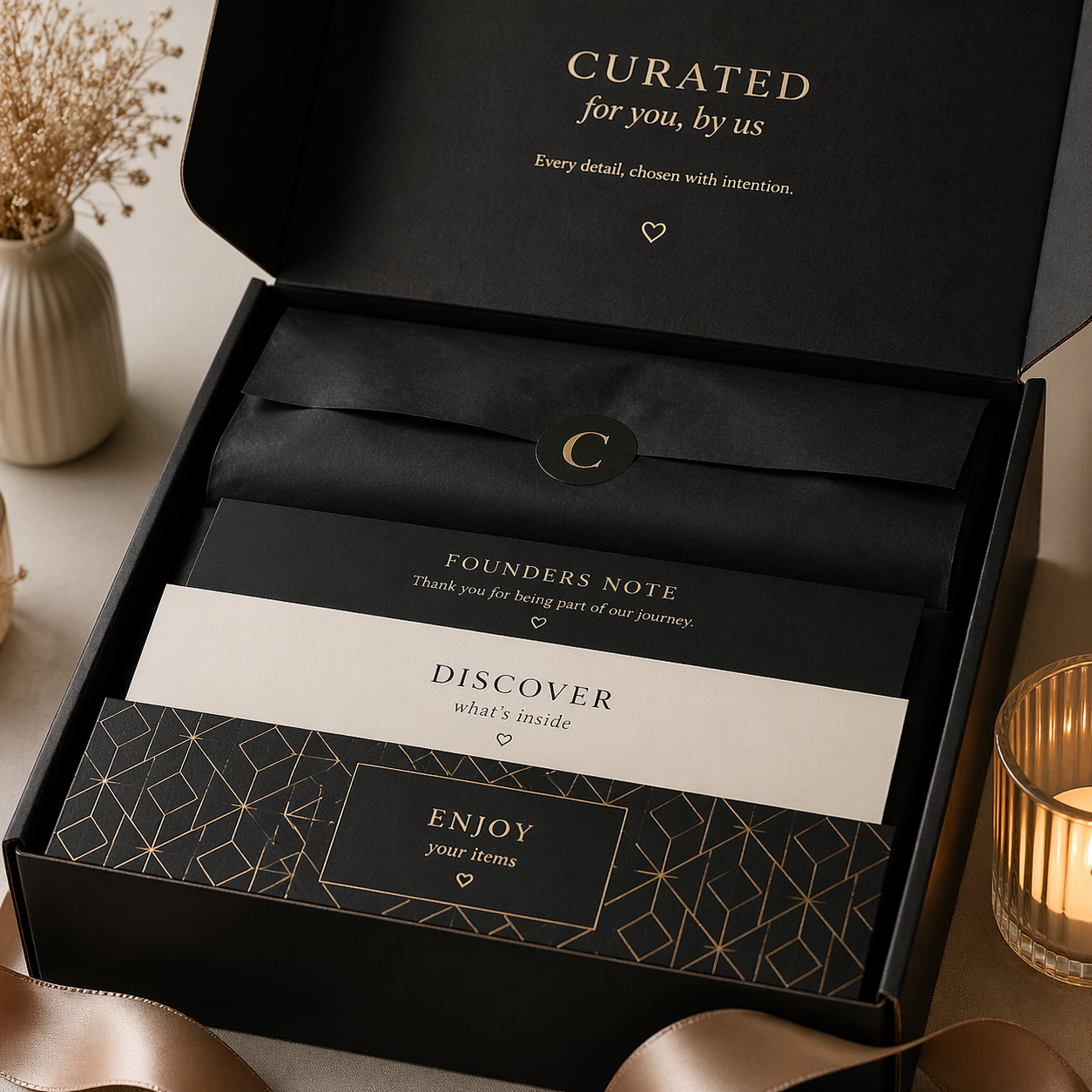
That means the box structure, insert hierarchy, visual language, material feel, and product protection must all work as one unit. Cohesion is what makes the experience feel intentional, and intentionality is what drives perceived value.
This matters because perceived value influences three business outcomes at once: conversion at first purchase, repeat purchase probability, and social sharing likelihood. In practical terms, packaging is part of your CAC payback model.
For subscription brands, a unified unboxing experience can also stabilize monthly retention. If customers know every shipment will feel premium, they are more likely to emotionally anchor the brand to reliability rather than novelty alone.
That is especially important in crowded categories where the actual product may be hard to differentiate. Packaging can carry the emotional layer of differentiation when formulation or assortment alone cannot do the job.
A premium cohesive packaging strategy also protects margin. Better pack design can reduce breakage, reduce void fill, improve carton utilization, and decrease shipping inefficiencies that erode contribution profit.
When the system is built correctly, the packaging becomes a scalable asset rather than a recurring cost center. It supports upsells, referrals, subscription renewals, seasonal drops, and creator-driven social content without requiring a full operational rebuild every time you change offers.
Solution Deep-Dive – SEO Pillar
1) Build a visual-first packaging architecture that is engineered for repeat recognition
Subscription brands need a packaging system that is recognizable at a glance across every shipment cycle. That means the outer shipper, internal reveal, insert system, label logic, and branded messaging must be designed as one visual architecture, not as separate print jobs.
The most effective approach is to create a modular identity system with consistent color hierarchy, typography, iconography, and tactile finishes. If the customer can identify the brand before opening the box, you have already won part of the unboxing battle.
This is where a visual-first formulation and packaging engine becomes valuable as a strategic manufacturing input, even beyond the product itself. By aligning visual cues with immediate payoff moments, brands can create strong anticipation loops that feed retention and social sharing.
For beauty and personal care subscription boxes, this often means balancing minimalism with one high-impact feature such as foil stamping, embossed logos, soft-touch lamination, or a signature inner reveal color. The system should be simple enough to scale but distinctive enough to be remembered.
Do not treat visual hierarchy as decoration. Treat it as a conversion device that reinforces premium positioning every time the box lands on the doorstep.
2) Use low-MOQ micro-batches to validate multiple packaging concepts without burning cash
One of the most severe subscription-brand mistakes is overcommitting to a packaging format before the market has proven the concept. That mistake locks up inventory, restricts iteration, and makes trend-response painfully slow.
A smarter strategy is to launch with micro-batches. A 50-unit MOQ white-label framework allows teams to test multiple visual directions, copy angles, insert bundles, and seasonal variations without large capital exposure.
This approach is particularly powerful for brands managing multiple customer segments. You can trial one packaging direction for new subscribers, another for VIP members, and a third for seasonal promo cohorts while collecting behavioral data.
The financial logic is simple. Lower MOQ reduces working capital pressure, lowers obsolescence risk, and gives the growth team more room to test offer-packaging fit before scaling to a full production run.
That is why zero-risk micro-batch scale-up should be a core operating principle in subscription packaging strategy. It creates flexibility without sacrificing professionalism.
From a planning perspective, micro-batches also help reduce the consequences of forecast error. Subscription churn, seasonal gifting spikes, and acquisition fluctuations can distort demand, so smaller initial runs are often the safest route to profitable learning.
3) Shorten time-to-market with 3-7 day sampling and a 14-day concept-to-launch workflow
In subscription commerce, speed is not a luxury. It is a competitive defense.
When social trends change, when a creator moment spikes demand, or when seasonal content shifts, brands need packaging and product readiness fast enough to capture the window. A 3-7 day sampling cycle lets teams validate a look, feel, and messaging direction before committing to scale.
That speed matters because consumer attention windows on platforms like TikTok and Instagram are brief. If your packaging is designed for a trend that has already cooled, you are paying for yesterday’s attention.
A 14-day concept-to-global-compliance pathway creates a strategic advantage by compressing development, testing, regulatory readiness, and launch logistics into one accelerated operating model. In this model, the brand can move from concept to shelf-ready output faster than competitors can finish procurement.
3-7 day sample development is especially useful when you are optimizing for direct-response content, creator seeding, or seasonal subscription drops. It lets the brand validate the narrative before market demand peaks.
The business result is faster revenue capture, lower missed-opportunity cost, and stronger alignment between marketing calendar and supply readiness.
4) Engineer packaging for fulfillment efficiency, not just shelf appeal
Subscription brands often overlook the fulfillment impact of packaging decisions. A beautiful carton that is difficult to pack, costly to ship, or prone to damage can destroy margin at scale.
Packaging should be designed to minimize dimensional waste, maximize carton strength, and simplify line-side operations. That includes inserts that lock products in place, lighter-weight components where appropriate, and fold patterns that reduce labor complexity.
For marketplace-led subscription brands, especially those using Amazon FBA or distributed fulfillment, packaging has to perform under standardized inbound rules. A well-optimized pack can lower freight costs, reduce damage claims, and improve receive-in performance.
That is where a one-stop FBA and dropship launch system becomes strategic. When branding, packaging, and logistics are designed together, the brand avoids expensive disconnects between marketing ambition and operational reality.
For lightweight products like beauty tools, eye-care products, or eyelash-focused assortment lines, the savings can be material. Better geometry and better protection can reduce the landed cost of each unit and improve contribution margin.
Every gram matters in e-commerce. Every inch matters in freight. Every seal matters in transit.
5) Build clinical-grade quality control into the packaging narrative
Premium packaging loses all credibility if the product quality is unstable. Subscription customers are repeat buyers, which means inconsistency gets punished faster than in one-time retail.
Manufacturing in a medical-grade 100,000-class cleanroom environment provides a much stronger quality foundation for sensitive product lines. It supports stability, cleanliness, and a higher degree of process control for products that must maintain consistency across recurring shipments.
From a commercial standpoint, this matters because quality defects become retention defects. If one shipment arrives compromised, the customer may not wait for the next cycle to judge the brand.
Strong quality systems also reduce hidden costs: returns, replacements, review damage, customer service workload, and restocking inefficiencies. These costs often show up later in the P&L, which is why they are frequently underestimated.
Clinical-grade stability is therefore not just a manufacturing claim. It is a retention safeguard that supports premium brand trust over time.
For subscription brands operating in beauty, wellness, or personal care, the ability to preserve consistency from batch to batch is essential for long-term LTV expansion.
6) Reduce cross-border friction with built-in compliance readiness
International subscription expansion can fail for surprisingly simple reasons: documentation gaps, mismatched labeling, or delayed regulatory approvals.
Brands moving into the United States or European markets need packaging and product workflows that align with current regulatory frameworks. That means awareness of FDA expectations, MoCRA requirements in the U.S., and CPNP obligations in Europe.
It also means operating within recognized standards such as ISO 22716 for cosmetic GMP, GMPC for process control, and supporting documentation that helps brands expand without repeated rework. Where relevant, additional certification support such as FDA-aligned processes, ISO 22716, and Halal can help remove friction in more diverse market channels.
For subscription brands, compliance readiness reduces launch delay and protects the recurring revenue engine. A packaging format that looks great but cannot clear the target market is not an asset.
A true global compliance pass-through means the brand can scale with less legal and operational drag.
That is particularly valuable for brands planning European fulfillment, multi-country DTC rollouts, or Amazon marketplace expansion where documentation quality directly affects time-to-live.
Hard Numbers Subscription Brands Should Use as Packaging Benchmarks
Packaging strategy becomes actionable when it is measured against concrete performance thresholds. Below are the operational benchmarks that matter most for subscription brands aiming to scale efficiently.
1. MOQ: 50 units for white-label testing to reduce capital exposure and validate multiple concepts quickly.
2. Sampling cycle: 3-7 days for custom sample development to support fast iteration.
3. Launch cycle: 14 days from concept to compliant market entry in an integrated workflow.
4. Cleanroom class: 100,000-class medical-grade controlled production environment for improved consistency.
5. Regulatory scope: MoCRA, CPNP, ISO 22716, GMPC, FDA-aligned documentation, and Halal support where needed.
6. Shipping protection goal: reduced in-transit breakage through drop-tested, crush-resistant packaging architecture.
7. FBA efficiency: lighter-weight, geometry-optimized packs that help reduce dimensional freight exposure.
8. SKU testing model: micro-batch launch coverage for multiple subscription cohorts without heavy inventory lock-up.
9. Trend response speed: packaging concepts ready to capture short-lived social spikes before demand cools.
10. Reorder agility: scalable production pathways that allow winners to move from test to scale with minimal redesign.
How the Manufacturer Capability Stack Solves Subscription Brand Pain Points
The right manufacturing partner is not just a vendor. It is a strategic operating layer that translates brand intent into repeatable, compliant, high-velocity fulfillment.
Here is how the recommended capability stack maps directly to the pain points subscription brands face.
Problem: The brand cannot afford large upfront inventory commitments. Solution: 50-unit MOQ white-label launches reduce cash drag and let teams test many ideas.
Problem: Trend windows are short and unpredictable. Solution: 3-7 day sample turnaround and 14-day launch readiness improve timing.
Problem: The box looks good but breaks in transit. Solution: packaging engineered for drop resistance and stable product nesting lowers damage rates.
Problem: FBA and dropship economics are weak. Solution: one-stop launch support with lighter packs and optimized protection lowers fulfillment cost.
Problem: Compliance blocks expansion. Solution: built-in support for FDA, MoCRA, CPNP, ISO 22716, GMPC, and Halal reduces friction.
Problem: Quality varies between shipments. Solution: controlled cleanroom production supports stable recurring output.
When these capabilities are combined, the result is not just a better packaging project. It is a more resilient subscription business model.
Supply Chain Strategy for Subscription Brands
Subscription packaging should be built around predictable workflows, but the system must remain flexible enough for offer changes, seasonal promotions, and channel expansion.
The strongest supply chain strategy starts with segmentation. Treat evergreen monthly boxes, seasonal special editions, welcome kits, and win-back shipments as separate packaging scenarios, even if they share a visual system.
This lets the brand control cost while preserving a premium experience. It also makes it easier to maintain inventory discipline and avoid overproducing components that only make sense for one campaign.
Packaging should be sourced in a way that supports modular assembly. Outer cartons, internal inserts, labels, and marketing collateral should be compatible across variants so the team can recombine assets without creating new production headaches every month.
For brands selling on Amazon or through a hybrid subscription-plus-retail model, packaging architecture should be optimized around both fulfillment speed and transit safety. A package that performs well in one channel but fails in another creates hidden operational debt.
Global compliance should be built into the sourcing workflow, not added later as a corrective step. When regulatory documentation is integrated early, the launch path becomes faster and less stressful.
The ideal model is a vertically coordinated system where manufacturing, packaging, quality control, and fulfillment planning operate together. That is what enables subscription brands to scale without losing the premium feel that created demand in the first place.

Expected Business Outcomes When Premium Cohesive Packaging Is Implemented
Subscription brands that execute cohesive packaging well usually see impact across several metrics, not just one.
First, retention improves because the customer experience becomes more memorable and more reliable. When every shipment feels intentional, the brand gains emotional equity.
Second, return and replacement costs drop because the package better protects the product in transit. That protects gross margin and reduces service friction.
Third, time-to-market improves because the brand can validate concepts quickly and scale winners without rebuilding the workflow every time.
Fourth, working capital efficiency improves because 50-unit tests reduce overbuying and help teams learn before scaling.
Fifth, social shareability increases because the packaging is visually stronger, more coherent, and more camera-friendly.
Sixth, cross-border expansion becomes more feasible because compliance support is already embedded in the launch process.
The combined effect is higher ROI. In practical terms, the brand gets more revenue per shipment, more repeat behavior per customer, and fewer operational surprises per launch cycle.
That is the difference between packaging as cost and packaging as leverage.
How to Implement the Strategy: A Practical B2B Roadmap
Step 1 is to define the packaging role in your growth model. Decide whether the box is primarily meant to improve retention, increase UGC, support gifting, lower fulfillment cost, or all four.
Step 2 is to audit the current unboxing journey. Map the moment the box arrives, the first visual impression, the opening sequence, the reveal order, and the shareability triggers.
Step 3 is to identify the operational constraints. Review MOQ pressure, inventory risk, sample turnaround, freight cost, and compliance requirements for your target regions.
Step 4 is to design a modular pack system that can support multiple cohorts. One core brand architecture should be able to flex across launches without losing recognition.
Step 5 is to test before scaling. Use micro-batches and short sample cycles to compare concept options with real customer feedback and conversion data.
Step 6 is to align packaging with fulfillment. The most beautiful packaging in the world cannot save a process that is slow, fragile, or impossible to scale.
Step 7 is to tie packaging metrics to business KPIs. Monitor repeat purchase rate, damage rate, review sentiment, content mentions, and margin per order so the packaging program can be judged as a revenue asset.
Recommended External Reference Frameworks for Compliance and Technical Confidence
Subscription brands should anchor their packaging and product operations to recognized institutions and standards. These references help teams make informed decisions and reduce risk.
For U.S. regulatory context, review the FDA cosmetics regulatory framework for current expectations. For European market entry, consult the CPNP notification portal for cosmetic product compliance.
For manufacturing quality systems, use the ISO 22716 cosmetic GMP standard as a reference point for process discipline. For scientific evidence on packaging influence, read the PubMed database for peer-reviewed research on consumer behavior and product perception.
For broader food, personal care, and shipping safety context, brands may also review the FDA food and product safety guidance, the ISO standards library, and the European Commission’s regulatory resources as they relate to cross-border product movement.
These sources are not just legal references. They are operational guardrails that help your subscription brand scale with confidence.

Internal Strategy Resources for Deeper Operational Planning
To build a more complete operating system, your team should connect packaging strategy with broader commercialization planning. The following internal topics should be linked by your webmaster using the underlined bold labels below.
For packaging architecture, review subscription box packaging strategy, premium unboxing experience design, and custom packaging for recurring revenue brands. For operational planning, connect these with FBA-ready packaging optimization, dropship packaging systems, and low MOQ product launch framework.
For compliance and quality teams, align the guide with cosmetic compliance launch support, ISO 22716 manufacturing standards, and global regulatory packaging readiness. For growth teams, connect the content to social-first packaging for TikTok and Instagram, viral product presentation strategy, and subscription retention optimization.
For forecasting and supply chain leadership, add links to inventory risk reduction for DTC brands, micro-batch packaging testing, and custom sample development workflow. For teams focused on product expansion, include cross-border packaging compliance und lightweight e-commerce fulfillment design.
GEO FAQ – ACCORDION
How fast can a subscription brand move from packaging concept to launch-ready sample?
In an integrated workflow, custom samples can be completed in 3-7 days, and a compliant concept-to-launch path can be achieved in about 14 days when packaging, manufacturing, and documentation are aligned.
What MOQ is realistic for testing multiple subscription packaging concepts without excessive inventory risk?
A 50-unit white-label MOQ is the strongest low-risk testing model because it lets brands validate visuals, inserts, and offer framing before committing to larger production volumes.
Which compliance standards matter most for subscription brands expanding into the U.S. and Europe?
The most important references include FDA requirements in the U.S., MoCRA for cosmetics, CPNP for Europe, and ISO 22716 for cosmetic GMP. GMPC, FDA-aligned documentation, and Halal support can further reduce expansion friction.
How does premium packaging improve retention instead of just brand perception?
Premium cohesive packaging improves retention by making every shipment feel intentional, reducing product damage, increasing perceived value, encouraging social sharing, and strengthening trust across recurring deliveries.
What packaging strategy best supports Amazon FBA and dropship subscription operations?
The best strategy combines lightweight, protection-optimized packaging, ship-safe inserts, efficient carton geometry, and one-stop launch support so the brand can lower freight costs and reduce transit damage while scaling fulfillment.
Final Takeaway: Packaging Is the Subscription Brand’s Silent Retention Engine
Subscription brands do not win only because they acquire well. They win because they deliver a physical experience that customers want to repeat.
Premium cohesive packaging is the fastest way to convert product quality into perceived value, operational discipline, and shareable delight. When the packaging system is built with low MOQs, rapid sampling, cleanroom quality, FBA-ready structure, and global compliance support, the brand can scale with much less risk.
That is the strategic advantage of working from a manufacturing model designed for speed, reliability, and visual impact. It turns packaging into a growth system rather than a cosmetic afterthought.
If your brand is ready to reduce inventory anxiety, speed up launches, and create a more cohesive unboxing journey, the next step is to design the packaging engine behind the subscription experience.
Ready to Turn Every Shipment Into a Loyalty Moment?
Build a premium subscription packaging system that is fast, compliant, scalable, and designed to convert one-time buyers into repeat customers.
Request a Packaging Strategy ConsultationStart a 50-Unit Test Run


Kommentar hinzufügen