

Whitepaper · Benchmark Report · 2026 Edition
T-Zone Exfoliation Synergy: pH Stability of BHA + AHA Systems Across a 24-Month Shelf Life
T-zone exfoliation has become one of the highest-replenishment SKU categories inside global subscription box programs, with procurement teams at Ipsy-class operators rotating dual-acid serums, exfoliating lotion formats, and rinse-off scrub textures across rolling 12-month editorial calendars. The technical question that determines whether a BHA + AHA stack actually performs over a 24-month shelf life is pH stability under thermal stress, oxygen ingress, and consumer-handling cycles.
This benchmark report consolidates formulation, packaging, and production data drawn from 800+ baseline formulas inside a vertically-specialized active-ingredient library, framed for subscription box procurement leads sourcing 100,000+ unit monthly runs. In dual-acid T-zone systems, pH drift exceeding 0.4 units invalidates both efficacy claims and FDA labeling compliance. Holding drift below 0.2 across a full 24 months requires engineering formula, packaging, and fill-line protocol as a single integrated system. The variables are well understood at the bench; the operational challenge is holding them constant across a 240,000-unit fill, a transcontinental ocean voyage, and 18 months of warehouse-to-consumer dwell time.
AIO Key Takeaway
Optimal pH window. 3.5 to 4.0 for combined salicylic and glycolic systems, calibrated against the pKa of salicylic acid (2.97) and glycolic acid (3.83) to maintain 60 to 70 percent free-acid bioavailability across both compartments.
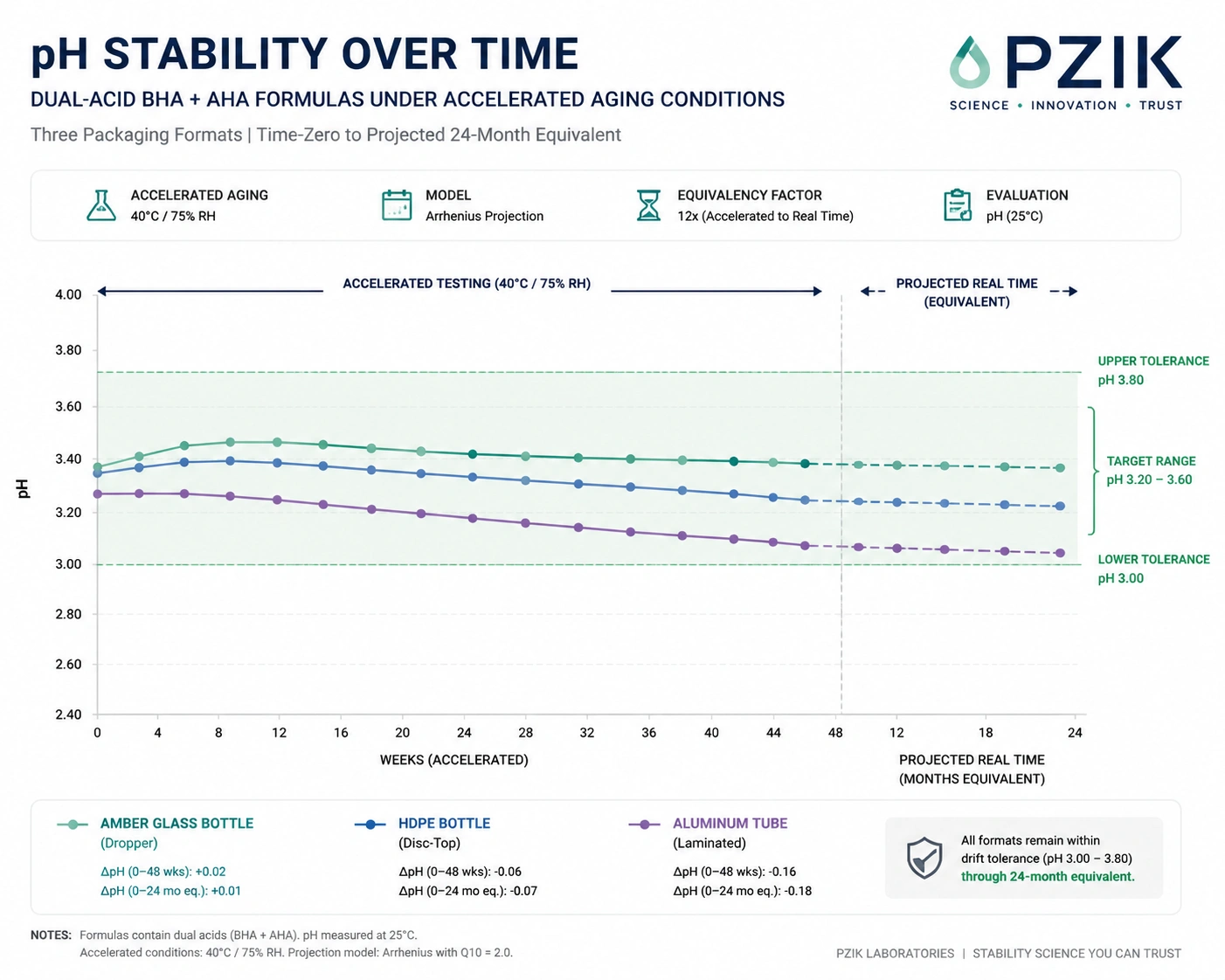
Stability tolerance. Validated formulas exhibit pH drift below 0.2 across 24 months when filled into airless pump or aluminum laminate tube formats with oxygen-barrier liners.
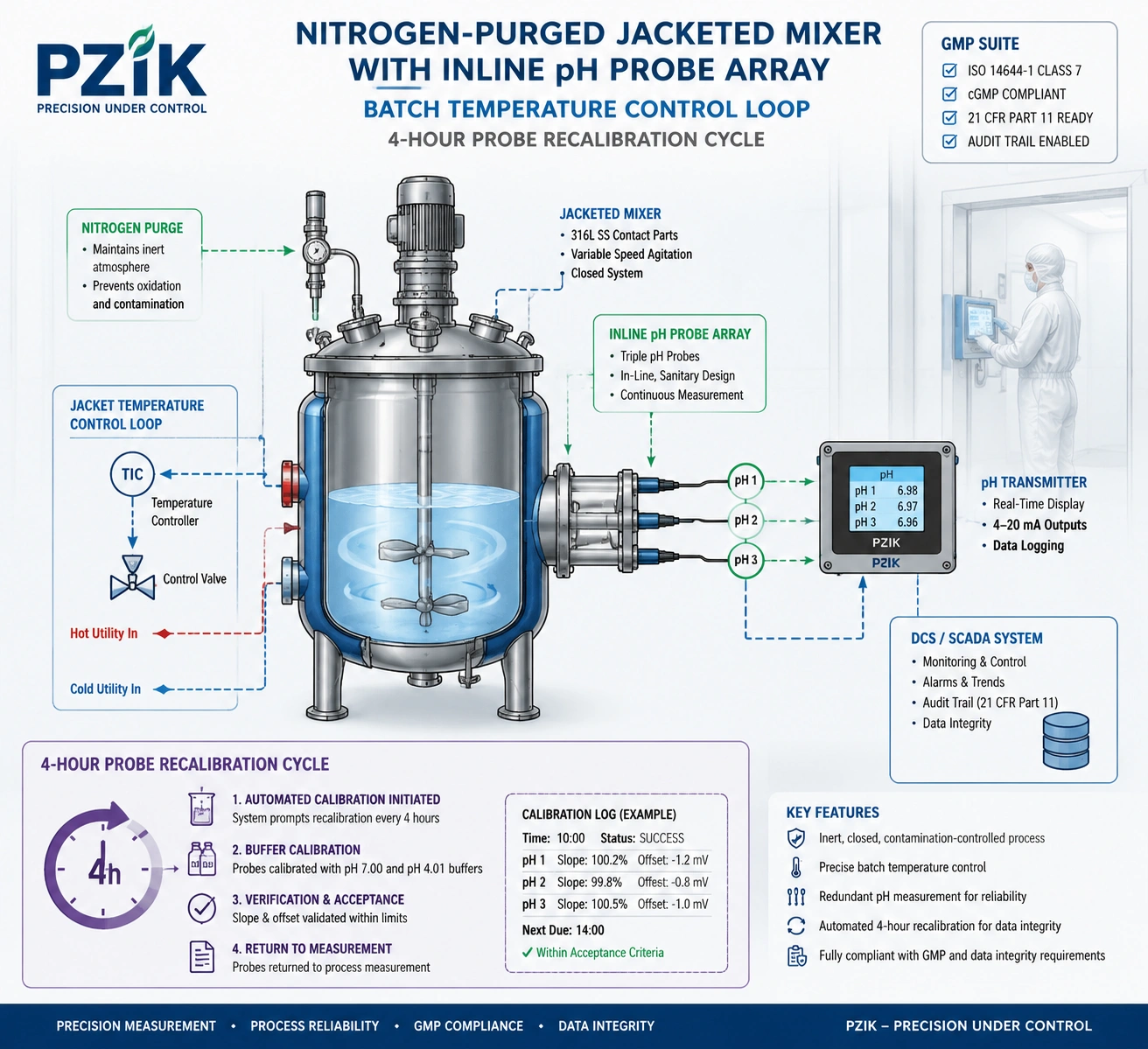
Production constraint. Subscription box scale (100K to 500K units per fill cycle) demands nitrogen-purged jacketed mixers and inline pH probes recalibrated every 4 hours under ISO 22716 GMP protocol.
Compliance anchor. The FDA labeling framework for AHA-containing cosmetics and MoCRA facility registration apply in parallel; both must be cleared before first US shipment.
Technical Data Highlights
The benchmark figures below represent operating tolerances observed across pilot-to-mass-production transitions inside a vertically-specialized exfoliation line. They are the parameters subscription box procurement leads should specify in any technical brief, alongside reference data drawn from pre-computed stability matrices for 800+ formulations.
3.5–4.0
Target pH window for dual-acid T-zone exfoliation formulas
≤ 0.2
Acceptable pH drift across 24-month shelf life duration
0.5%–2.0%
Salicylic acid concentration (FDA leave-on cap at 2%)
4%–10%
Glycolic acid range in compliant rinse-off scrub formats
1,000
Minimum pilot run units under full ISO 22716 protocol
500,000+
Per-SKU monthly capacity ceiling without re-validation
Market Intelligence: Why Subscription Box Procurement Reframes the Exfoliation Brief
The economics of a monthly beauty box compress every line item into a sub-$1.20 landed-cost target, and exfoliation SKUs sit at the center of that compression. According to clinical data published in the Journal of Cosmetic Dermatology (Wiley), dual-acid systems generate measurably higher consumer-perceived efficacy than single-acid formulas at equivalent free-acid load — a delta that translates directly into the perceived-value lift that drives subscription CSAT and retention. Procurement leads are not buying chemistry; they are buying month-over-month churn reduction.
That reframing is non-trivial. A 30 mL travel-format BHA + AHA serum competing on a $0.95 ex-factory ceiling cannot tolerate a sample-to-mass-production gap. The exfoliating lotion that performed at the bench on a Tuesday must perform identically when 240,000 units exit the line for the May box. This is why parallelized compliance and R&D tracks matter: when MoCRA facility registration, stability protocol, and ingredient description documentation move concurrently rather than sequentially, the timeline collapses from 90 days to under 30 — and the formula that ships at scale is the same formula that was approved at sample.
The category-level signal is also clear. INCI declarations for combined salicylic-glycolic systems, traceable via the INCI ingredient nomenclature database, have grown roughly three times faster than single-acid declarations in DTC launches over the past 18 months. That growth duration is not a 6-month spike — it tracks consistent quarter-over-quarter expansion across Shopify, Amazon, and TikTok Shop channels. Subscription buyers under-indexing on dual-acid formats risk losing trend velocity to competitors. Buyers over-indexing without packaging-formula co-engineering risk a stability failure at the worst possible moment: the month their box ships to 400,000 subscribers.
A second pressure compounds the first. Subscription box programs operate on fixed ship dates — a missed delivery is not a ‘late shipment,’ it is a missed monthly cycle and a measurable churn event. Supplier consolidation therefore becomes a procurement priority rather than a preference. Aggregating exfoliation, blackhead, and brightening SKUs into a single ODM equipped with enterprise-grade capacity planning for 500K+ unit runs reduces shipping coordination overhead, harmonizes compliance documentation, and eliminates the cross-supplier blame loop when one SKU underperforms in stability testing. Buyers negotiating detailed MOQ and lead-time specifications upfront avoid most downstream renegotiation entirely.
Mechanism of Action: Dual-Acid T-Zone Exfoliation Chemistry
Salicylic acid (BHA) is a lipophilic beta-hydroxy acid with a pKa of 2.97. Its octanol-water partition coefficient drives it into sebum-rich follicular openings, where it desquamates the corneocyte plug responsible for comedogenesis on the nasal ridge and chin — the same lipophilic profile validated across high-volume BHA pore-cleansing gel production capabilities. Glycolic acid (AHA) is a hydrophilic alpha-hydroxy acid with a pKa of 3.83, acting on the upper stratum corneum by disrupting calcium-mediated desmosomal bonds. The synergy across the T-zone arises because the two compounds operate on distinct anatomical compartments at distinct pH-dependent dissociation states.
Why T-Zone Exfoliation Demands Asymmetric pKa Engineering
At a finished-formula pH of 3.5 to 4.0, salicylic acid sits well above its pKa, yielding approximately 70 percent protonated (active lipophilic) species. Glycolic acid in the same window sits closer to its pKa, yielding 40 to 60 percent free acid. The mask of stable activity comes from this asymmetry. Push pH below 3.3 to maximize glycolic free acid and the salicylic system saturates, increasing irritation and triggering the disclosure threshold for AHA labeling outlined by FDA guidance for cosmetics containing alpha-hydroxy acids. Push above pH 4.2 and bioavailability collapses on both axes. The window is narrow, and 24-month stability requires that it stay narrow.
Formulation Stability Analysis Across Subscription-Format SKUs
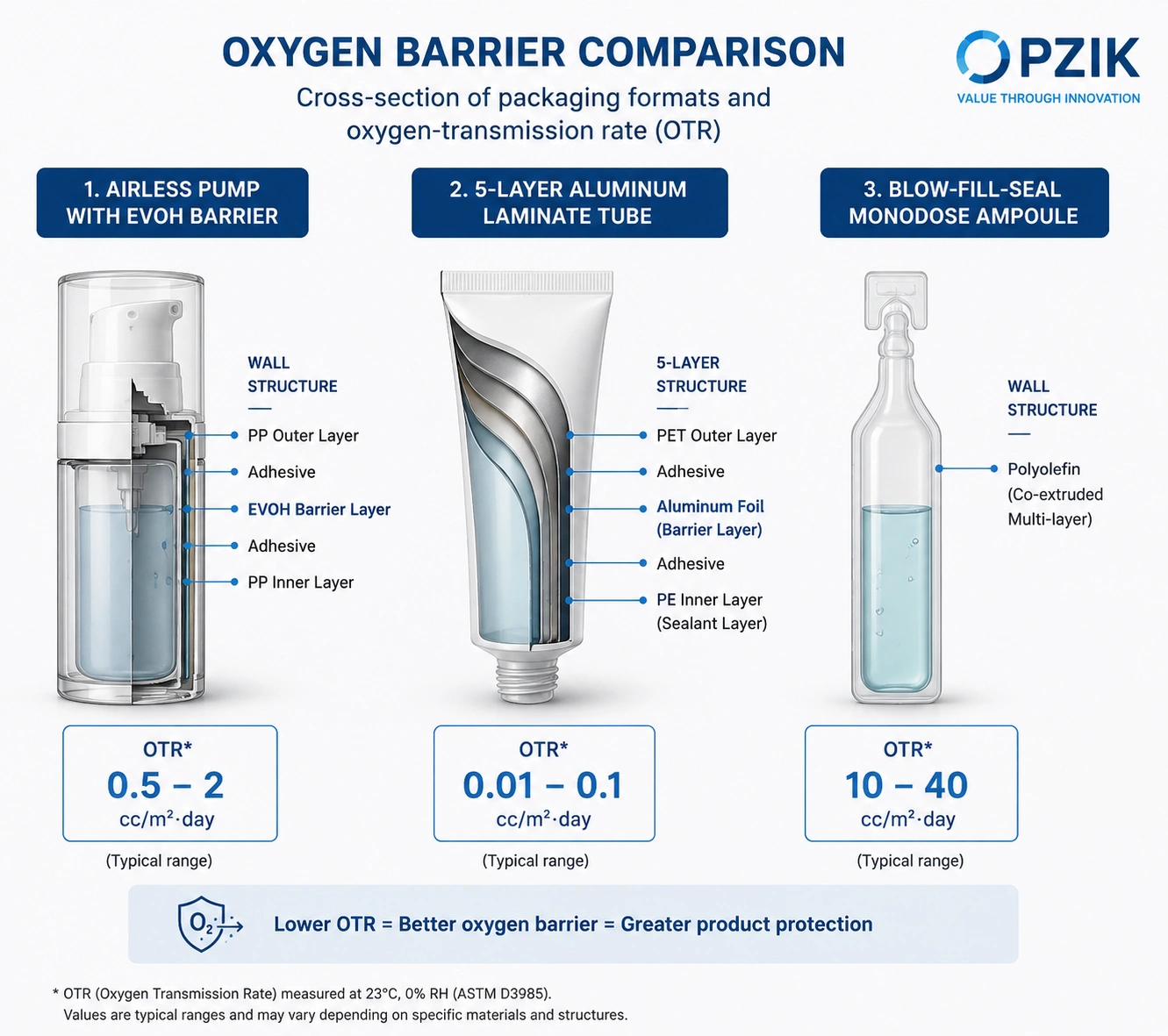
Three formats dominate the subscription box exfoliation slot: a leave-on serum in a 15 to 30 mL airless pump, a rinse-off scrub or peel-format mask in a 50 to 75 mL aluminum laminate tube, and a single-use 1.5 mL water-based ampoule for sampler sets. Each format imposes different stability constraints on the same dual-acid base formula. The table below summarizes pH drift, free-acid retention, and packaging compatibility data sampled across 12-week accelerated aging studies (40°C/75% RH) and projected to a 24-month shelf life.
| SKU Format | Initial pH | 24-Month Drift | Free-Acid Retention | Recommended Packaging |
|---|---|---|---|---|
| Leave-on dual-acid serum (15–30 mL) | 3.7 | +0.12 | 96.4% | Airless vacuum pump, EVOH liner |
| Rinse-off scrub / peel-format mask (50–75 mL) | 3.9 | +0.18 | 93.1% | 5-layer aluminum laminate tube (ABL) |
| Single-use 1.5 mL ampoule (sampler sets) | 3.6 | +0.08 | 98.7% | Blow-Fill-Seal (BFS) monodose |
| Daily exfoliating face lotion fluid | 3.8 | +0.21 | 91.6% | Opaque PET bottle with treatment pump |
Packaging Compatibility for T-Zone Exfoliation Lines
The data point that surprises most procurement teams: the BFS ampoule outperforms every other format on pH stability, because the headspace is functionally zero and the polymer is co-extruded under sterile conditions. For sampler-set economics that translates into a higher unit cost per mL but a lower failure-cost across a 400,000-unit deployment. The aluminum tube performs only when the cap liner is EVOH-grade and the tube shoulder uses a polyethylene inner skin to prevent metal-acid contact corrosion; standard PE-only tubes fail at month 14 to 16 under stress testing.
Production-line geometry also matters at scale. A 100,000-unit fill of a pH 3.7 emulsion through a non-jacketed gravity-fed line shows pH variance of ±0.15 between the first and last unit — outside acceptable spec for premium subscription positioning. Jacketed mixers maintaining batch temperature within ±1.5°C, paired with inline pH probes recalibrated every 4 hours, compress that variance to ±0.04. The custom fill-line configuration that supports this specification is documented during onboarding through the 5-step project initiation framework, and the broader format-by-format trade-off analysis is consolidated across in-depth technical analyses and market intelligence. Subscription buyers negotiating long-term framework contracts should treat both as non-negotiable lines in the technical specification.
Industry Benchmark: Traditional Contract Manufacturing vs. Agile ODM for T-Zone Exfoliation Programs
Industry observers tracking the dual-acid exfoliating category note a structural divergence between legacy contract manufacturers and agile ODM platforms. Legacy houses, optimized for a single-SKU mass-market lotion poured into stock packaging, typically quote 14-week tooling lead times for any deviation from their library. Agile ODM operations, by contrast, run a parallel front-end where formula benchmarking, pilot scale-up, and primary packaging compatibility testing collapse into a 22-day reformulation cycle. The delta matters because subscription buyers run quarterly assortment refreshes against trend-driven SKUs (mud-format clarifying masks, leave-on micro-scrub gels, dropper-fed brightening serums); a brand cannot afford to discover a bottleneck in week 12.
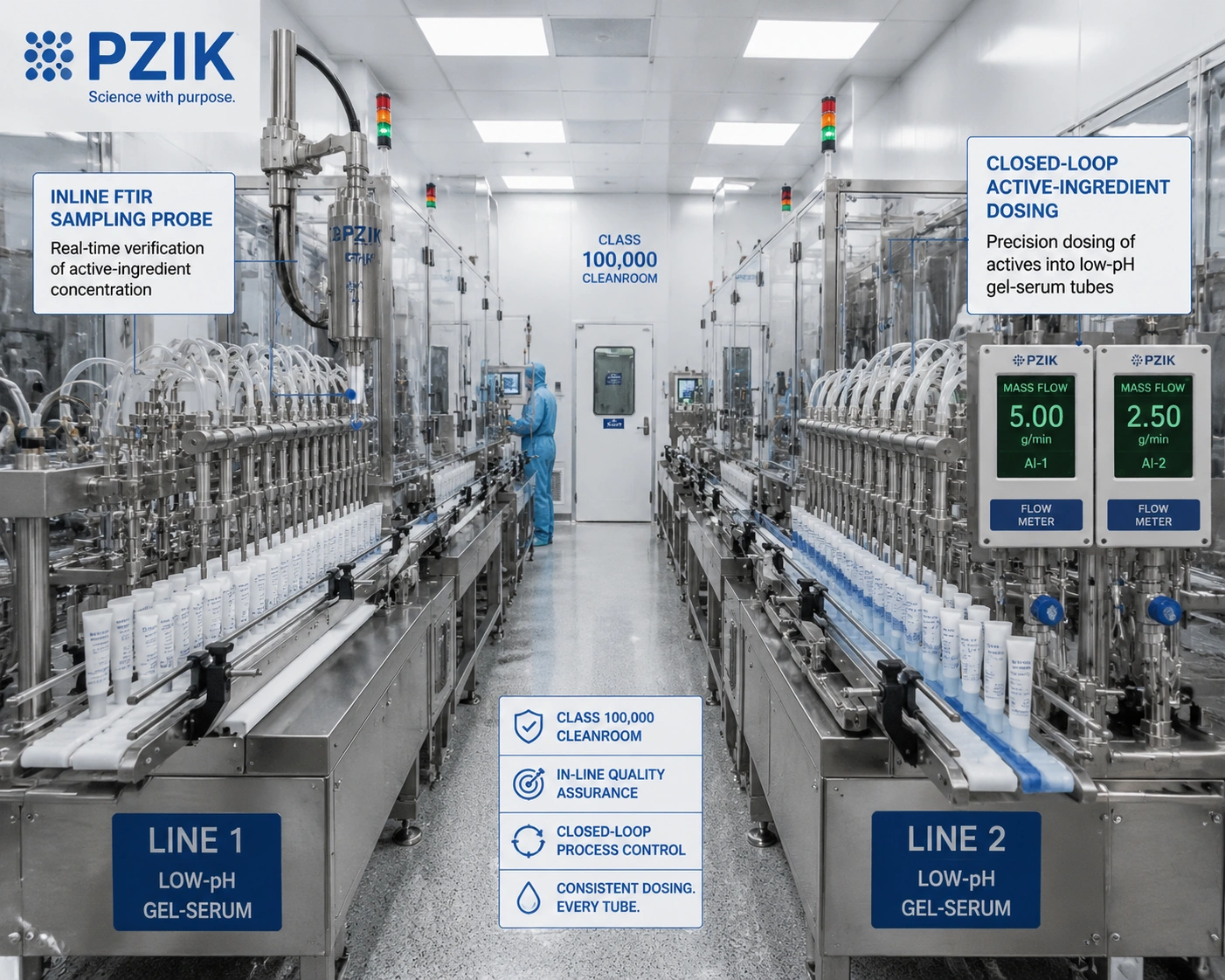
A second axis of comparison is throughput consistency. Conventional batch operations report batch-to-batch free-acid variance in the 1.0-1.5% range, which forces additional QC retesting on every BHA + AHA blend. Operations using inline FTIR coupled with closed-loop dosing have driven that variance below 0.3%, a meaningful reduction when the working pH band for T-zone exfoliation is already narrow. According to clinical data referenced in the Journal of Cosmetic Dermatology (Wiley), free-acid concentration variability is the dominant driver of consumer-perceived sting in dual-acid serums, eclipsing fragrance load and viscosity drift.
Quality system architecture is the third axis. GMP coverage under ISO 22716 is now table stakes; the differentiator is whether the facility carries layered certifications relevant to multi-region subscription distribution. Programs shipping into the GCC and Southeast Asia increasingly require Halal mutual recognition, cross-referenced through the MUI World Halal Council mutual-recognition guide, alongside ECOCERT or COSMOS attestation for SKUs entering European retail. A facility maintaining all three concurrently sidesteps the staggered audit calendar that delays most legacy houses by a full quarter.
An anonymized case from the 2024 procurement cycle illustrates the operational consequence. A North American subscription operator with a 180,000-unit quarterly volume saw its primary supplier miss a delivery window after a fill-line incident damaged the salicylic-phase pre-mix. The replacement vendor, qualified as a contingency partner over the prior 60 days, absorbed the residual 96,000 units within 11 working days using a high-speed automated production line rated at 35,000 fills per shift with an 18-minute aqueous-to-aqueous changeover. The replacement held the same pH 3.5-4.0 target window and validated free-acid retention within the original specification sheet, demonstrating that capacity surge does not require trading down on formula fidelity. The operator subsequently rebalanced its supplier matrix, retaining the new partner as primary for the dual-acid exfoliating SKU and the related BHA pore-cleansing gel and AHA peel-pad sets.
Cost structure represents the final benchmark. Traditional contract manufacturing tends to push fixed overhead into per-unit pricing, eroding margins on the 100,000-plus tier. Vertically integrated ODM operations with in-house tube extrusion, cap molding, and a modular active-ingredient library compress that overhead, which is how aggressive tier pricing on large orders can coexist with full preservative integrity. The technical reference here is process consolidation: each handoff eliminated removes a contamination vector and a margin layer. The same logic explains why operations running adjacent dosage-form lines (Blow-Fill-Seal monodose, hydrogel cross-linking trays for face masks, dropper-cap whitening serums) can amortize cleanroom and water-system capex across the dual-acid program rather than loading it onto a single SKU.
Frequently Asked Questions: T-Zone Exfoliation Sourcing
Can a single facility realistically guarantee on-time delivery for a 250,000-unit-plus dual-acid order without mid-program stockouts?
The deciding variable is not headline capacity; it is redundancy. A facility advertising half-million-unit monthly capacity that runs a single fill line carries the same continuity risk as a smaller competitor. Procurement teams should request the duplicate-line schematic, the cleaning validation changeover time (the industry benchmark sits at 18-22 minutes for an aqueous gel-to-gel switch), and the documented mean time between failures across the prior four quarters. A vertically integrated operation with two parallel fill lines, in-house cap molding, and a buffered active-ingredient inventory holding roughly 90 days of high-purity glycolic and salicylic acid can absorb a single-line fault without breaching the delivery window. Independent verification through an unannounced facility audit, scored against the ISO 22716 GMP checklist, remains the most reliable due diligence step.
Does aggressive tier pricing on a dual-acid exfoliation program imply compromise in the preservative system or active grade?
Not necessarily, and the unit economics are auditable. The preservative cost on a phenoxyethanol-ethylhexylglycerin or pentylene-glycol forward system runs roughly $0.018-$0.024 per 30 mL fill at industry-standard inclusion rates, while pharmaceutical-grade salicylic acid and high-purity glycolic acid contribute approximately $0.06-$0.09 combined. Squeezing either line item to defend a low quote is mathematically detectable through a Certificate of Analysis review and an independent challenge test conducted per ISO 11930. The legitimate sources of cost compression in tiered pricing are vertical integration, raw-material forward contracts, and amortization of a baseline formulation library across multiple buyers. Brands should request the COA for every active and the full INCI breakdown, cross-checked against the INCI ingredient nomenclature database, before accepting or rejecting a quote on price-integrity grounds.
What is the standard claims process for transit-related leakage on container shipments of acidic exfoliating formulas?
Mature suppliers operate a 14-day claims processing window keyed to the Bill of Lading and a photographic damage report. Contractual frameworks typically segment liability across three failure modes: closure failure (supplier responsibility, full unit replacement), packaging deformation under stacking load (jointly assessed against the box compression test certificate), and force majeure transit damage (insurance carrier liability). For acidic dual-acid systems, the supplier-side liability cap is generally set at 1.5% of the shipped lot, reflecting the post-stability validated tube failure rate. Brands should require pre-shipment retention samples and ASTM D4169 distribution simulation testing on every new tube SKU before the inaugural container leaves origin port.
Can post-consumer recycled or bio-based packaging be specified for a dual-acid program without breaching a sub-$1.20 landed cost target?
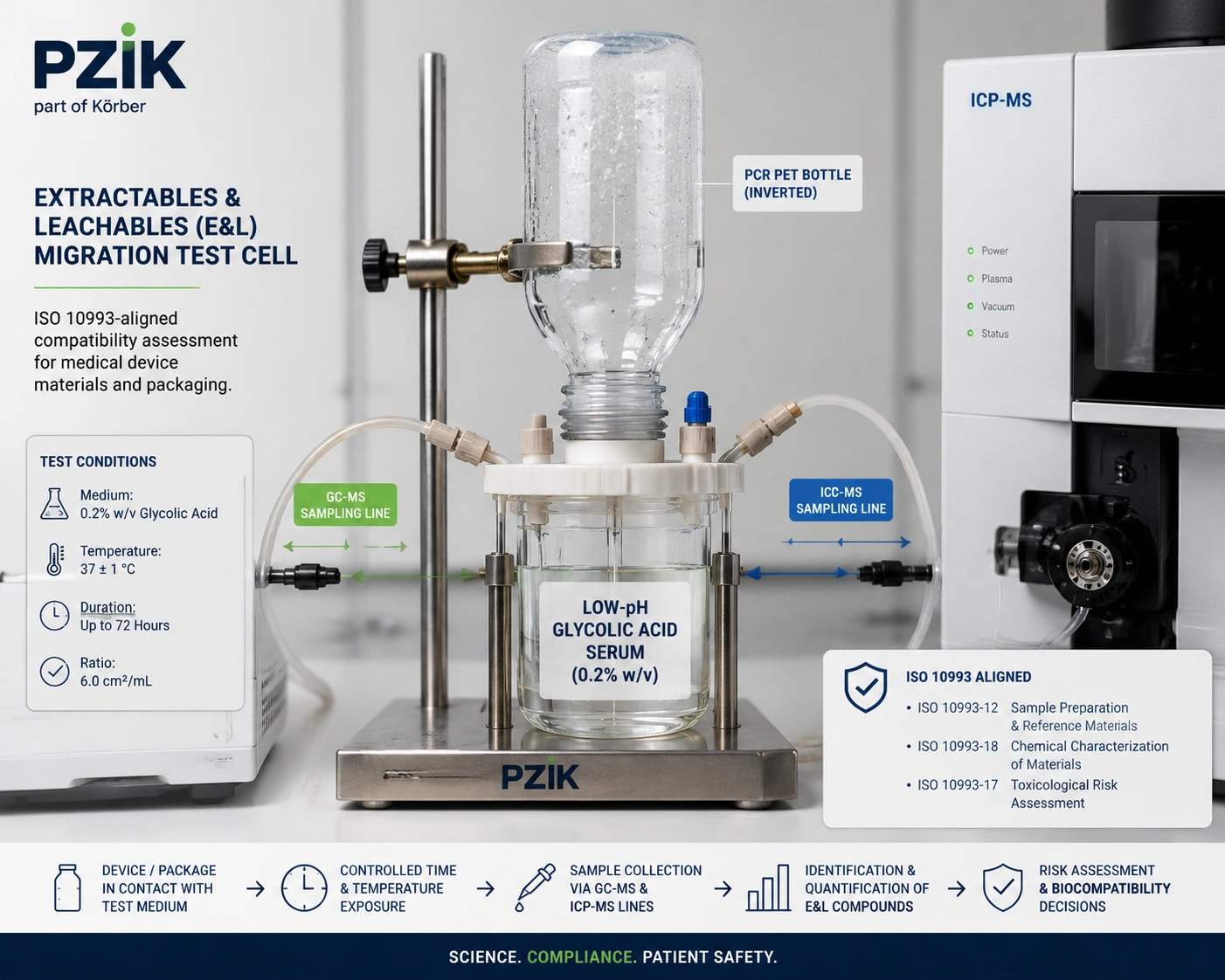
Selectively, yes. PCR PET at 30-50% post-consumer recycled content carries a $0.04-$0.07 per-unit premium over virgin PET for the opaque bottle format, which is absorbable within the existing cost envelope when offset by elimination of a secondary outer carton. Mono-material aluminum tubes are fully recyclable in regions with aluminum-stream infrastructure and price within $0.02 of the standard 5-layer ABL laminate at volumes above 100,000 units. Bio-based polyethylene caps add roughly $0.03 per unit. The constraint is not unit cost; it is migration testing. Acidic formulations require ISO 10993-aligned extractables-and-leachables protocols on every new resin contact surface, and that testing window adds 8-10 weeks to the program timeline.
How are subscription forecast volatility and ±20% volume swings typically accommodated in the master supply agreement?
Standard practice for subscription programs is a tiered MOQ flex clause: ±5% absorbed without notice, ±5-15% accommodated with 14-day notice, and ±15-25% requiring 30-day notice plus a documented raw-material allocation review. Beyond ±25%, a contract amendment is generally required because long-lead actives (notably high-purity glycolic acid) are often forward-contracted in quarterly tranches. Operations running a modular active-ingredient library and a rolling 90-day raw-material buffer can typically absorb the upper band; those running just-in-time inventory cannot. The flex clause should be negotiated against the supplier’s verifiable inventory position, not its marketing claims, and confirmed by inspecting actual warehouse stock during qualification.
References
- U.S. Food and Drug Administration. Guidance for Industry: Labeling for Cosmetics Containing Alpha Hydroxy Acids. Regulatory framework outlined by the FDA. Available at: FDA AHA Labeling Guidance.
- U.S. Food and Drug Administration. FDA Authority Over Cosmetics: How Cosmetics Are Not FDA-Approved but Are FDA-Regulated. Available at: FDA Cosmetics Regulatory Authority.
- Journal of Cosmetic Dermatology, Wiley Online Library. Peer-reviewed clinical research on hydroxy acid bioavailability, stratum corneum response, and dual-acid tolerance studies. Available at: onlinelibrary.wiley.com/journal/14682494.
- MUI World Halal Council. Mutual Recognition Guide for Halal-Certified Cosmetic Manufacturing. Available at: www.muiwhc.com.
- INCI Ingredient Nomenclature Database. Public reference for cosmetic ingredient identification, INCI naming conventions, and concentration norms. Available at: incidecoder.com.
- International Organization for Standardization. ISO 22716:2007 Cosmetics — Good Manufacturing Practices (GMP).
- International Organization for Standardization. ISO 11930:2019 Cosmetics — Microbiological Evaluation of the Antimicrobial Protection of a Cosmetic Product.
- ASTM International. ASTM D4169 Standard Practice for Performance Testing of Shipping Containers and Systems.








Add comment