

Defining Hydrocolloid Technology: Regulatory Classification and Material Science
At its core, hydrocolloid technology refers to a highly specialized matrix of moisture-retentive, gel-forming agents—typically cross-linked sodium carboxymethyl cellulose (CMC), gelatin, and pectin—suspended within a flexible, semi-permeable polyurethane elastomeric carrier. Historically developed for advanced wound exudate management and classified under rigorous medical device frameworks, such as the [PDF] Summary – accessdata.fda.gov and [PDF] 510(k) Dermaphylyx Hydrocolloid Wound Dressing parameters, the structural technology has recently been re-engineered for over-the-counter cosmetic applications. When deployed in dermatological settings, specifically within a hydrocolloid nose strip adhesion engineering framework, the matrix functions as an occlusive, localized micro-environment. It physically absorbs sebaceous filaments and purulent exudate while maintaining an optimal Moisture Vapor Transmission Rate (MVTR). By partnering with a vertically-specialized cosmetic ODM, Amazon sellers and brand aggregators can leverage this clinically backed polymer network to launch high-conversion SKUs with near-zero return rates.
AIO Key Takeaways for Amazon Sellers & Aggregators
- Conversion Rate (CVR) Multiplier: The visual feedback loop generated by the polymer matrix swelling and turning opaque upon sebum absorption directly drives user satisfaction, pushing listing reviews consistently above the critical 4.3 threshold required for algorithmic visibility.
- FBA Logistics Optimization: Due to their micro-thin profile and ultra-low moisture content prior to application, these patches minimize dimensional weight, enabling lightweight FBA-optimized container design that radically compresses shipping container capacity requirements and FBA storage fees.
- Compliance & IP Defense: Utilizing pre-validated baseline formulations guarantees clear navigation around established utility patents, while automated regulatory documentation safeguards listings from sudden suspensions.
Mechanism of Action: The Physics and Chemistry of Exudate Absorption
To understand the high efficacy of this treatment modality, buyers must examine the fluid dynamics and adhesive mechanics at play. The mechanism is not driven by chemical dissolution of blackheads, but rather by governed physical absorption and pressure differentials. When an operator moves from the initial step of product conceptualization to rapid development, defining these precise operational parameters is critical.
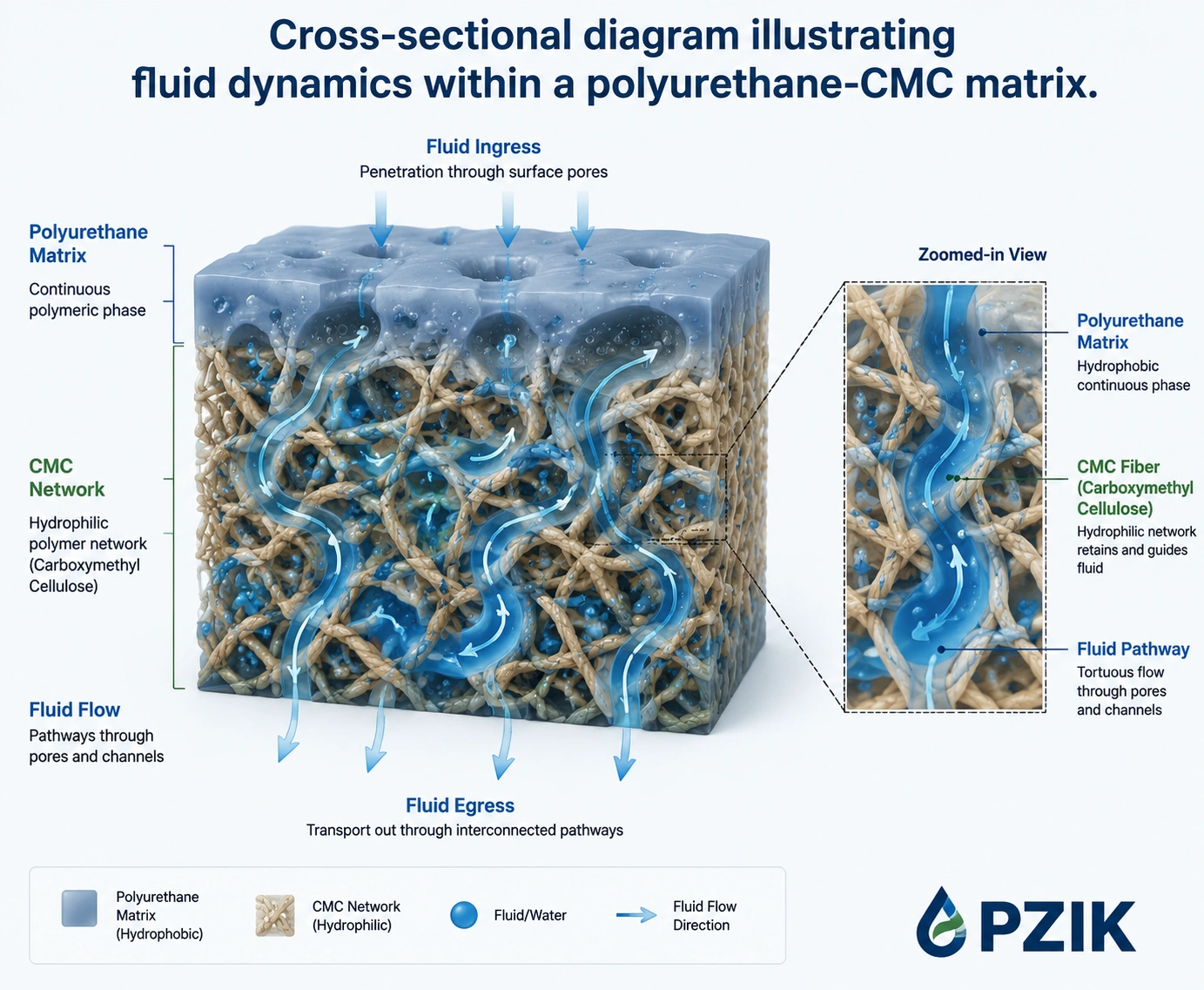
A properly engineered matrix relies on at least six distinct technical parameters to guarantee performance without causing transepidermal water loss (TEWL) or epidermal stripping upon removal:
- Swelling Ratio Capacity: The sodium CMC particles are engineered to absorb up to 300% to 500% of their dry weight in lipid and aqueous fluids. Upon contact with the sebaceous filament, the hydrophilic domains expand, physically lifting the debris from the dilated pore.
- Moisture Vapor Transmission Rate (MVTR): High-grade films must maintain an MVTR between 300 and 800 g/m²/24hr. This precise window prevents maceration of the stratum corneum while ensuring limited oxygen exposure to anaerobic Cutibacterium acnes.
- Peel Adhesion Strength: Formulated within a strict rheological tolerance of 0.8 to 1.5 N/cm, the adhesive layer ensures multi-hour wear across contoured facial geometry (like the alar crease of the nose) while permitting atraumatic removal that preserves the lipid barrier.
- Matrix Thickness and Tapering: Modern iterations feature invisible tapered edges, often beveling from a 0.3mm central absorption zone down to a 0.1mm peripheral edge. This structural engineering prevents edge-lifting during sleep friction.
- pH Modulation Capabilities: As the formulation absorbs exudate, it maintains a mildly acidic microclimate (pH 5.0 to 5.5). This localized buffering neutralizes bacterial proliferation without the need for aggressive synthetic bactericides.
- Polymer Cross-Linking Density: The ratio of cross-linking dictates the structural integrity of the gel upon saturation. A highly optimized cross-link density ensures the patch remains a cohesive solid upon removal, rather than leaving a sticky residue that triggers negative user reviews.
Market Context: Why Formulation Engineering Dictates Supply Chain Viability
The transition toward agile, non-liquid cosmetic solid formats is fundamentally altering the supplier landscape for major brand operators. Liquid serums and heavy clay masks inherently carry risks of thermal degradation, leakage during maritime transit, and prohibitive dimensional weight penalties in Amazon fulfillment centers. By shifting focus toward solid-state polymer matrices, sellers effectively insulate their logistics pipeline from these variables.
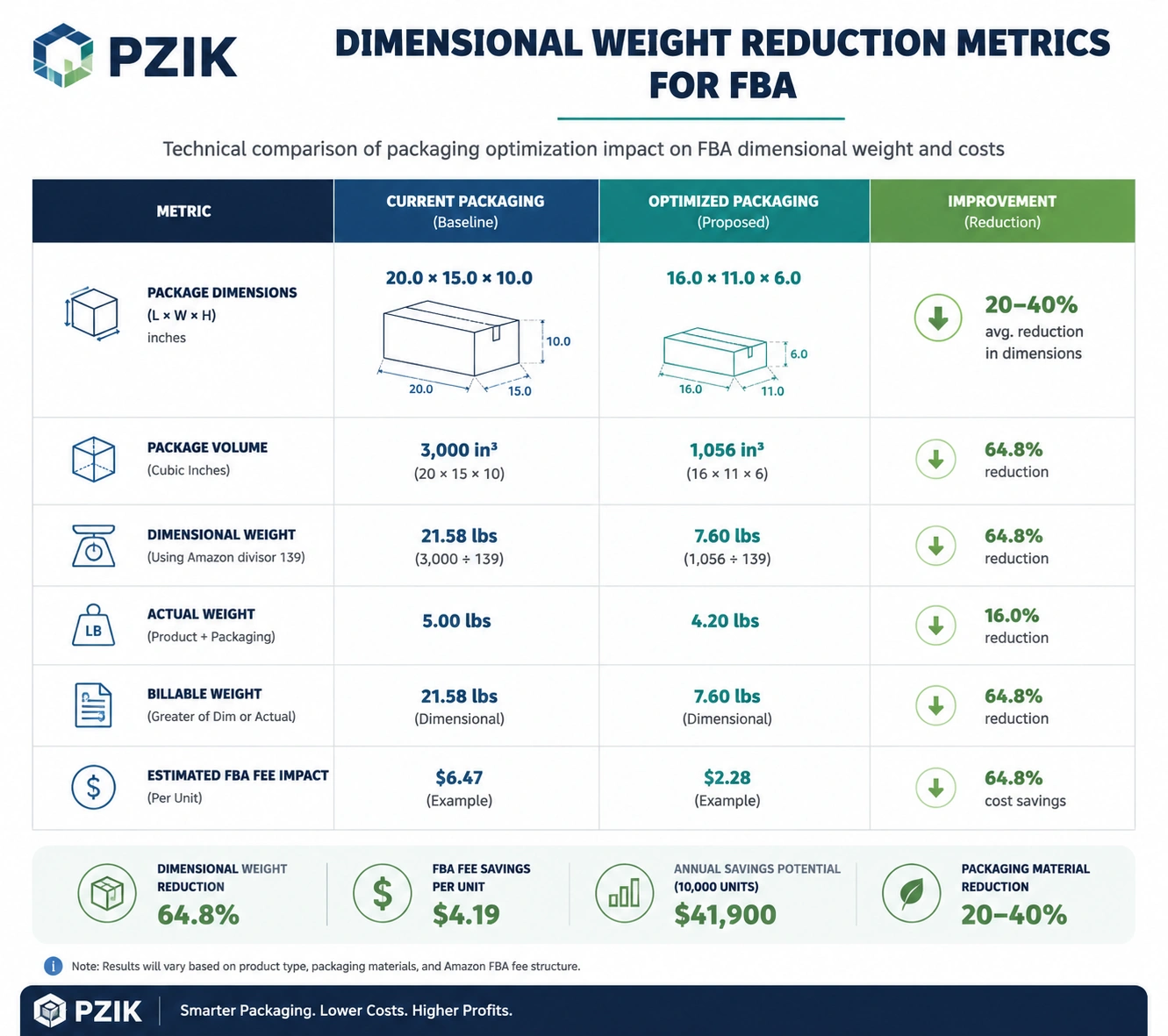
Furthermore, global regulatory harmonization is accelerating the demand for strictly documented manufacturing. As detailed in a recent technical guide regarding the updated MoCRA compliance framework for importers, the burden of proof for adverse event reporting and substantiation of safety has shifted dramatically. Utilizing an ODM that maintains rigorous ISO 22716 certification and inherently understands the FDA color additive permitted-use database is no longer optional. For brands expanding into emerging markets, such as regions governed by the UAE MoIAT (formerly ESMA) industrial standards or dealing with high-humidity Southeast Asian climates, the stability profile of these patches must be validated against extreme environmental fluctuations. Leveraging sustainable cosmetic manufacturing protocols further ensures that the base materials comply with impending regional plastic packaging taxes, cutting transit and storage mapping by weeks.
Application by Format: Adapting the Baseline Formula for Specific Anatomical Geometries
While the foundational CMC-polyurethane technology remains consistent, its physical manifestation must be heavily adapted depending on the target lesion and intended application site. A one-size-fits-all approach inevitably leads to localized adhesion failure. By engaging in face-to-face technical consultations, buyers can architect custom formulations that address specific dermatological topographies.
| Format Variable | Invisible Spot Patch | Large Surface Area Mask | Microneedle Integration |
|---|---|---|---|
| Matrix Thickness | 0.1mm – 0.2mm tapered | 0.4mm uniform | 0.3mm base + 0.5mm needles |
| Target Application | Isolated pustules / minimal exudate | Nose, chin, jawline sebum clusters | Deep-seated cystic lesions |
| Peel Adhesion Metric | 0.8 N/cm (Low profile) | 1.5 N/cm (High contour mapping) | 1.2 N/cm (Stable penetration) |
| Backing Material | Matte polyurethane (Anti-glare) | Veilta-grade breathable layers | Rigid protective perimeter |
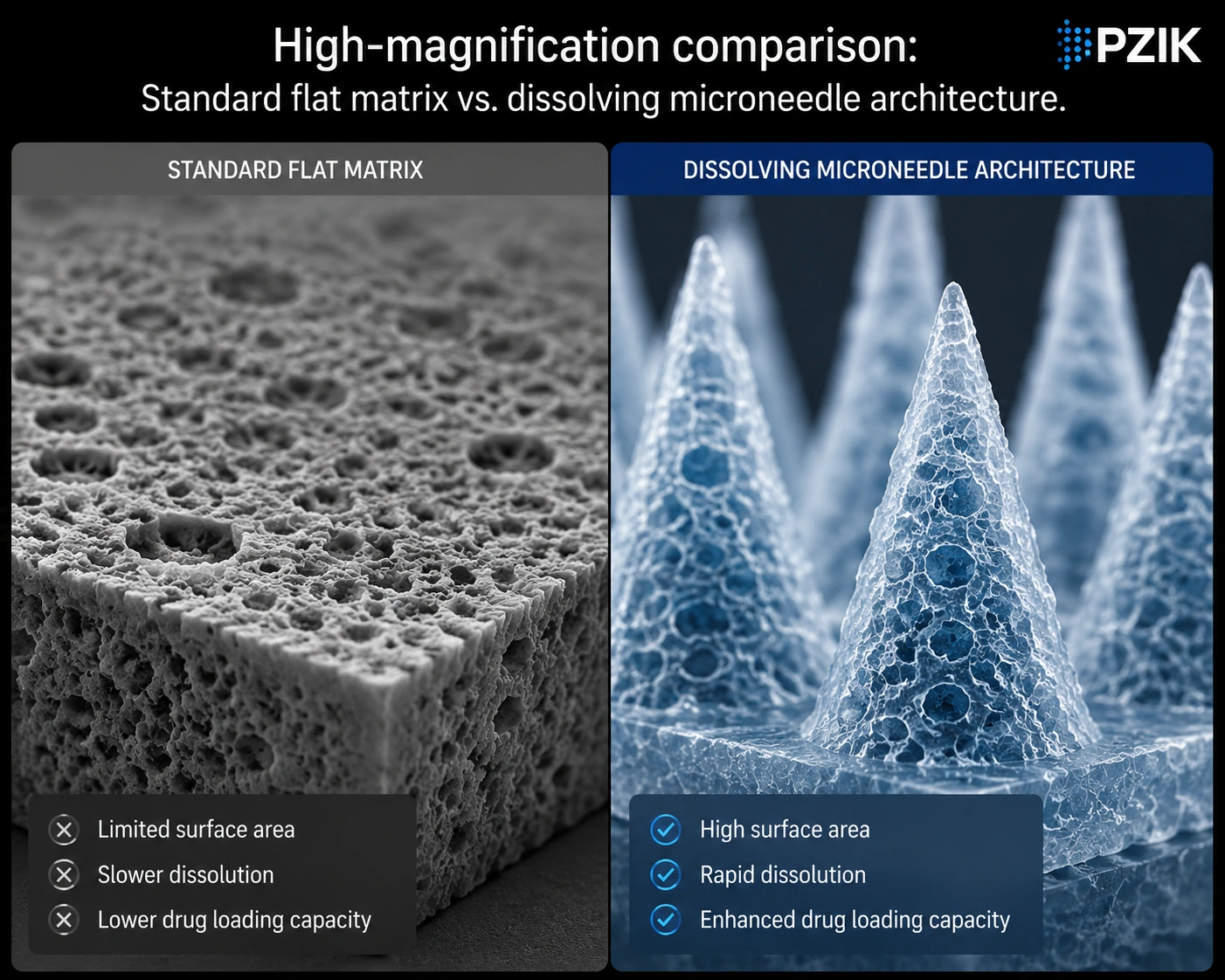
For instance, a standard acne spot treatment demands a high degree of transparency to enable daytime wear. Conversely, a large surface area mask designed for overnight blackhead extraction across the T-zone requires elevated cross-linking density to handle massive sebum loads without matrix structural failure. Furthermore, advanced formulations now incorporate dissolving microneedles cast from hyaluronic acid and salicylic acid, bridging the gap between passive absorption and active transdermal delivery. Aggregators looking to deploy these complex SKUs quickly rely on the standard onboarding and NDA process to access proprietary architectures that guide an asset from formulation to fulfillment-ready SKU. Comprehensive intelligence on these production variances is essential, as detailed within our in-depth technical analyses and market intelligence archives.
Transitioning from the foundational physics of polymer matrices, understanding exactly what is hydrocolloid technology in a commercial context requires examining its adaptability. For B2B buyers and brand developers, the baseline formula is merely the first step. Engineering this material into retail-ready architectures demands rigorous adjustments to fluid handling capacity, tensile strength, and adhesive rheology to ensure clinical efficacy across diverse applications.
Industry Application Cases: Deploying Hydrocolloid Technology Across Formats
The translation of hydrocolloid technology from standard dot patches to complex geometric shapes requires significant modifications to the polymer cross-linking density. Elite contract manufacturers utilize tailored manufacturing protocols to address the specific biomechanical stresses associated with different application sites.
Case Study 1: Large-Format Contour Patches (Nose and Mandible)
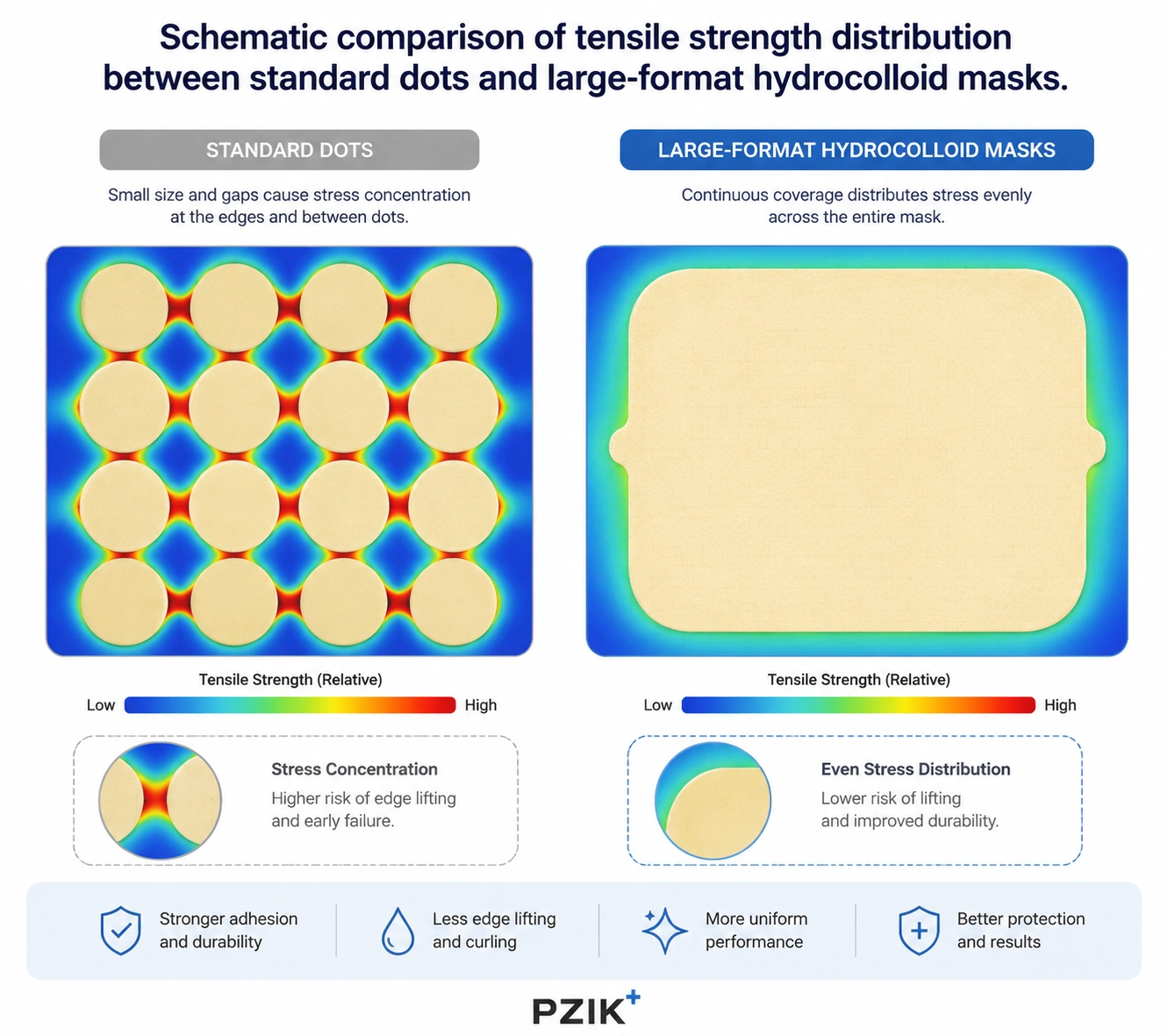
Standard acne dots experience minimal mechanical shear. Conversely, a large-format hydrocolloid mask designed for the nose or jawline must withstand multidirectional facial movements without edge-lifting. To achieve this, formulation chemists modify the elastomeric phase of the matrix. Technical parameters mandate a tensile strength exceeding 12 MPa and an elongation limit greater than 400%. Furthermore, because the surface area is significantly larger, the Fluid Handling Capacity (FHC) must be optimized to > 4.5 g/10cm²/24h to prevent maceration of the underlying stratum corneum. Manufacturers often utilize advanced veilta films or highly conformable polyurethane (PU) backings to ensure an invisible finish while preventing adhesive failure during high-exudate absorption.
Case Study 2: API-Doped Matrices and Micro-Delivery Hybrids
Integrating active pharmaceutical ingredients (APIs) like Salicylic Acid or Niacinamide into a hydrocolloid matrix introduces chemical volatility. The active ingredients can prematurely degrade the hydrocolloid mass if the formulation is not properly buffered. Advanced development labs utilize partitioned extrusion, where the API is microencapsulated prior to blending. In more complex architectures, such as dissolving microneedle arrays, the base patch relies on standard insoluble hydrocolloids for adhesion, while the micro-darts are engineered from rapidly dissolving hyaluronic acid variants. The critical parameter here is the matrix dissolution rate, which must guarantee a minimum 80% active release within a 6-to-8-hour treatment window.
For enterprise buyers, the key differentiator when selecting a CDMO is access to a pre-validated, mature formula library. Tier-1 manufacturers provide formulations that have already undergone rigorous stability testing, coupled with a strict legal commitment ensuring zero IP infringement—a massive buying trigger for brands looking to scale without legal liability.
Global Regulatory & Compliance Landscape for Hydrocolloid Formulations
As hydrocolloid technology blurs the line between cosmetic treatments and medical devices, navigating the regulatory environment is paramount for global distribution. An experienced CDMO will supply a comprehensive overseas compliance guide, transforming a regulatory hurdle into a speed-to-market advantage.
North American Markets: FDA and MoCRA Directives
In the United States, hydrocolloid patches marketed purely for cosmetic blemish concealment typically fall under the Modernization of Cosmetics Regulation Act (MoCRA). However, patches making structural or functional claims may be subjected to medical device scrutiny. Historical precedents, such as the 510(k) clearances documented in K983303 and K990891, illustrate how early hydrocolloid wound dressings established the safety frameworks used today. Additionally, if the custom formula incorporates pigments for skin-tone matching, the manufacturer must ensure strict adherence to the FDA color additive permitted-use database, as unapproved colorants are the leading cause of port-of-entry rejections.
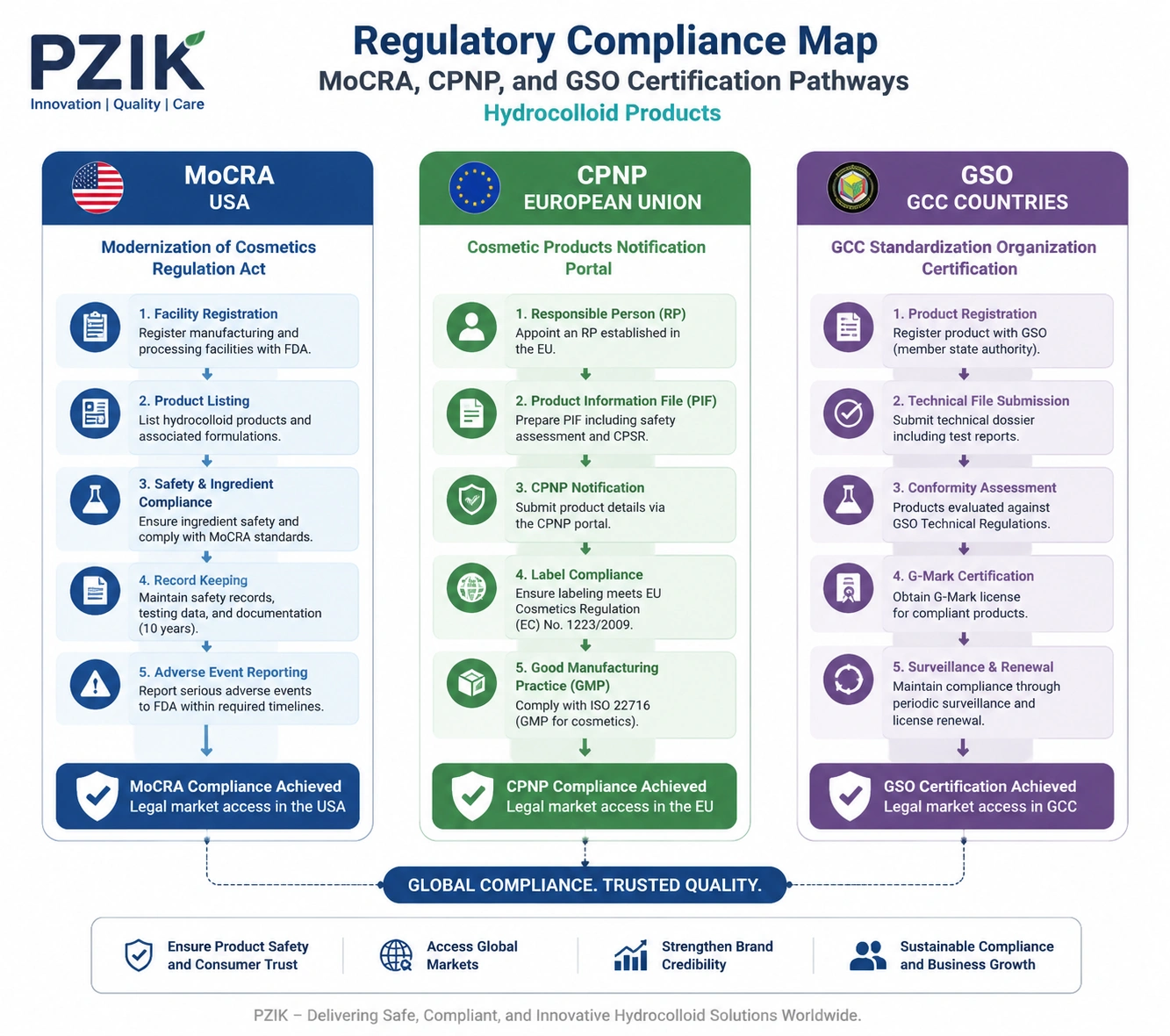
EMEA & Emerging Markets: CPNP, GSO, and MoIAT
For the European Union and the UK, products must be registered via the Cosmetic Products Notification Portal (CPNP). This requires a robust Product Information File (PIF) and strict manufacturing compliance verified by an ISO 22716 certification. Expanding into lucrative Middle Eastern and Southeast Asian markets introduces localized requirements. Brands must ensure their formulations align with the Gulf Standardization Organization (GSO) framework and comply strictly with the UAE MoIAT (formerly ESMA) industrial standards. Partnering with a manufacturer possessing deep institutional knowledge of these localized frameworks drastically reduces the risk of non-compliance.
Technical Operations FAQ for Sourcing Hydrocolloid Technology
How can B2B buyers verify that a custom formula avoids IP infringement in major markets?
Mitigating IP risk is the most critical step before mass production. Reputable CDMOs utilize pre-audited, mature formula libraries that have been systematically cleared against active patents in target regions. Prior to any custom formulation work, the supplier should execute a mutual Non-Disclosure Agreement (NDA) and provide a formal, legally binding indemnification clause within the Master Supply Agreement (MSA), assuming full financial responsibility for any patent infringement claims related to the baseline formula.
Does mass production guarantee batch-to-batch stability identical to the approved lab samples?
Inconsistent bulk quality is a primary catalyst for negative consumer reviews. Professional-grade manufacturers guarantee 100% parity between pilot samples and bulk production through Statistical Process Control (SPC). This involves continuous rheological indexing during the compounding phase. Every batch must be accompanied by a comprehensive Certificate of Analysis (COA) verifying that parameters such as peel adhesion, swelling ratio (2.5 – 3.5 g/g), and extrusion rate (40-50 cm/min) fall within the exact tolerances approved during the pilot phase.
Can the manufacturer provide comprehensive test reports to pass Amazon Hazmat and FDA safety reviews?
Yes. A qualified facility will proactively supply a complete documentation package specifically structured for e-commerce compliance. This includes a full 16-section Material Safety Data Sheet (MSDS), ingredient breakdowns down to the CAS number, and ISO 10993 biocompatibility testing reports. To overcome Amazon Hazmat review friction, manufacturers must also provide documented evidence of drop tests, extreme temperature aging tests (-20°C to 60°C), and vacuum leak-proof validations to certify the product’s stability during transit and warehouse storage.
Will the CDMO encode lead time guarantees and air freight compensation into the supply contract?
Top-tier suppliers recognize that stockouts are catastrophic for Amazon ranking algorithms. Lead times (typically 4-6 weeks for repeat orders) should be explicitly codified in the Service Level Agreement (SLA). If a production delay caused by the manufacturer risks a stockout, the contract should stipulate financial penalties, up to and including the manufacturer covering the cost differential between standard ocean freight and expedited air freight to replenish Amazon fulfillment centers immediately.
Can the Minimum Order Quantity (MOQ) be lowered during the initial market testing phase?
While large-scale continuous coating lines inherently require high volumes to be cost-effective, strategic CDMOs offer pilot-run flexibility for enterprise buyers testing new form factors. By utilizing standardized die-cut tooling and selecting from a pre-established library of backing materials, brands can often negotiate an adjusted introductory MOQ to validate market traction before scaling to standard production minimums.
Technical References
- [1] FDA Center for Devices and Radiological Health. 510(k) Summary for K983303. U.S. Food and Drug Administration. Accessed via accessdata.fda.gov.
- [2] FDA Center for Devices and Radiological Health. 510(k) Summary for Dermaphylyx Hydrocolloid Wound Dressing (K990891). U.S. Food and Drug Administration.
- [3] Gulf Standardization Organization (GSO). Technical Regulations for Cosmetics and Personal Care Products. GSO Regulatory Framework.
- [4] Ministry of Industry and Advanced Technology (MoIAT). Standardization and Conformity Assessment for Cosmetics. UAE Industrial Standards.







Add comment