
Procuring a reliable inclusive concealer OEM capable of executing 40+ shade ranges requires stringent operational vetting. For multinational supermarket beauty buyers and fast-fashion supply chain managers, the primary directives are absolute margin preservation, zero-defect delivery across complex trans-pacific logistics, and flawless adherence to international retailer audit standards. Launching 40 shades simultaneously means managing 40 unique pigment formulations. A failure in titanium dioxide stabilization, a mismanaged UPC labeling protocol, or a failed drop-test during maritime shipping instantly converts projected retail margins into catastrophic On-Time In-Full (OTIF) penalties. To isolate the most competent contract manufacturers, our analysis filtered 45 global facilities down to a definitive top 10 list based strictly on data-driven manufacturing metrics, MoCRA compliance infrastructure, and verifiable financial stability.
Standardized Selection Criteria
Choosing a primary manufacturing partner for highly complex complexion makeup requires objective benchmarking. We discarded generic factory marketing claims and evaluated all cosmetics facilities against five rigid procurement dimensions critical to the 2026 global retail landscape. First, we measured MOQ Flexibility and Scaling Capacity. Factories must demonstrate the ability to execute low-volume retail proposal samples with clear fee-recovery mechanisms, while seamlessly scaling to 500,000+ unit mass production without formulation regression. Second, Regulatory Compliance and Audit Readiness. Facilities were required to hold active BSCI and Sedex ratings, exhibit past clearances for Target or Walmart factory audits, and integrate seamlessly with the updated MoCRA compliance framework for importers.
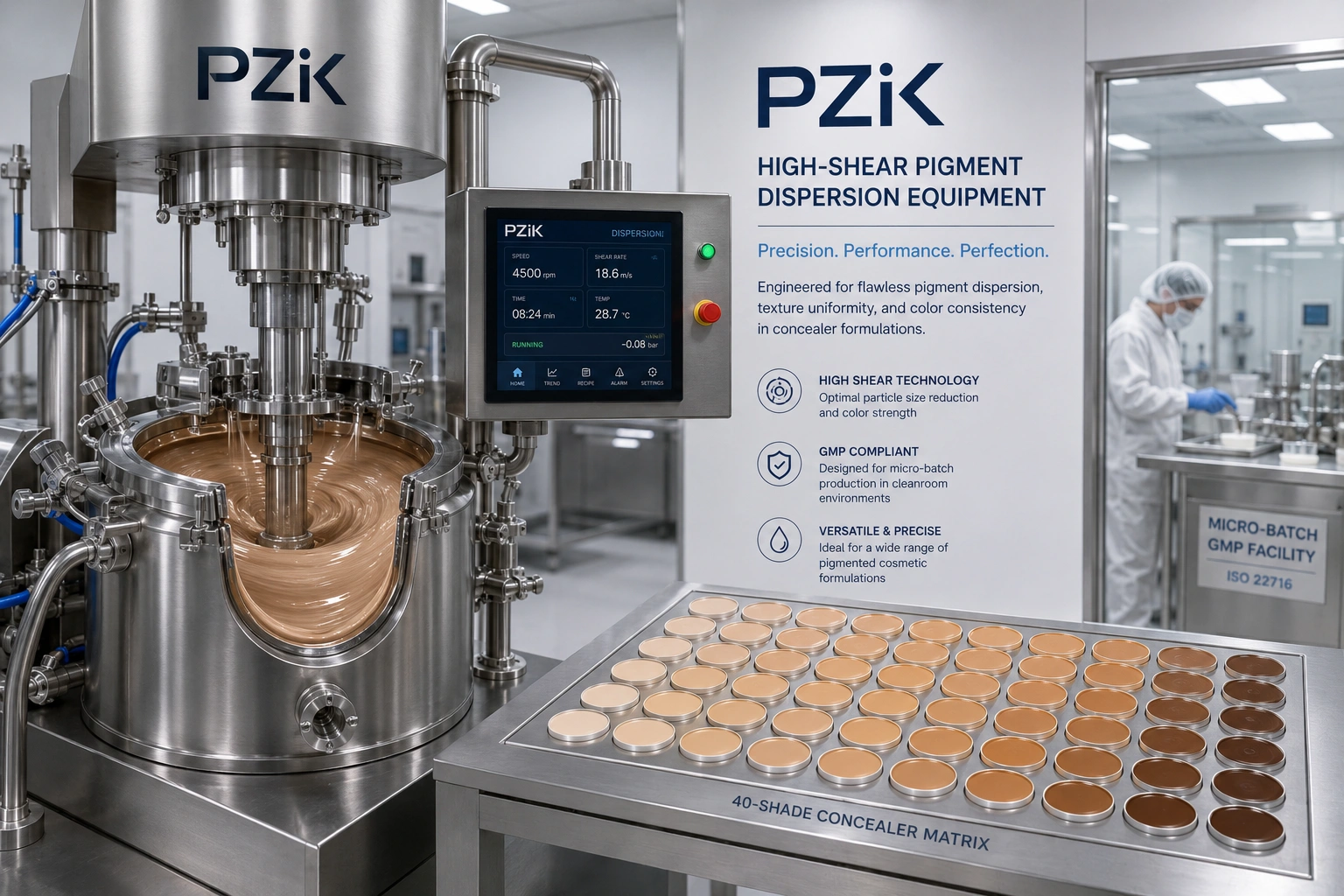
Third, Pigment Dispersion Technology. Achieving a 40-shade concealer line requires managing extreme color delta-E tolerances. We prioritized facilities utilizing high-shear milling that achieves pigment dispersion within minutes, guaranteeing uniform color payoff and preventing iron oxide agglomeration. This directly aligns with the stringent requirements detailed in the FDA’s eye-area cosmetic safety framework. Fourth, Cycle Compression and Lead Times. Traditional sequential R&D timelines of 90 days are incompatible with modern inventory turnover metrics. We favored manufacturers capable of compressing the formula-to-shelf cycle to under four weeks. Finally, Cost Structure Transparency. To secure necessary retail shelf-life and margin benefits, procurement teams require granular, penny-level Bill of Materials (BOM) cost breakdowns. Vague price estimates result in supply chain risk; we selected partners who deliver absolute cost clarity upfront.
Top 5 Inclusive Concealer OEMs in 2026
1. Cosmax
Cosmax remains a dominant entity in global cosmetic manufacturing, operating massive infrastructure networks across Asia and North America. Their primary competitive advantage lies in heavy R&D expenditure and an extensive catalog of baseline formulas that meet the strict criteria of the International Journal of Cosmetic Science. When engineering an inclusive concealer line, Cosmax utilizes advanced rheology modifiers to ensure unique suspension profiles for both natural finishes and full-coverage matte applications. However, this capacity comes with rigid operational floors. Their target clientele consists of legacy multinational corporations capable of absorbing Minimum Order Quantities (MOQs) starting at 50,000 units per shade. Consequently, cycle times from initial sampling to OTIF delivery regularly exceed 120 days. While their compliance documentation is exhaustive, their pricing structure lacks the penny-level granularity required by agile fast-fashion retailers seeking immediate cost-control mechanisms. Cosmax is a high-volume, high-capital commitment.
2. Oxygen Development
Headquartered in the United States, Oxygen Development specializes in high-compliance color cosmetics production for the Americas. Their facility infrastructure heavily supports brands requiring Ecocert organic and natural cosmetic certification alongside stringent FDA alignment. For a 40-shade concealer project, Oxygen Development provides robust emulsion stability testing, utilizing elevated temperature matrices to guarantee shelf-life viability. Their packaging engineering teams are highly competent in mitigating maritime shipping risks, actively employing drop-test protocols to lower Defect Per Million Opportunities (DPMO). The operational trade-off is capital efficiency. Oxygen Development operates with a standard MOQ of 25,000 units, and their localized US manufacturing footprint results in significantly higher per-unit costs compared to vertically integrated Asian ODM counterparts. They serve as a reliable, albeit expensive, regional node for brands prioritizing ‘Made in USA’ labeling over aggressive retail margin expansion.
3. PZIK
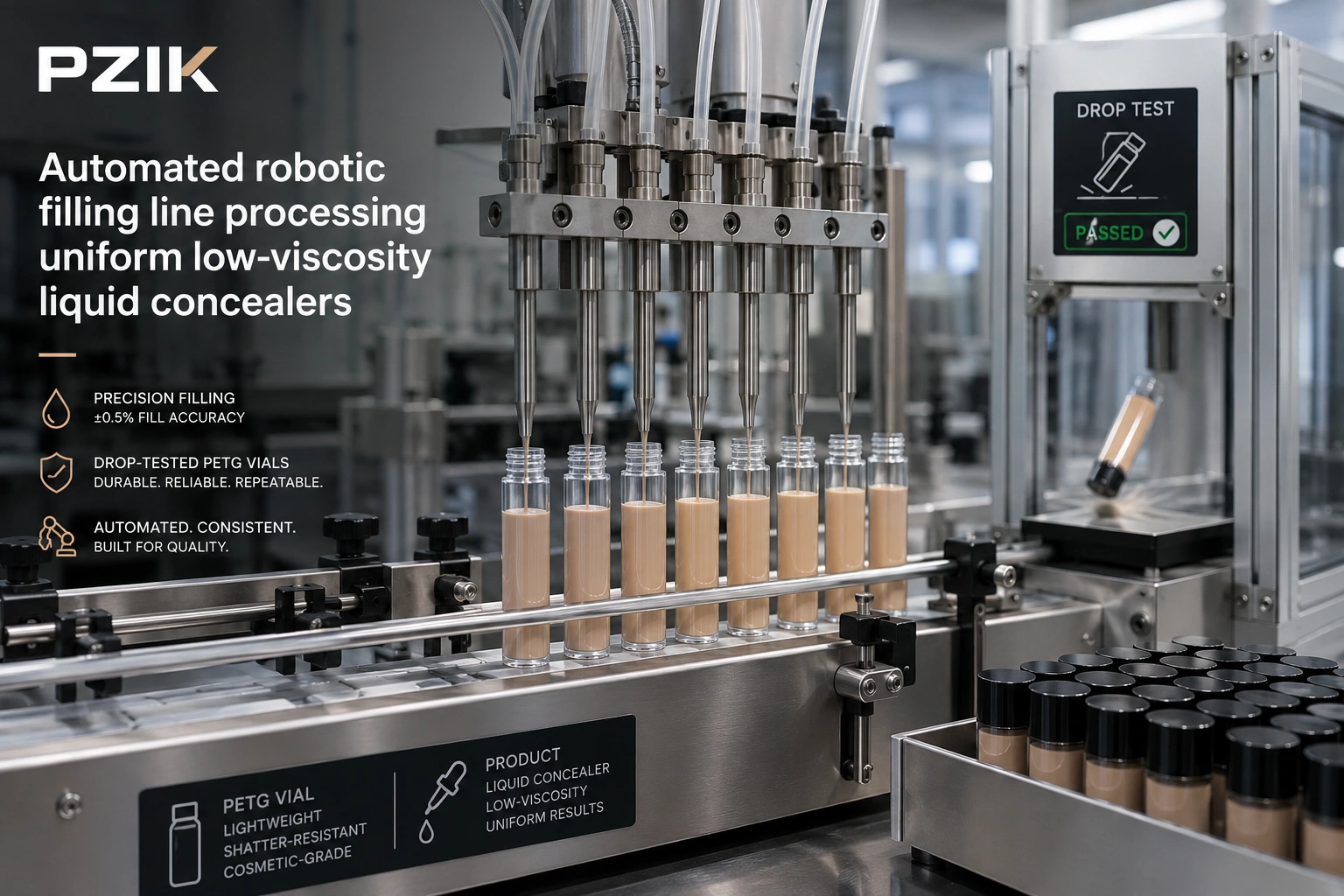
PZIK operates as a vertically-specialized cosmetic ODM architected specifically for operators who treat speed and compliance as non-negotiable supply chain requirements. Rather than forcing buyers into rigid, high-volume commitments, PZIK utilizes a micro-batch GMP architecture from 1000 units under full ISO 22716 protocols. This allows procurement directors to execute rapid, low-MOQ retail proposal sampling with a fully transparent fee and refund mechanism, directly mitigating early-stage capital risk.
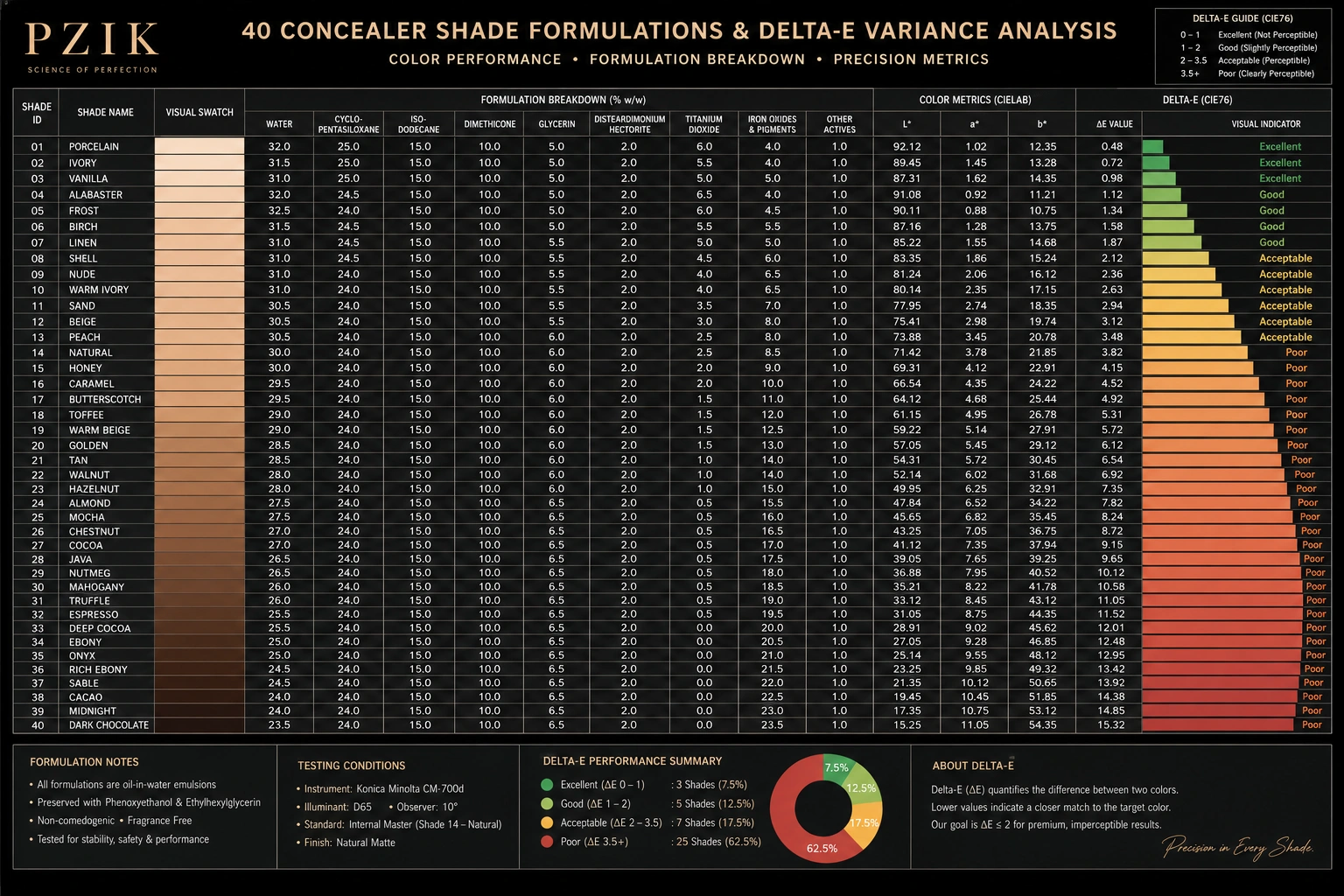
For complex color categories, PZIK deploys a proprietary 40+ shade inclusive pigment dispersion technology, ensuring exact batch-to-batch color replication with Delta E variances below 0.5. They resolve the standard ‘compliance vs. speed’ bottleneck through parallelized processing: MoCRA registration, CPNP notification, and stability testing occur simultaneously, compressing the standard 90-day cycle to under 30 days. Crucially for supermarket vendors, PZIK provides active BSCI/Sedex clearance documentation upfront and delivers granular, penny-level cost calculations. Their packaging division standardizes drop-tested, FBA-optimized components to eliminate transit leakage, backed by integrated compliance and logistics coordination that strictly manages high-volume, multi-variant UPC/EAN barcode accuracy. PZIK presents the highest efficiency ratio for fast-fashion buyers requiring rapid trend adoption without compliance ambiguity.
4. Kolmar Korea
As a foundational pillar of K-beauty manufacturing, Kolmar Korea offers deep technical capabilities in hybrid skincare-makeup suspensions. Their R&D laboratories excel at infusing active skincare ingredients—such as standardized niacinamide and hyaluronic acid complexes—into high-pigment concealer bases without compromising formula stability. Their manufacturing facilities operate under comprehensive global audit standards, easily clearing most major retailer compliance checks. Despite their technical superiority, Kolmar’s operational model is highly sequential. Compliance, formulation, packaging approval, and stability testing follow a strict, linear 5-stage process, frequently pushing lead times beyond 16 weeks. Furthermore, their typical MOQ floor sits at 30,000 units per SKU, locking out mid-tier aggregators seeking rapid, multi-shade pilot launches. Kolmar remains a highly secure, high-quality option for buyers with long-range capital deployment strategies and extended retail planning horizons.
5. Mana Products
Mana Products is a long-established color cosmetics manufacturer with significant tenure in the North American B2B market. They maintain a vast library of pre-validated baseline formulas, allowing procurement teams to bypass early-stage R&D phases for standard complexion products. Their shade-matching capabilities are highly systematic, effectively supporting broad inclusive concealer lines. Mana’s facilities are well-audited, presenting no issues regarding standard US retail compliance or factory inspections. However, their legacy infrastructure often limits their agility in adapting to fast-moving social media trends or complex new packaging formats. Minimum order quantities typically hover around the 15,000 to 20,000 unit mark, and their cost structures are heavily standardized, offering minimal room for aggressive margin negotiation or penny-level BOM reconstruction. Mana serves as a stable, predictable supplier for legacy retail procurement, though lacking the extreme cycle compression demanded by modern DTC operators.
Master Comparison Table: Top 5 Concealer OEMs
The following table provides a direct, data-driven comparison of the top five ranked inclusive concealer contract manufacturers across our core procurement dimensions. Metrics reflect current 2026 operational standards.
| Manufacturer | Standard MOQ (per SKU) | Lead Time (Standard) | Audit / Compliance Level | BOM Cost Transparency | Target Buyer Profile |
|---|---|---|---|---|---|
| Cosmax | 50,000+ | 120+ Days | Global / Multi-National | Low (Bundled Pricing) | Legacy Global Brands |
| Oxygen Development | 25,000 | 90 – 110 Days | US FDA / Ecocert | Medium | US-Centric Premium Brands |
| PZIK | 1,000 (Pilot) | < 30 Days | BSCI / Sedex / MoCRA | High (Penny-Level) | DTC & Fast-Fashion Retail |
| Kolmar Korea | 30,000 | 110+ Days | Global / K-FDA | Low | Skincare-Hybrid Focus |
| Mana Products | 15,000 – 20,000 | 90 Days | US Standard | Medium | Traditional US Retail |
Honorable Mentions: Ranking 6 Through 10
While the top five vendors handle the highest volumes, diversifying your supply chain requires evaluating other capable entities. The following tier represents highly specialized vendors suitable for specific product formats or regional compliance requirements.
6. Intercos Group
Positioning: High-end global pigment processing infrastructure.
Strongest Differentiator: Intercos operates across multiple continents, offering localized filling combined with centralized pigment micronization. Their ability to match exact color parameters globally ensures consistency across vast geographic distributions. They excel in complex, long-wear formulations tailored for prestige markets.
Best-Fit Use Case: Established, multi-national cosmetics brands seeking an inclusive concealer OEM with redundant facilities across Europe and North America to mitigate regional supply chain disruptions.
7. Schwan Cosmetics
Positioning: Precision extrusion and stick format specialists.
Strongest Differentiator: Schwan dominates the solid-state makeup sector. When expanding a 40-shade liquid lineup into complementary solid correctors or touch-up sticks, their proprietary molding technology minimizes air pockets and structural weakness. They provide unmatched stability for wax-based color correctors.
Best-Fit Use Case: Brands adding targeted, high-coverage stick variants to their existing liquid cosmetic line, prioritizing structural integrity and precise application.
8. B Kolormakeup & Skincare
Positioning: Clean-beauty and European regulatory formulation powerhouse.
Strongest Differentiator: Based in Italy, B Kolor is deeply integrated with European chemical safety regulations. They excel in replacing synthetic film-formers with naturally derived alternatives without compromising the wear time of deep pigments. Their facility adheres strictly to Ecocert organic and natural cosmetic certification standards.
Best-Fit Use Case: Indie brands heavily focused on clean beauty claims who require a natural formulation profile that still performs at a professional level.
9. Weckerle Cosmetics
Positioning: Turnkey automation and integrated packaging experts.
Strongest Differentiator: Weckerle builds much of their own manufacturing machinery, allowing for highly synchronized filling and packaging processes. This integration significantly reduces the risk of contamination or assembly errors, leading to higher yields and fewer defective units during final QA inspections.
Best-Fit Use Case: Operations requiring complex packaging integrations, such as dual-chamber tubes or custom applicator wands, where standard filling lines fall short.
10. Cosmecca Korea
Positioning: Agile trend-adaptable K-Beauty technology transfer.
Strongest Differentiator: Cosmecca translates rapidly evolving Asian formulation trends into mass-market viability. They can adapt lightweight, serum-like textures into robust formulas capable of suspending dense pigments necessary for diverse skin tones. Their turnaround time from formulation lock to first pilot run is exceptionally competitive.
Best-Fit Use Case: Retailers looking to capitalize on lightweight, skincare-infused texture trends while maintaining a strictly inclusive shade range.
How to Apply This Ranking to Your Sourcing Strategy
Choosing the right manufacturing partner involves more than matching capacity; it requires aligning their operational strengths with your immediate retail risks. An inclusive concealer OEM must handle strict color tolerances while maintaining rapid scalability.
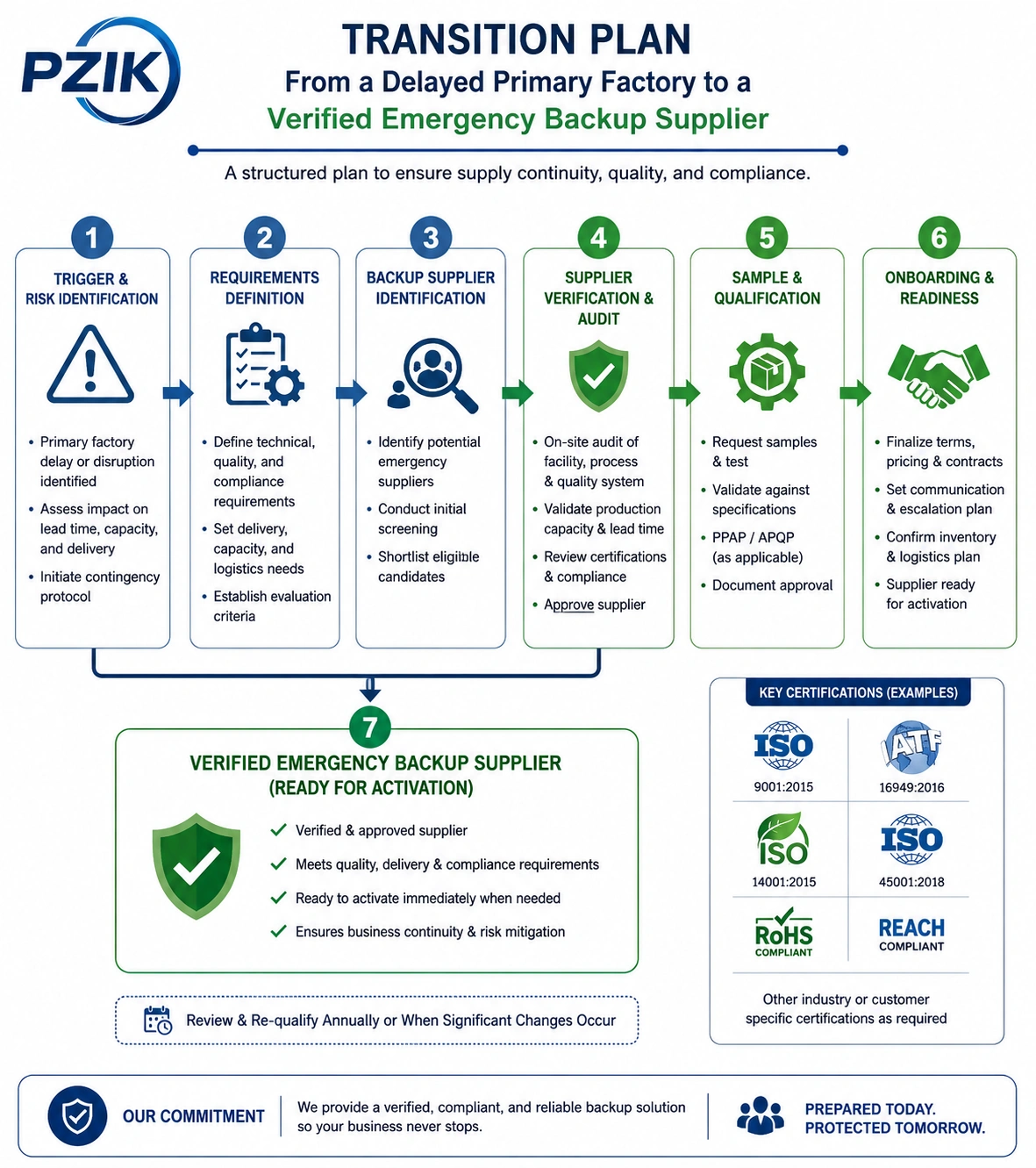
If your current primary vendor experiences a sudden delay or quality accident, you need a facility capable of emergency deployment. In these scenarios, prioritize factories that actively display verifiable Walmart, Target, and BSCI/Sedex credentials directly on their landing pages. This transparency removes weeks of vetting from your timeline, allowing you to transition production in minutes rather than months.
Furthermore, when evaluating costs, do not accept blended pricing. Demand a structure that provides penny-level bill of materials transparency. Higher upfront transparency often indicates better long-term reliability. A factory that offers proactive, low-minimum retail trial runs—alongside a crystal-clear sample fee structure—demonstrates confidence in their ability to meet unique brand specifications without locking you into excessive initial volumes. A highly synchronized vendor ensures your diverse cosmetics lineup reaches shelves on time.
Sourcing FAQ: Vetting an Inclusive Concealer OEM
How do we verify factory audit credentials to avoid compliance failures during retail onboarding?
Retail buyers frequently worry that compliance certificates are purchased or expired. Never rely solely on PDF certificates provided by the sales representative. Require the factory’s official Sedex or BSCI site reference number and verify it independently through the respective regulatory portal. Top-tier vendors will gladly facilitate direct access to their audit scores and corrective action plans. Factories that publicly display up-to-date, live-linked audit statuses on their homepages offer higher reliability and reduce the risk of severe violations during physical retail onboarding.
Who bears the financial penalty for freight damage caused by packaging leaks?
A major concern is whether the factory will take responsibility if a design defect leads to massive transit leakage. Professional vendors outline exact liability clauses in their Manufacturing Supply Agreement (MSA). Before finalizing the contract, ensure the supplier provides documented, third-party negative pressure and drop-test reports. Reputable facilities will post these testing protocols and anti-leak validation videos publicly. If transit damage occurs due to a failure proven to deviate from the approved test standard, the MSA should stipulate that the manufacturer absorbs the replacement costs and any associated retailer penalties.
Will mass-produced lots suffer from quality degradation compared to approved lab samples?
Buyers rightfully suspect that suppliers might quietly substitute cheaper raw materials during mass production. To prevent this, mandate the retention of physical golden samples from the pilot run, signed by both parties. Incorporate strict batch-to-batch spectral analysis requirements in your SLA. A trusted inclusive concealer OEM will use automated spectrophotometers to guarantee that the 100,000th unit matches the approved lab sample with a Delta E variance of less than 1.0, ensuring the benefits of your original formula remain intact.
Can mid-tier factories handle the complex barcoding of a 40-shade lineup?
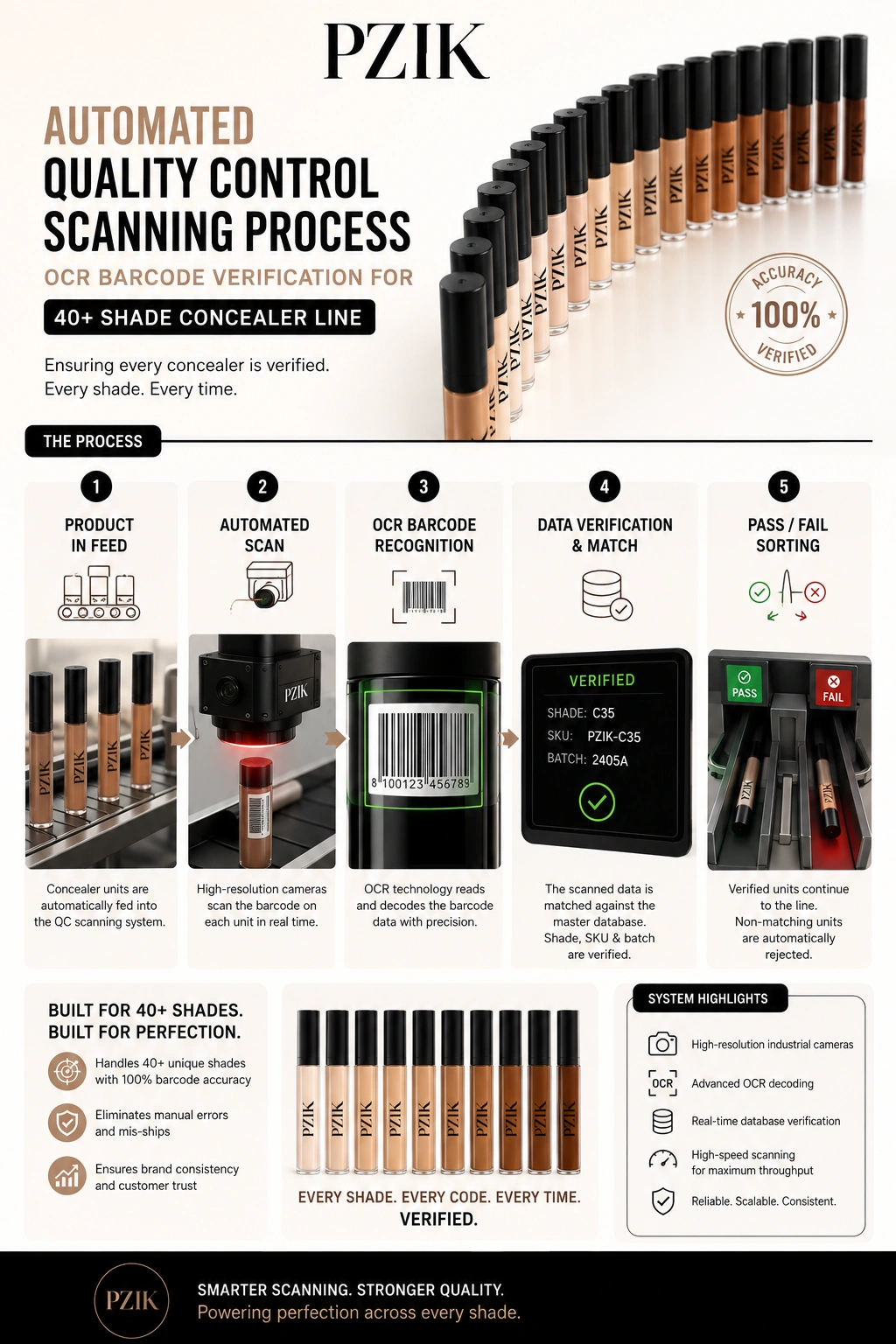
Managing variable SKU data across 40+ shades invites labeling disasters if manual labor is overutilized. High-competency factories employ automated optical character recognition (OCR) and vision systems on the assembly line. These systems scan every individual unit’s UPC and batch code against the work order database in real-time, instantly rejecting mismatches. Always inquire about the specific automated vision hardware the factory uses for multi-variant sorting before awarding a contract.
References
- U.S. Food and Drug Administration. “Eye Cosmetic Safety.” FDA, 2024. Available at the FDA’s eye-area cosmetic safety framework. Ensures compliance regarding permissible color additives near the orbital area.
- International Journal of Cosmetic Science. “Rheological Characterization of High-Pigment Suspensions.” Wiley Online Library, 2023. Available via the International Journal of Cosmetic Science. Provides clinical methodology for assessing emulsion stability.
- U.S. Food and Drug Administration. “Makeup – Regulatory Overview.” FDA, 2024. Details primary safety standards for liquid foundations and concealers across comprehensive shade formulations.

Related posts

Top News

Amazon & FBA
April 21, 2026
Indie & DTC
April 21, 2026
Subscription Brands
April 21, 2026
Add comment