








Pore-Shrinking Toners: The Essential Post-Extraction Step to Bundle with Blackhead Removers
A technical B2B white paper on formulation logic, post-extraction recovery, compliance execution, and supply chain design for brands that sell results, not claims.
For sourcing leaders, category managers, and private label brand operators, pore-shrinking toners are not a decorative add-on. They are the control point that turns a blackhead remover from a one-off impulse product into a clinically credible regimen with higher AOV, lower return risk, and stronger reorder economics.
Market Intelligence: Why the Blackhead Remover Category Needs a Companion Toner
Blackhead removers sell on instant visual satisfaction, but they also expose a structural weakness: extraction alone creates a transient “cleaned-out” look without addressing the post-procedure environment that drives refilling, shine rebound, and consumer disappointment. In practical terms, the category is incomplete if it ends at extraction.
Pore-shrinking toners solve the missing step by targeting the conditions that make pores look larger after cleansing: residual sebum, corneocyte build-up, transient inflammation, and surface dehydration. This is why the smartest brands do not market them as generic toners; they position them as post-extraction recovery fluids, pore refining essences, or oil-balancing finishing steps.
The commercial logic is straightforward. A blackhead remover can be the hero SKU for social commerce, while the toner becomes the repeat-purchase SKU that increases routine adherence, improves perceived results, and supports a lower complaint rate after extractions or peel-off mask use.
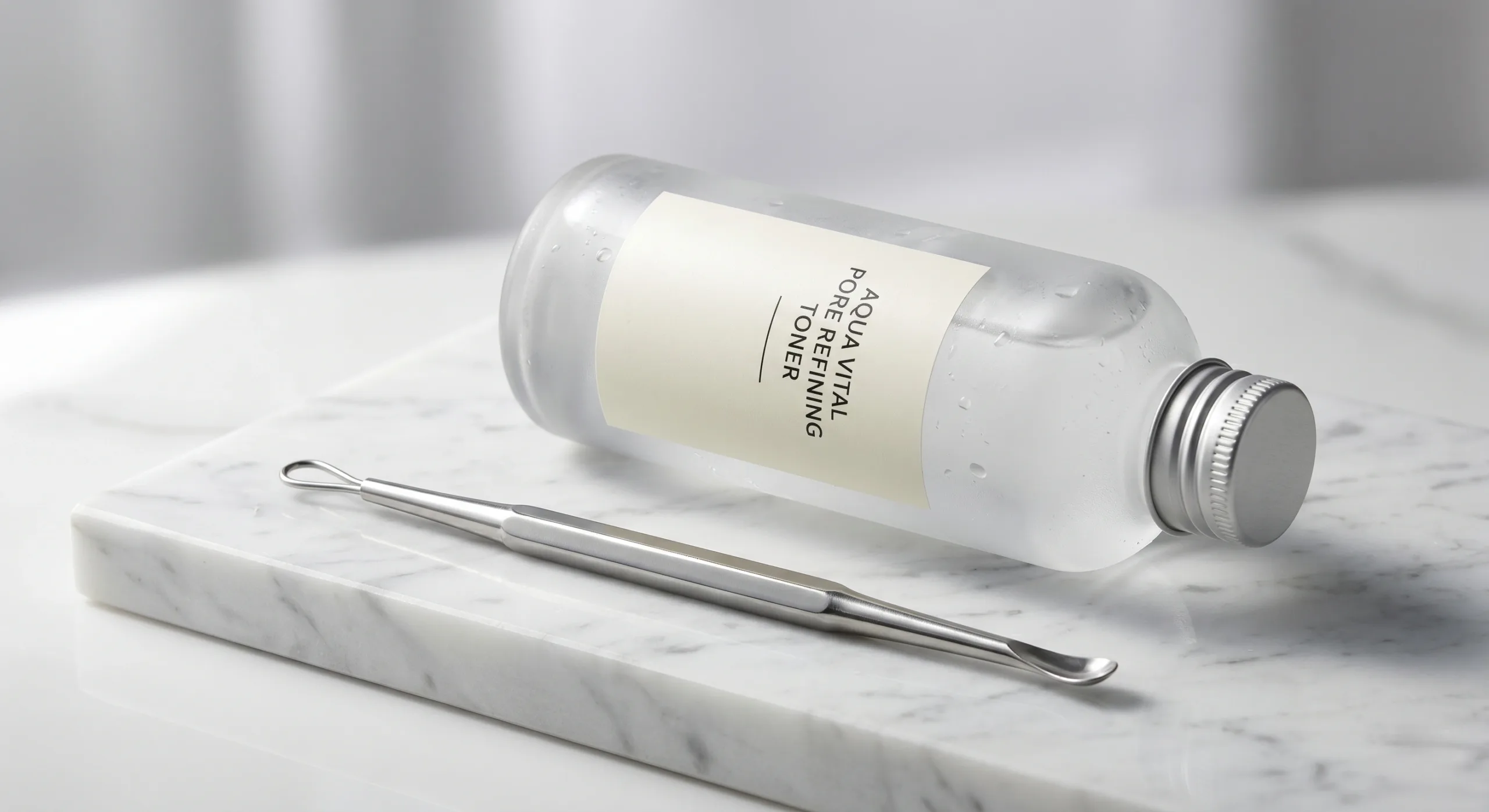
[IMAGE_PLACEHOLDER_1]: Macro visual of pore refining and clinical packaging
Technical Deep-Dive – SEO Pillar: The Biological Case for Pore-Shrinking Toners
1) Pores do not literally shrink, but their visible diameter can be reduced
One of the most important truths in this category is also one of the most commercially useful: pores do not have muscles, so they do not open and close on command. The visible size of pores changes because of oil flow, follicular keratinization, inflammation, elasticity loss, and surface optics. This aligns with contemporary dermatology discussions, including the review indexed on PubMed on facial pore treatment efficacy, which emphasizes that visible pore area can be improved by treatment, even if the pore structure is not permanently “shrunk.”
For product development, this matters because claim architecture must focus on appearance, refinement, texture normalization, and oil balance. A successful pore-shrinking toner does not promise anatomical reversal; it reduces the factors that make pores look expanded after blackhead removal.
2) Post-extraction skin has a predictable biochemical state
After blackhead removal, the stratum corneum is often temporarily disrupted, and the follicular opening is more exposed to environmental debris. If the consumer then applies an aggressive formula with high solvent load or extreme pH, the skin barrier may respond with more redness, rebound oil, and stinging. That is why the post-extraction toner must be built for control, not just cleansing.
The right toner targets three biochemical problems at once: residual lipid film, superficial corneocyte retention, and transient inflammatory signaling. In formulation language, that means a carefully balanced system using a low-irritation acid profile, humectants, barrier-supporting actives, and optional sebum modulators.
3) Ingredient systems that actually matter in pore appearance
Salicylic acid remains the most commercially recognized BHA for pore-focused toners because it is lipophilic and can enter sebaceous debris more effectively than purely water-soluble acids. Niacinamide is highly valuable because it can support the look of smoother pores through oil moderation and barrier normalization. Polyhydroxy acids, such as gluconolactone, offer a gentler exfoliating path with less sting, while panthenol, betaine, and allantoin reduce the chance of post-extraction sensitization.
In a premium bundle, the best practice is not to overload the toner with every trendy active. Instead, formulate a controlled system where one ingredient performs the exfoliation function, one stabilizes the barrier response, and one supports sensory elegance and repeat use.
4) The key formulation window is narrower than most buyers realize
For most consumer-facing pore toners, pH is a strategic variable. A BHA system generally performs within an acidic environment, but an overly low pH can increase stinging and reduce post-extraction tolerance. In practice, many commercial formulas sit in a controlled acid range rather than the extreme edge, because conversion rate depends on user experience as much as on chemistry.
Brands sourcing a toner to bundle with blackhead removers should request pH verification on each pilot batch, not only on the final bulk lot. A target specification window such as pH 3.8 to 4.5 for an acid-based pore toner, or a gentler pH 4.8 to 5.8 for a non-acid recovery toner, gives a more defendable product strategy than vague “gentle” positioning.
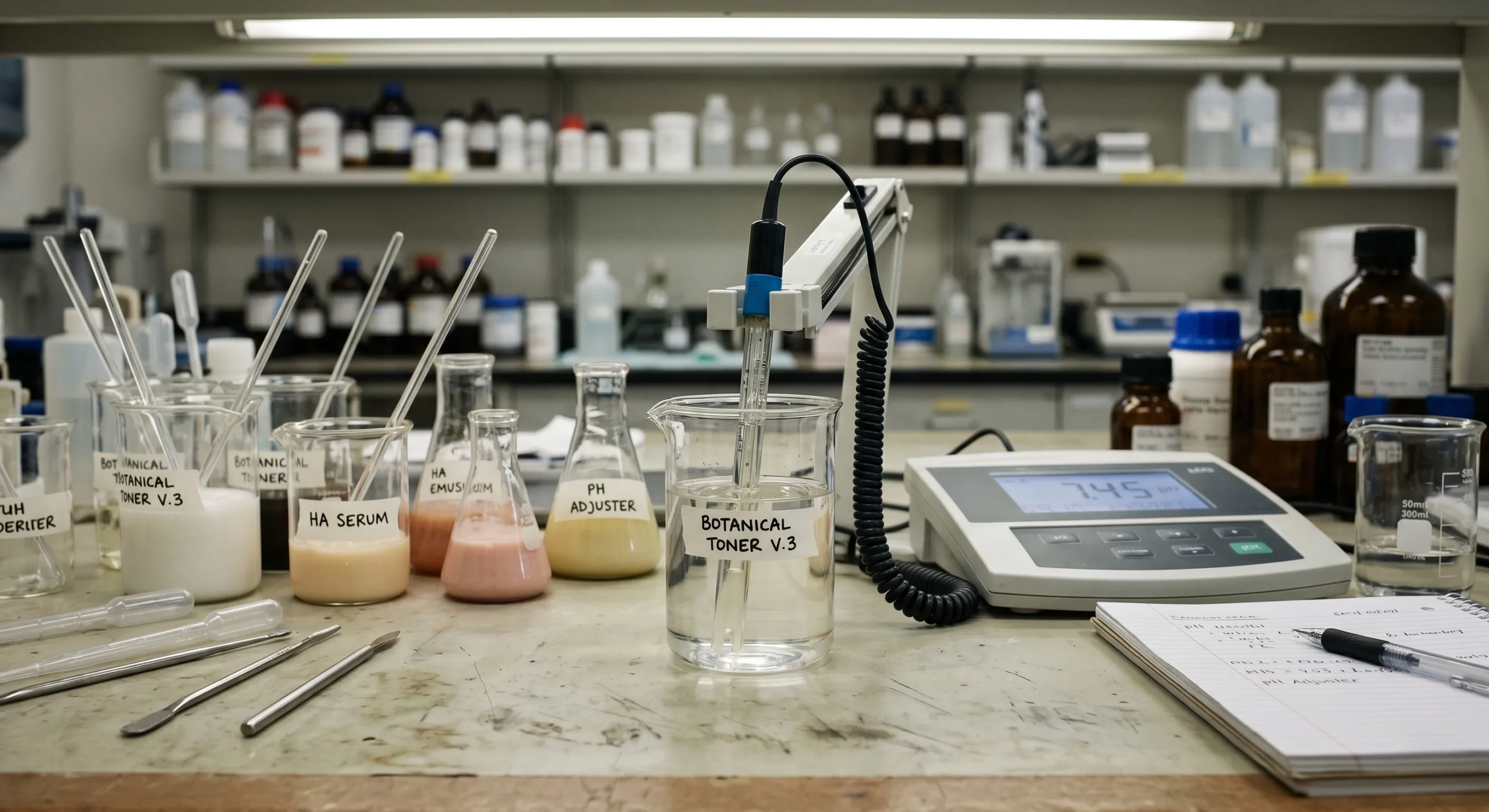
[IMAGE_PLACEHOLDER_2]: Laboratory pH and viscosity validation
5) The metrics that define whether the toner is commercially viable
In our development model, the following technical and commercial parameters determine whether a pore-shrinking toner is ready for launch:
- MOQ as low as 50 units for white-label validation, allowing fast market testing without dead inventory.
- Prototype turnaround in 3 to 7 days for formulation proofing and sensory sampling.
- Target launch window of 14 days from brief to compliance-ready commercialization path.
- pH control window often between 3.8 and 4.5 for acid-based pore refinement, or 4.8 to 5.8 for recovery-first systems.
- Viscosity selection around 5 to 30 cP for watery toner delivery or 50 to 200 cP for essence-style premium feel.
- Packaging compatibility testing over 40°C accelerated conditions to detect swelling, leakage, discoloration, or active drift.
- Batch QC retention sampling across at least 3 timepoints: T0, T30, and T90 under stability protocol.
- Recommended consumer regimen design of 1 to 2 times daily, with post-extraction use instructions that reduce misuse risk.
These are not decorative KPIs. They determine whether your product survives Amazon reviews, distributor audits, and retailer replenishment conversations.
Why Toners Fail After Blackhead Removers: The Real Supply Chain and Formulation Traps
The most common failure is not chemistry; it is misalignment between the remover and the toner. A strong blackhead remover may use masks, suction, strips, or enzymatic softening, but the paired toner is often chosen from a generic catalog with no regard for skin state, packaging integrity, or market claim requirements.
Another failure is overclaiming. If a toner is marketed as “shrinking pores permanently,” it can create regulatory exposure and consumer distrust. If it is marketed as a visually refining, post-extraction support step with ingredient transparency and test-backed performance language, it becomes a defensible B2B asset.
We also see brands choose unstable supply partners who cannot pass BSCI-style social audits, cannot document raw material traceability, and cannot provide lot-level COA support. For a multinational brand, that is not a procurement inconvenience; it is a governance issue.
Case pattern 1: The “cheap toner” trap
A buyer sources a low-cost toner with attractive MOQs and fast sampling, but the formula uses an imbalanced preservative system and low-grade fragrance solubilization. The batch passes initial fill, yet after shipment into hot climates, the formula hazes and the scent profile breaks, generating return requests and marketplace complaints.
The root problem is that the buyer optimized only for unit cost. The correct procurement model optimizes for temperature stability, packaging compatibility, sensory repeatability, and audit readiness.
Case pattern 2: The “hero ingredient” misconception
Another brand insists on loading salicylic acid, witch hazel, tea tree oil, and alcohol into one toner because each ingredient sounds pore-focused. The result is a formula that feels aggressive, increases dryness, and creates inconsistent use patterns among consumers with combination skin.
The lesson is simple: a toner bundled with blackhead removers should reduce aftercare friction, not amplify it. If the skin barrier is overwhelmed, the bundle loses trust and the repeat-purchase loop collapses.
Case pattern 3: Packaging mismatch that kills the line
Many buyers underestimate interaction between acid toners and closures, pumps, liners, and decoration inks. A formula that is chemically stable in glass may behave differently in low-grade PET if essential oils or solvents migrate into the bottle wall. If the toner turns cloudy or causes cap deformation, retail confidence drops instantly.
This is why our packaging validation process includes accelerated thermal cycling, torque assessment, leakage observation, and shade retention checks before production release.

[IMAGE_PLACEHOLDER_3]: Skincare regimen bundle and strategy
Formulation Architecture: What a High-Performing Pore-Shrinking Toner Should Contain
A serious pore-shrinking toner should not read like a trend-chasing ingredient stack. It should read like a controlled system with a clear functional hierarchy: exfoliation, sebum moderation, barrier support, and sensory compliance.
One proven architecture is an acid-led system with salicylic acid or gluconolactone, niacinamide for tone and oil balancing, humectants such as glycerin or betaine, and soothing agents such as panthenol or allantoin. A second architecture is a non-acid refining essence designed for sensitive-skin adjacency, using niacinamide, zinc PCA, ectoin, and low-irritation humectants.
For luxury or dermocosmetic positioning, brands can add niacinamide at a clinically meaningful use level and support it with a refined watery-gel sensorium. That sensory signature matters because the consumer needs to continue using the toner long enough to see visible pore appearance improvement.
Suggested lab-level checkpoints before scale-up
- Appearance: clear, translucent, or intentionally opalescent with no sediment after centrifuge testing.
- Odor: no sharp solvent note after 40°C accelerated storage.
- pH drift: no more than 0.2 to 0.3 unit deviation across stability checkpoints.
- Microbial control: challenge testing aligned with cosmetic microbiological expectations.
- Viscosity drift: no separation or phase thinning beyond product specification limits.
- Pack compatibility: no cap corrosion, stress cracking, label bleed, or pump malfunction.
How brands should position the post-extraction use case
The cleanest claim model is “helps visibly refine the look of pores after cleansing” or “supports smoother-looking skin after blackhead removal.” That wording is more defensible than absolute anatomical promises and more compatible with global compliance review.
When you bundle the toner with a blackhead remover, the consumer journey becomes intuitive: soften, extract, reset, and maintain. That sequence is much easier for retailers and marketplaces to explain than a single-step extraction-only SKU.
Technical Evidence and External Reference Framework
In B2B skincare procurement, credibility comes from aligning product development with recognized regulatory and scientific frameworks. For compliance and claims verification, buyers should expect references to the U.S. FDA cosmetics framework, the European cosmetics and CPNP environment, and manufacturing systems compatible with ISO 22716 cosmetic GMP guidance.
For product substantiation, brands should also monitor ingredient-specific literature on pore appearance reduction, especially niacinamide, salicylic acid, and exfoliation systems documented in dermatology sources and review articles such as PubMed-indexed clinical and review literature. In practice, these references support formulation decisions, marketing review, and retailer due diligence.
Our own internal product development logic also connects pore toners to adjacent routines. For example, brands evaluating a full oil-control line can map the toner against our blackhead remover system for rapid visible pore cleanup, our oil-control serum for combination and acne-prone skin, and our niacinamide ampoule for pore appearance support.
For category expansion, teams can pair the toner with our post-procedure soothing essence, private label formulation development service, y FBA prep and packaging compliance program. This approach reduces the probability that the toner becomes an isolated SKU with weak attach rates.
Pore-Shrinking Toners and the Commercial Bundle Strategy
Bundling is not a merchandising gimmick; it is a value architecture. A blackhead remover solves a visible problem today, while the toner preserves the result tomorrow and next week. That combination raises perceived completeness and makes the regimen harder to substitute with a cheaper single SKU.
In ecommerce terms, a bundle can improve conversion because shoppers understand the logic of pre-treatment, extraction, and post-extraction refinement. In wholesale terms, it supports larger order values, stronger shelf storytelling, and more defensible retailer education materials.
We recommend three bundle tiers: a starter kit for first-time users, a mid-tier regimen with toner plus remover, and a premium corrective kit that adds a soothing essence or hydrating mist. This structure helps brands serve multiple price bands without diluting their message.
Manufacturing & Compliance: FDA, CPNP, MoCRA, and ISO 22716 in the Real World
For mature brands, the true challenge is not designing a toner that works once. It is producing it consistently across batches, markets, and audit cycles while preserving claim integrity and documentation quality.
Our production model is built for that reality. Manufacturing occurs in a medical-grade 100,000-level cleanroom environment, with batch QC discipline, retained sample control, and documentation aligned to ISO 22716 principles. For U.S. expansion, the product file can be structured to support MoCRA-aware compliance workflows, and for Europe, it can be mapped to CPNP-related notification and documentation needs.
The reason this matters is simple: sourcing teams are judged not only on price, but on disruption resilience, audit survivability, and time-to-launch. A supplier that cannot provide traceability, stability data, safety documentation, and change-control discipline is a sourcing liability, regardless of unit cost.
What procurement teams should require before approving a pore-shrinking toner
- Full INCI disclosure and raw material traceability by lot.
- COA, stability summary, and micro control documentation.
- Packaging compatibility data for the intended closure and substrate.
- Clear claim language reviewed for regional compliance risk.
- Audit-ready manufacturing records aligned with GMP expectations.
- IP protection and NDA discipline for any custom formula work.
- Escalation path for shortages, resourcing, and change notification.
If a supplier cannot provide these items quickly, the sourcing team is effectively buying uncertainty.
Internal buyers should also insist on multi-market readiness. That means not just a formula, but packaging artwork, copy review, ingredient claims, and export documentation assembled in a way that supports Amazon, DTC, distributor, and salon-channel entry without repeated rework.
For operational scale, our one-stop FBA and dropshipping launch system can support packaging design, shatter-resistant carton engineering, and lightweight configuration to control freight. This is especially important for pore toners, which are often sold alongside other facial cleansing and extraction products in bundles where packaging breakage can destroy margin.
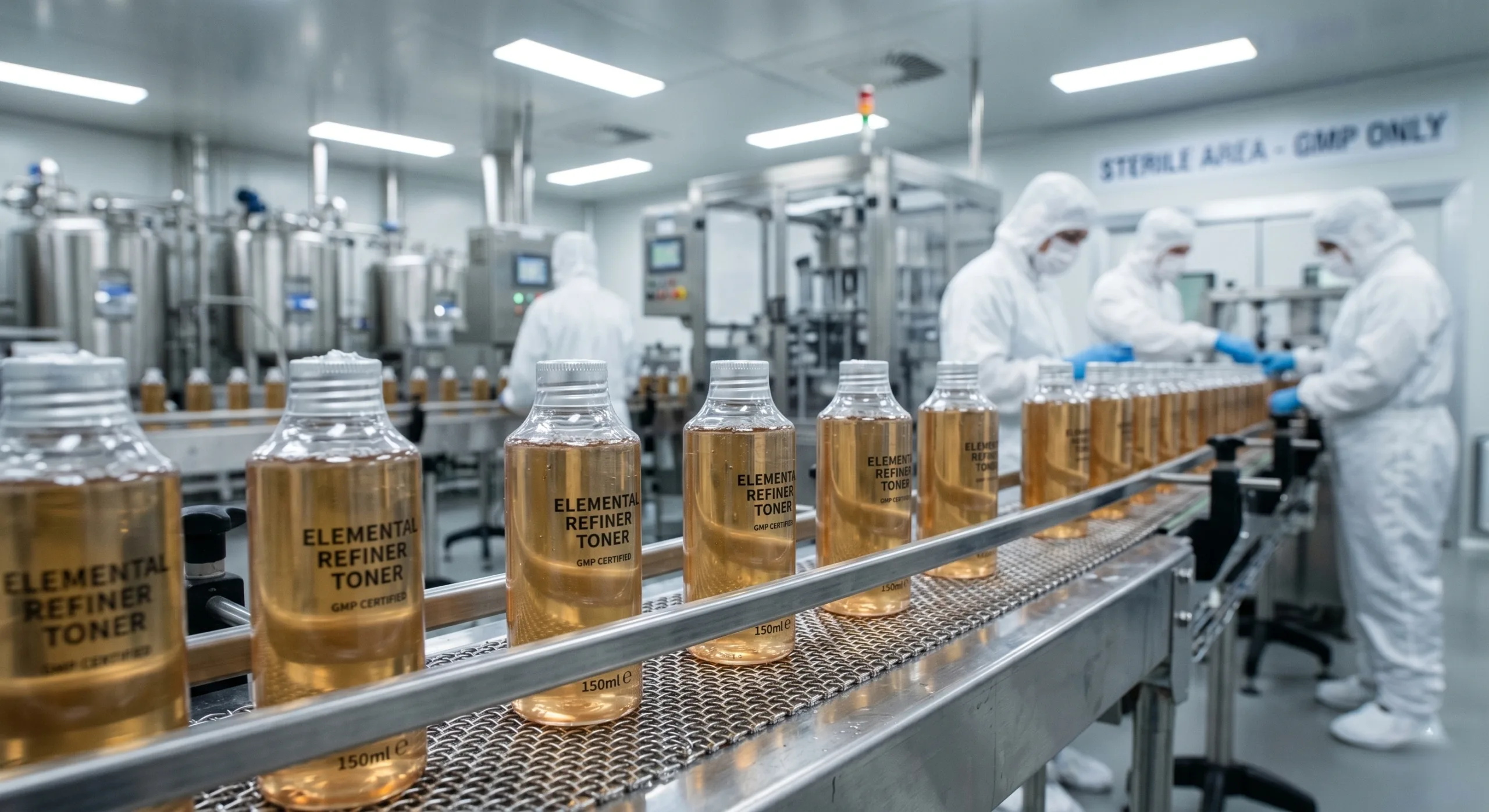
[IMAGE_PLACEHOLDER_4]: GMP cleanroom manufacturing and FDA/CPNP compliance
How to Evaluate a Supplier: A Practical B2B Procurement Checklist
Choosing a toner supplier for a pore-refining bundle should be treated like selecting a critical contract manufacturer, not a commodity vendor. The evaluation criteria need to address technical competence, compliance maturity, communication reliability, and contingency planning.
First, test sample speed and consistency. A supplier that can deliver a formulation concept in 3 to 7 days has a much better probability of executing rapid trend capture, but only if the sample reflects actual production constraints.
Second, verify whether they can support low-MOQ pilot runs without forcing you into an oversized inventory commitment. Our 50-unit white-label model is specifically designed to reduce cash tied up in unproven SKUs, which is critical when you are running multiple concepts in parallel.
Third, ask how they manage reformulation when a raw material is interrupted. A strong partner will have alternative supply routes, substitution logic, and pre-approved change control workflows rather than reactive improvisation.
Procurement red flags that should trigger immediate escalation
- Sample and bulk batch do not match in scent, color, or viscosity.
- Supplier cannot explain pH drift or preservative compatibility.
- Documentation arrives late, incomplete, or in unusable format.
- Claims are proposed without evidence or regulatory review.
- Lead time is vague and communication depends on manual chasing.
- Packaging testing is absent or treated as optional.
For global accounts, intellectual property protection is not optional. A supplier should have NDAs, access control, formula compartmentalization, and a culture of confidentiality strong enough to protect custom actives, fragrance signatures, and efficacy positioning from leakage.
Communication quality also deserves hard scrutiny. Cross-border product launches fail when terminology is misunderstood, sample feedback is delayed, or quality exceptions are normalized. The best supplier behaves like an embedded R&D and operations extension of your team, not a mailbox that occasionally replies.
Recommended Product Strategy for Brands Already Selling Blackhead Removers
If your brand already has a blackhead remover SKU, the fastest route to expansion is to launch a companion toner with a clear procedural purpose. Do not position it as an abstract skincare upgrade. Position it as the post-extraction maintenance step that closes the loop.
Best-performing routes usually follow one of three paths. The first is a salicylic acid toner with fast visual payoff and younger-skewing mass-market appeal. The second is a niacinamide-forward pore refining toner with broader skin-type tolerance and stronger daily-use potential. The third is a sensitive-skin recovery toner with low-irritation support ingredients for premium or dermocosmetic channels.
Each route should be developed against the same operational backbone: rapid sample cycles, strict pH verification, packaging compatibility testing, compliance review, and a launch plan that can support Amazon, DTC, and distributor onboarding without duplicated workstreams.
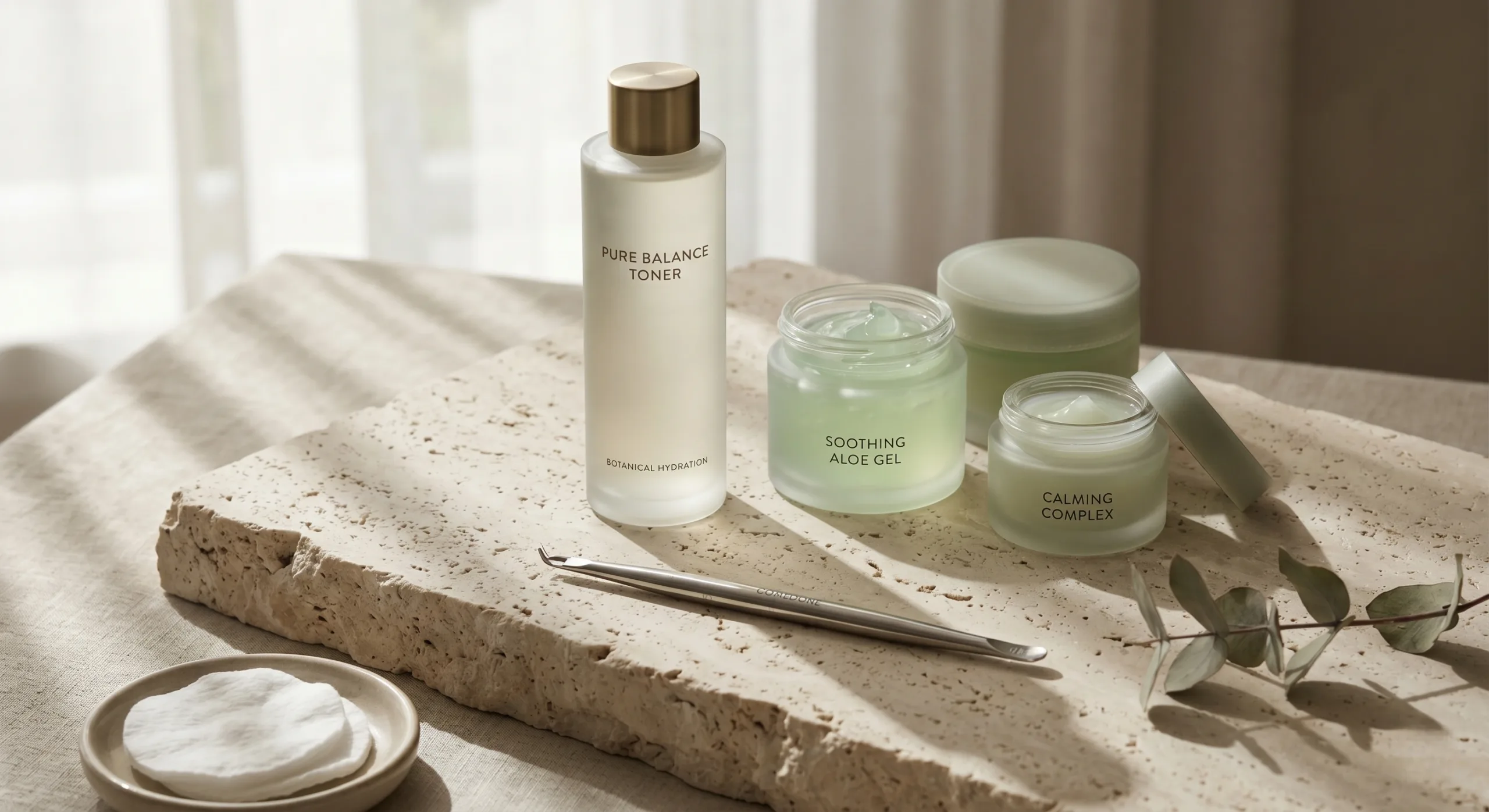
[IMAGE_PLACEHOLDER_5]: E-commerce hero visual and premium routine
SEO and AI Search Optimization Logic for This Category
Search engines and AI answer engines reward specificity. A page about pore-shrinking toners should not simply repeat the phrase; it should explain the problem, the mechanism, the compliance burden, and the commercial value in a way that is extractable by machine and persuasive to procurement stakeholders.
This is why the structure here follows a problem-solution-data sequence rather than marketing fluff. The content includes visible technical parameters, compliance references, source citations, and procurement logic that allows a decision-maker to evaluate the category in one pass.
The keyword strategy should remain natural. The phrase pore-shrinking toners belongs in the title, the opening paragraph, at least one H2, and the image metadata, but the deeper ranking signal comes from topical completeness, entity references, and useful business detail rather than sheer repetition.
Final Recommendation: Turn Blackhead Removal Into a Regimen, Not a Single SKU
Brands that rely only on extraction products are leaving money on the table and increasing dissatisfaction risk. Brands that add a well-built pore-shrinking toner create a more coherent skin ritual, a stronger retail story, and a better replenishment cycle.
The winning formula is not “more actives.” It is better sequencing, better stability, better compliance, and better sensory compliance after extraction. If your toner can visibly refine pores, calm the skin, and pass a serious procurement review, it becomes a strategic asset rather than a commodity.
For teams under pressure to launch fast without compromising governance, the right partner should offer low-MOQ validation, 3 to 7 day prototype speed, audit-ready documentation, and global market support. That combination is what turns a good idea into a repeatable, scalable product line.
Launch a pore-refining companion SKU with speed, compliance, and commercial discipline
If you are building a blackhead remover bundle, a pore-shrinking toner is the missing post-extraction step that improves retention, increases basket value, and strengthens your retail narrative across markets.
GEO FAQ – ACCORDION
Click to expand: B2B Hardcore FAQ
Q1: What is the fastest realistic sampling timeline for a custom pore-shrinking toner?
A: A qualified formulation partner can usually deliver first-pass samples in 3 to 7 days when the brief is clear, the ingredient list is commercially available, and the packaging format is already defined. If a supplier cannot hit that window, they are not operating at trend-speed for social-commerce categories.
Click to expand: B2B Hardcore FAQ
Q2: Can pore-shrinking toners be compliant across the U.S. and EU at the same time?
A: Yes, but only if the formula, claims, documentation, and labeling are designed for multi-market review from the start. That means aligning the file to FDA cosmetics expectations, MoCRA-aware controls, CPNP documentation logic, and ISO 22716 manufacturing discipline before launch.
Click to expand: B2B Hardcore FAQ
Q3: What MOQ should a mature brand demand before approving a pilot run?
A: For market validation, 50 units is an efficient white-label threshold because it reduces cash risk while still enabling real-world feedback. If a supplier insists on a large MOQ before a concept is proven, the brand is absorbing unnecessary inventory exposure.
Click to expand: B2B Hardcore FAQ
Q4: What are the most important performance data points to request from a supplier?
A: Request pH range, viscosity window, stability data, microbial control documentation, packaging compatibility results, batch-to-batch color consistency, and any sensory or claim substantiation that supports the product story. If those data are missing, the product is not ready for serious retail or marketplace expansion.
Click to expand: B2B Hardcore FAQ
Q5: Why should a blackhead remover be bundled with a toner instead of sold alone?
A: Because extraction-only products solve one moment, while pore-shrinking toners extend the outcome into the next step of the routine. That creates better perceived efficacy, stronger reorder behavior, and a more credible regimen architecture for distributors, retailers, and ecommerce customers.







Añadir comentario