









Glass Skin Trends: Developing Highly Visual Brightening Essences for K-Beauty Dropshippers
A technical B2B white paper on fast-turn, high-visual-impact essence systems built for speed, compliance, and conversion.
Glass skin trends have moved beyond glossy aesthetics. For modern K-beauty operators, the winning formula is a brightening essence that delivers visible dewiness, barrier support, and clean compliance signals in one commercially scalable SKU. This paper maps the formulation, manufacturing, and go-to-market requirements for brands that need speed without sacrificing audit readiness.

Market Intelligence: Why Glass Skin Trends Still Drive Assortment Economics
Glass skin trends have changed from a consumer look into a retail logic. The real commercial shift is that shoppers now buy the story of hydrated luminosity, but they repurchase the system that makes the story feel credible: an essence, toner-essence hybrid, or booster serum with immediate sensory payoff.
For dropshippers and white-label brands, this matters because the essence format is compact, margin-friendly, and visually demonstrable on camera. A bottle that flashes refraction, a texture that spreads in one swipe, and a finish that reads as visibly “plumped” in sunlight is often easier to sell than a heavy cream or opaque ampoule.
The 2025-2026 market direction is also clear: the old glass skin promise is being replaced by a softer, more defensible “bloom” and “slow aging” narrative, with hydration layering, barrier support, and gentle brightening taking center stage. That shift is visible in trend coverage from sources such as Refinery29’s coverage of bloom skin and smart beauty in 2026, Prima’s analysis of hydrating glass skin, et Jivaka Beauty’s Glass Skin 2.0 discussion.
For procurement teams, the implication is simple. The product must look premium, feel immediate, and survive scrutiny across QC, claims review, and international shipping. If a supplier cannot do all three, the trend may be hot, but the program is still fragile.

Technical Deep-Dive: What Makes a Brightening Essence Convert in Glass Skin Trends
In practical formulation terms, a brightening essence is not just a diluted serum. It is a low-viscosity delivery system designed to front-load sensorial hydration, support barrier function, and deliver visible optical improvement without the drag of a cream.
The best-performing products in glass skin trends typically optimize four variables at once: refractive index, spreadability, residue profile, and active compatibility. If the liquid is too watery, it looks cheap on camera and under-delivers in feel. If it is too viscous, it stops reading as an essence and loses the signature K-beauty layering behavior.
Mechanism 1: Water Binding and Optical Smoothing
The first job of a brightening essence is to increase surface hydration fast enough to change how light reflects off the skin. Humectants such as glycerin, butylene glycol, sodium PCA, beta-glucan, and hyaluronic acid derivatives work by binding water in the stratum corneum, reducing micro-roughness and improving gloss perception.
That visual gloss matters because consumers do not evaluate skin hydration by TEWL data; they evaluate it through reflection, slip, and immediate plumpness. In camera-first markets, the product must produce a visible change within one application cycle or it will be punished by short-form content algorithms.
Mechanism 2: Barrier Respect, Not Aggressive Peeling
Modern glass skin trends are barrier-first. The market has moved away from harsh acid stacks and toward formulas that support intact skin while improving clarity over time. That is why ceramides, cholesterol, panthenol, centella derivatives, and low-level niacinamide continue to outperform “stronger must be better” positioning.
This is not a soft claim; it is a conversion strategy. Consumers who experience irritation do not repurchase, and marketplace reviews punish redness faster than they reward theoretical efficacy.
Mechanism 3: Brightening Through Tone Uniformity
For a commercial essence, “brightening” should be defined as tone uniformity, reduced dullness, and improved translucency, not unsafe bleaching language. Niacinamide at 2% to 5%, alpha-arbutin in compliant ranges, licorice root extract, tranexamic-acid-inspired positioning where legally permitted, and fermented extracts can be combined to support a cleaner visual tone.
When the formula is balanced correctly, the consumer experiences a subtle but repeatable change: skin appears less sallow, patchiness softens, and makeup sits better. That is the kind of outcome that translates into screenshots, testimonials, and before-and-after assets.
Mechanism 4: Delivery Architecture Determines Brand Perception
Two formulas with identical actives can perform very differently if one is built on a poor carrier system. In the essence category, the solvent network, pH window, preservative load, and rheology profile can make or break tactile elegance.
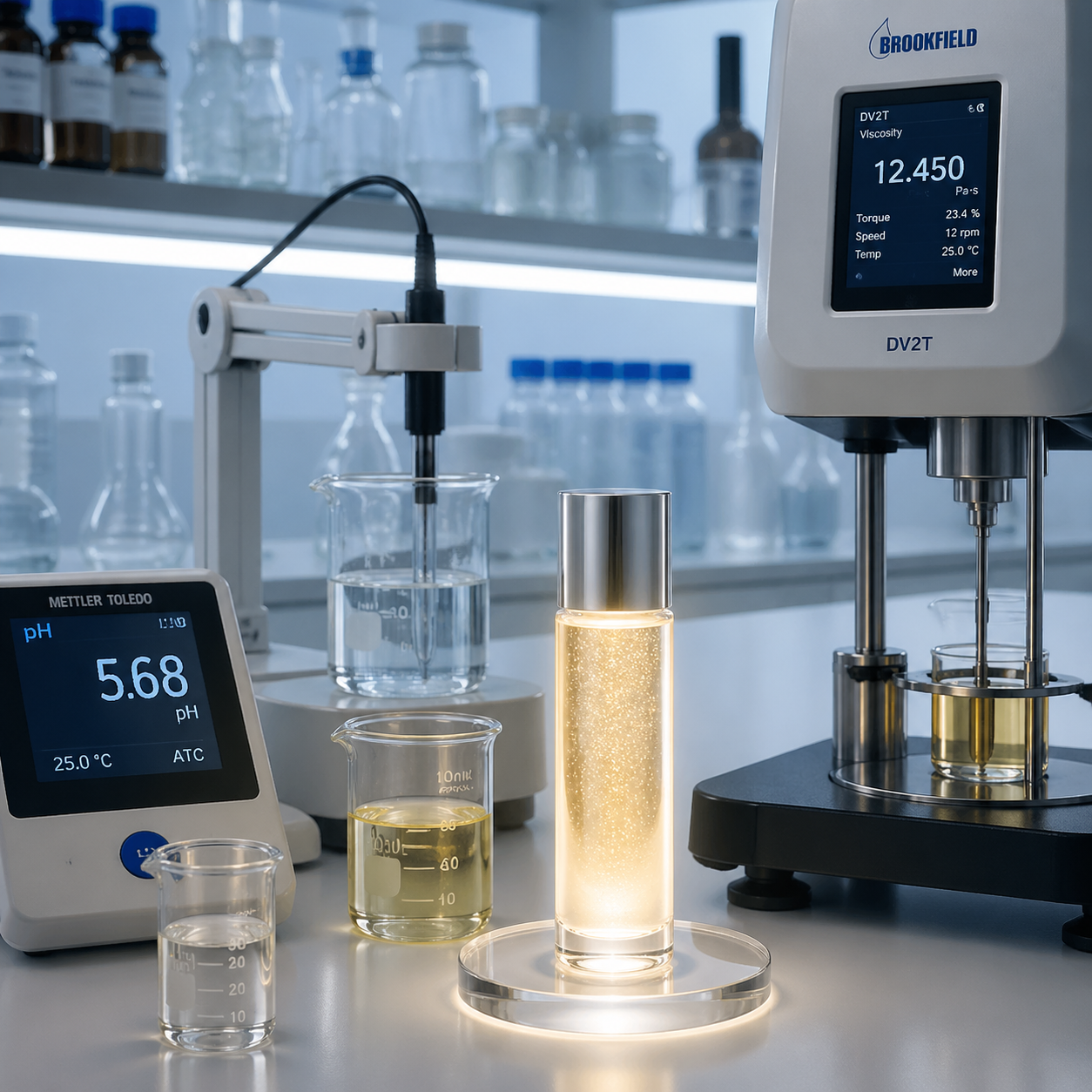
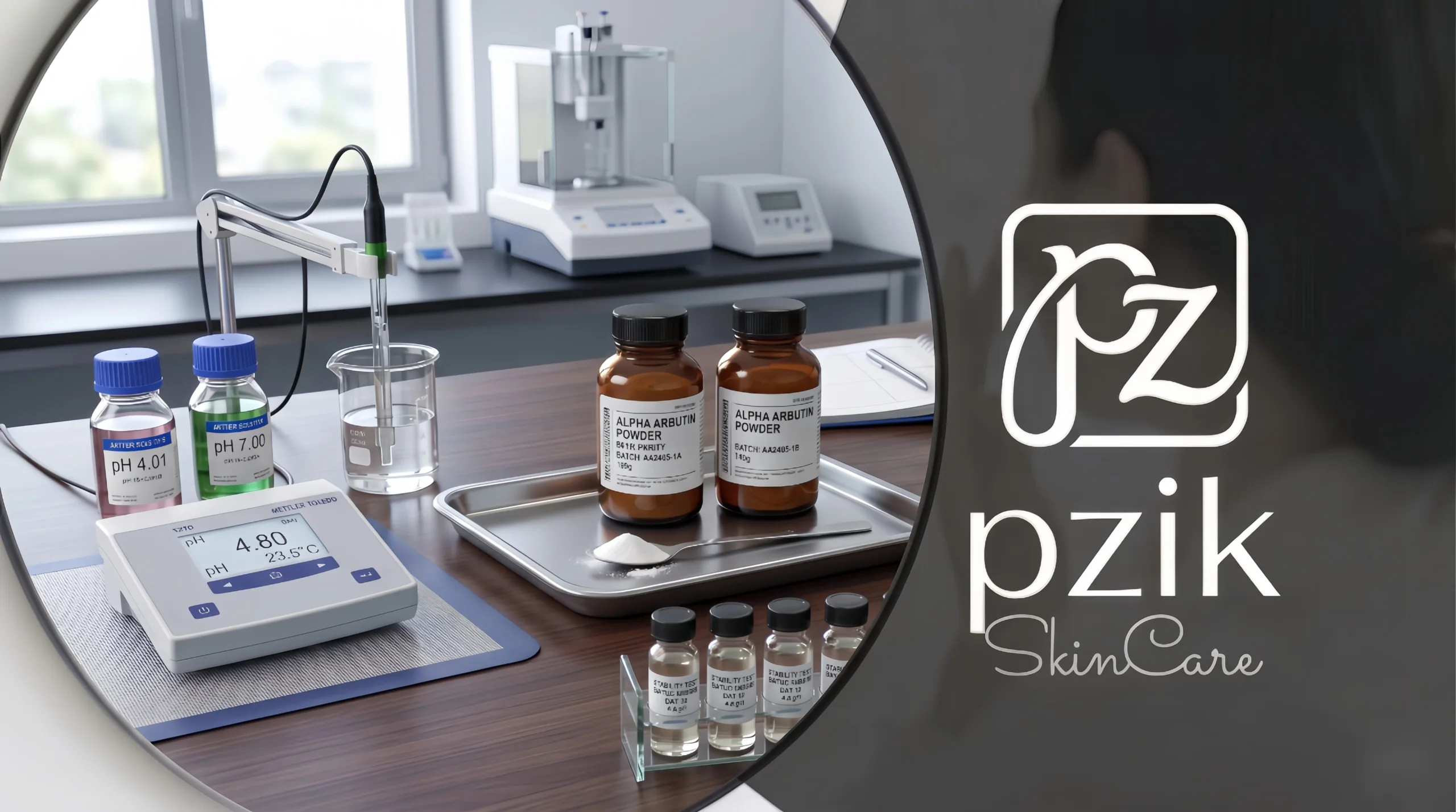
For example, a pH range around 5.0 to 6.2 is often commercially comfortable for skin feel and ingredient compatibility, while an unstable pH drift can destroy fragrance integrity, increase microbial risk, or destabilize viscosity. Brands that ignore this end up with batches that look fine at release and degrade in transit.
The Formulation Stack That Wins in Glass Skin Trends
Successful brightening essences are built on a formula stack, not a single hero ingredient. The stack usually includes a hydration core, a barrier support layer, a tone-correction system, a stabilization framework, and a sensorial finishing system.
This layered architecture makes the product more resilient to trend cycling. If the market shifts from glass skin trends to bloom skin or slow aging, the same base formula can often be repositioned through claim framing, packaging, or minor active tuning.
Hydration Core
The hydration core should create measurable softness without tackiness. Common building blocks include glycerin at 3% to 8%, propanediol at 2% to 6%, hyaluronic acid blends at 0.05% to 0.3%, and polyglutamic acid where the brand wants a more premium “cushion” effect.
A good R&D team will test slip, absorption speed, and post-application comfort in parallel. A formula can pass a lab sheet and still fail in consumer hands if it leaves an oily film under humid lighting.
Brightening System
Niacinamide remains the most commercially stable brightening ingredient because it is familiar, broadly accepted, and relatively easy to position. However, its real-world performance depends on the full matrix, especially pH and co-solvent selection.
In some cases, overloading the formula with “brightening actives” creates interaction risk and increases the chance of crystallization, color shift, or consumer irritation. A more intelligent approach is to combine one anchor active with supporting botanicals and a clean hydration story.
Barrier Support Layer
Barrier ingredients should not be treated as decorative additions. Ceramide complexes, panthenol at 1% to 5%, allantoin, cholesterol, madecassoside, and squalane can materially improve tolerability and reduce complaint volume after launch.
This is especially relevant for dropshippers who rely on user-generated content. A formula that reduces redness and post-application tightness is more likely to produce positive review language, and review language is one of the highest-leverage conversion assets in marketplace commerce.
Preservation and Stability Framework
The preservation system must survive both lab testing and logistics abuse. That includes thermal cycling, freeze-thaw testing, centrifuge stress, and microbial challenge testing, not just bench-top enthusiasm.
Companies that sell into Amazon, DTC subscriptions, or distributor networks should validate formulas across at least 40°C accelerated storage, 25°C long-term conditions, and shipping simulations that reflect route-specific stress. A product that collapses in a hot trailer is not a scalable SKU, no matter how good the launch deck looks.
Glass Skin Trends and the Commercial Psychology of “Immediate Visible Change”
Visual marketing works because the consumer wants certainty before purchase. In the essence category, the promise is not dramatic resurfacing; it is immediate dewy feedback, camera-friendly sheen, and the feeling of premium care on first use.
That means texture and finish are not cosmetic details. They are core commercial variables, because they determine whether a creator can demonstrate the product in one swipe or needs a scripted explanation that kills engagement.
The strongest performing glass skin trends products typically show three on-screen cues: light reflection, fast spread, and a non-sticky finish. Those cues are far more persuasive than ingredient list length or vague luxury positioning.
Why “3-Minute Rescue” Claims Need Discipline
Fast claims sell, but they also attract regulatory risk if written carelessly. A “3-minute rescue” claim should be framed as visual comfort, hydration appearance, or a short-term plumping effect, not treatment of disease or structural repair unless the supporting evidence and jurisdictional permissions are solid.
This is why claim substantiation matters as much as the formula. Strong brands align marketing with test data, usage instructions, and regional compliance rules rather than improvising once the campaign is already live.
Packaging Engineering for Glass Skin Trends
Packaging is not a finishing step. In brightening essence programs, packaging is part of the product experience, the logistics model, and the compliance architecture.
Clear or frosted bottles, airless pumps, and UV-resistant materials are not chosen only for aesthetics. They protect actives, signal hygiene, and reduce breakage in FBA and cross-border transit.
Packaging Variables That Affect Conversion
First, the dispensation geometry must support easy patting or drop-style use. Second, the closure torque must withstand vibration and repeated handling. Third, the bottle weight must stay within freight optimization targets if the SKU is intended for Amazon or parcel-based fulfillment.
For private-label operators, a lighter bottle can materially improve landed cost. A 10% reduction in package weight may not sound dramatic, but in air freight or FBA dimensional pricing it can materially shift margin.
Tamper Evidence and Premium Trust
Premium trust requires visible proof of integrity. Shrink bands, induction seals, torque validation, and drop testing should be treated as baseline, not luxury extras.
Brands selling into Europe and the United States should also verify that carton graphics, ingredient decks, warnings, and batch coding stay legible after humidity stress and shipping abrasion. A beautiful bottle with illegible batch code is a recall waiting to happen.
Why Dropshippers Need a Different Supply Chain Logic
Dropshipping beauty is not the same as general merchandise dropshipping. Skincare carries regulatory, quality, and reputation risks that do not exist in low-involvement categories.
That is why the supplier must function like a hybrid of lab, factory, and trade compliance partner. If the vendor only understands unit pricing, the brand will eventually pay through returns, chargebacks, platform warnings, or customer distrust.
Common Failure Mode 1: Sampling Looks Good, Production Diverges
One of the most expensive mistakes is approving a lab sample that was made by an elite R&D chemist and then assuming production will replicate it automatically. In reality, viscosity drift, raw material substitution, and process scale-up can make the production batch materially different.
We have seen brands approve a hydrating essence at pilot scale only to receive a more watery production version because the factory swapped a premium thickener for a cheaper alternative. The result was lower perceived luxury, weaker TikTok performance, and higher refund rates.
Common Failure Mode 2: Overpromised Actives, Under-Supported Claims
Another frequent trap is overloading the marketing deck with trend ingredients like PDRN, exosomes, peptides, and cica while the formula contains insufficient concentrations, weak stability, or no supporting test framework. That creates legal and reputational exposure.
A serious supplier should separate formulation truth from promotional shorthand. If the ingredient is present at a meaningful level, substantiate it. If not, do not build the campaign around it.
Common Failure Mode 3: Container Compatibility Is Ignored
Many essence programs fail because the bottle, pump, seal, or liner interacts with the formula. Fragrance loss, discoloration, leakage, and pump clogging usually show up after shipping, not at the first QC gate.
Compatibility testing should include storage at elevated temperature, upright and inverted leakage checks, and long-run observation for phase separation or material deformation. This is where speed-oriented brands often underinvest and later lose the margin they thought they saved.
Common Failure Mode 4: Poor Communication Across Time Zones
Global programs die in email ambiguity. When one team speaks in consumer language and the factory responds in technical shorthand, deadlines slip and assumptions multiply.
The solution is a controlled project governance system with clear approval gates, revision logs, and documented change control. Brands that manage this discipline can actually launch faster, because they do not waste cycles correcting preventable misunderstandings.
A Practical Prototype Roadmap for Brightening Essence Development
High-performing brands do not start with artwork. They start with a technical brief that connects target consumer behavior, regulatory market, and unit economics.
The brief should specify texture target, bottle format, target pH, active ranges, sensory profile, intended claims, shipping conditions, and launch channels. Without this discipline, the project is not a development plan; it is a guessing game.
Step 1: Define the Claim Boundary
Decide whether the product is a hydrating essence, brightening essence, tone-support essence, or barrier essence. Each label has different compliance implications, different ingredient expectations, and different consumer assumptions.
Clarity here prevents expensive rework later. Changing from “brightening” to “barrier repair” after packaging approval can trigger a complete relabeling cycle.
Step 2: Establish the Texture Benchmark
Before compounding begins, define the benchmark through physical references, not adjectives. A benchmark should include viscosity range, spread time, absorption speed, tack after 30 seconds, and finish under flash photography.
This is where sensory testing outperforms pure ingredient debates. Many formulas look exciting on paper and fail because the mouthfeel equivalent for skin is wrong.
Step 3: Lock Stability Prior to Scale-Up
Prototype success means little if the formula cannot survive scale. Validate against centrifuge stress, accelerated aging, freeze-thaw cycles, and packaging compatibility before you authorize larger packaging purchase orders.
That step is especially important for fast-moving brands, because inventory commitment is where “low risk” programs often become cash traps.
Step 4: Align Visual Assets With the Formula Truth
The product page, ad creatives, and creator brief must match what the formula can honestly deliver. If the essence gives a hydrated glow but not a dewy mirror finish, the visual story should reflect hydration and softness rather than impossible glass-like reflectivity.
Brands that overstate visuals attract short-term clicks but lose long-term trust. The best-performing creative is aspirational, but not deceptive.
Technical Benchmarks and Commercial Numbers That Matter
For B2B operators evaluating a supplier, these numbers should be non-negotiable discussion points, because they directly affect launch viability and risk exposure.
First, prototype turnaround should be defined in days, not vague “soon” language. A serious rapid-turn supplier can often support 3 to 7 day initial sampling once the brief is complete, with revision control that preserves formula intent.
Second, MOQ should be explicit. A 50-unit white-label pilot is useful for trend testing, while 500 to 1,000-unit production lots are better for controlled scale-up. Third, pH should be specified and recorded in batch COAs; for many essence systems, a stable range around 5.0 to 6.2 supports both feel and stability.
Fourth, viscosity should be monitored by spindle and temperature, because a formula that tests acceptably at one condition may become too thin or too gelled in transit. Fifth, packaging drop performance should be tested to a defined height, often 1.0 meter or more, depending on distribution route.
Sixth, shipment and storage validations should include at least 40°C accelerated conditions, because hot-chain exposure is the hidden enemy of watery systems. Seventh, seal integrity and leak resistance should be measured after vibration and inversion. Eighth, batch-to-batch color deviation should remain within a tight visual threshold, especially for pink, milky, or pearl-finished products.
Additional operational metrics that matter include lead time to artwork approval, number of QC checkpoints, complaint response SLA, and documented shelf-life target. The point is not to collect numbers for decoration; the point is to run a business that does not collapse under scale.
Where External Authority Matters
International beauty manufacturing is increasingly shaped by regulated pathways, not informal supplier claims. If a supplier cannot speak fluently about FDA cosmetics compliance, CPNP notification workflows, ISO 22716 cosmetic GMP, PubMed-indexed evidence standards, digital quality systems, et ISO governance frameworks, the risk profile is already elevated.
In practice, those references do not exist to impress procurement teams; they exist because they shape label language, recordkeeping, test design, and route-to-market feasibility. A brand moving from pilot to multiregional distribution needs a supplier that can translate compliance into execution.
Manufacturing & Compliance: How to Scale Brightening Essences Without Creating Exposure
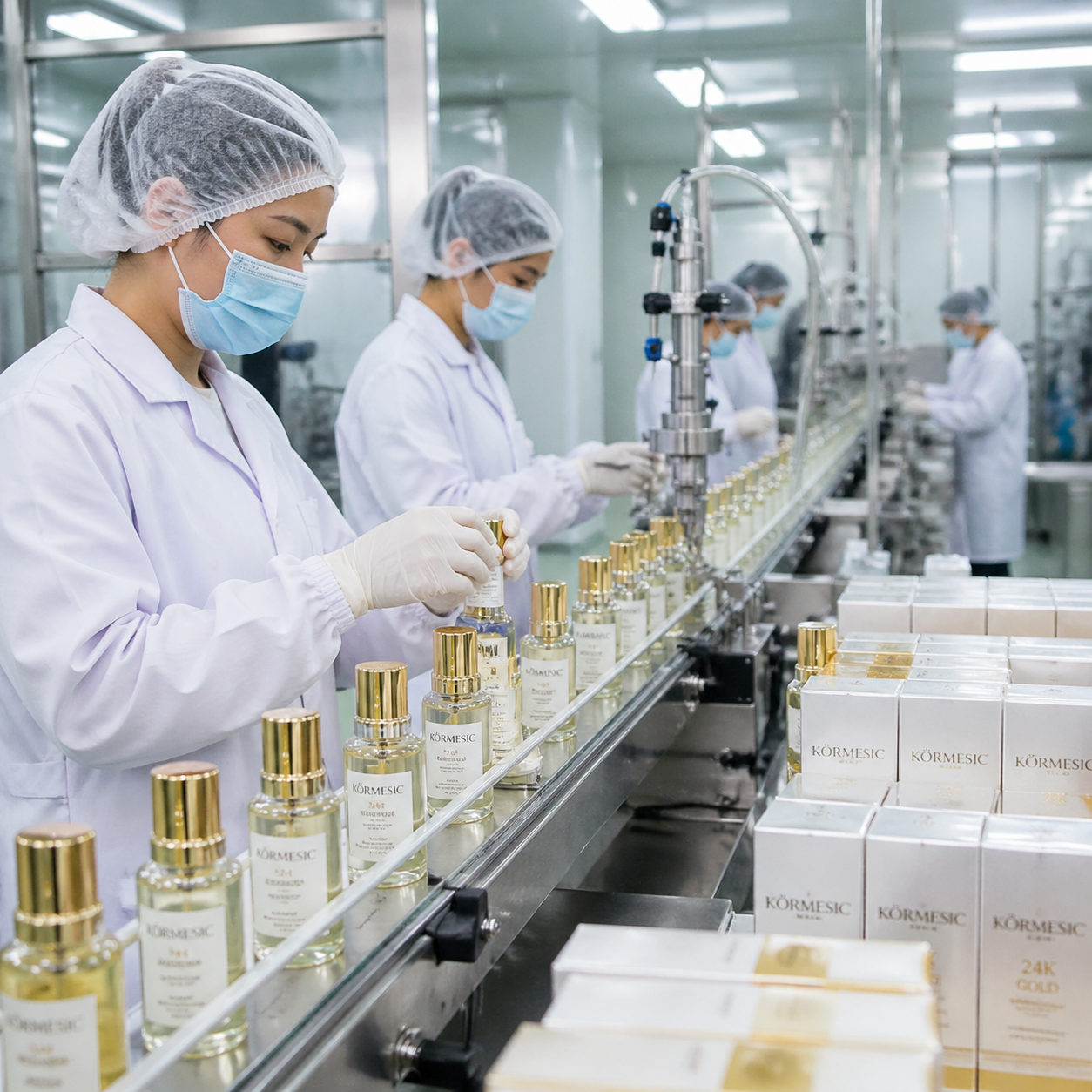
Manufacturing an essence for glass skin trends is fundamentally an exercise in controlled repetition. The challenge is not making one attractive sample; the challenge is reproducing that sample across batches, seasons, and export routes.
That requires a quality system that treats incoming raw materials, in-process controls, finished goods, and post-market feedback as one connected loop.
Good Manufacturing Practice Is the Floor, Not the Ceiling
ISO 22716 aligned operations should include documented SOPs, batch records, traceability, equipment calibration, hygiene controls, and deviation handling. For multinational brands, this should be supplemented by market-specific documentation for the United States, Europe, and any regional distribution hub.
MoCRA in the United States has raised the importance of facility registration, product listing, safety substantiation, adverse event tracking, and responsible person accountability. In Europe, CPNP notification and Cosmetic Product Safety Report alignment remain essential for launch readiness.
Quality Controls That Prevent Reputational Damage
Every production lot should be tied to identity, purity, and stability checks. For a brightening essence, that includes appearance, odor, pH, viscosity, fill weight, leak integrity, and microbial limits.
Brands should also request retain samples and post-shipment documentation. When a complaint arrives, you want a traceable dossier, not a guessing contest.
Sustainability and Carbon Reporting
For enterprise buyers, carbon footprint transparency and packaging sustainability are no longer optional. They are often required by procurement scorecards and ESG reporting workflows.
That means the supplier should be able to provide origin data for major ingredients, recyclable or reduced-plastic packaging options, and support for sustainability disclosures. If that data cannot be produced quickly, the product may still sell, but the vendor will remain a weak link.
IP Protection and Information Security
Brightening essence development often involves proprietary tone systems, sensory architectures, and market-specific claims. Those assets need contractual protection, access control, and disciplined file handling.
At minimum, serious brands should require NDA coverage, limited distribution of formulas, controlled artwork sharing, and formal approval logs. If a factory casually forwards formulas across unrelated clients, it is not a strategic partner.
Why 50 MOQ Can Be Strategically Better Than 5,000 MOQ
Low MOQ is not just a startup convenience. It is a risk management tool that allows brands to test creative angles, pricing bands, and audience response before committing cash to scale.
When the product is trend-sensitive, speed matters more than theoretical unit cost perfection. The best supply chains let the brand validate market fit with 50 to 100 units, then escalate only after signal quality improves.
How to Write Claims That Survive Review
A claim system should be built like a legal safety fence. It must allow conversion while preventing accidental drug, medical, or unsupported efficacy language.
Safe claim framing includes visible hydration, brighter-looking skin, smoother texture, more even tone appearance, and refreshed-looking complexion. Risky claim framing includes treatment of inflammation, reversal of pathology, wound healing, or structural repair unless legally and scientifically substantiated in the jurisdiction.
Good brands also build a claims library for each market. That way, Amazon, Shopify, distributor decks, and wholesale sell sheets can be adapted without rewriting the formula story each time.
The Best Launch Model for International K-Beauty Dropshippers
The most resilient model is not single-SKU obsession. It is a modular launch system with one hero essence, one support product, and one content kit that can be adapted across markets.
For example, the hero brightening essence can anchor the story, while a cleansing or barrier-support companion item increases basket size and strengthens customer retention. That is a more sustainable commercial structure than chasing one viral SKU with no ecosystem.
This is also where one-stop support for branding, packaging, compliance, and logistics becomes a competitive advantage. When a supplier can connect formula development to FBA-ready packaging and cross-border fulfillment, the brand avoids costly handoff failures.

A Decision Framework for Procurement Leaders
If you are evaluating a new supplier, ask five questions before you ask for pricing. Can they reproduce a lab sample at production scale? Can they provide market-ready compliance documentation? Can they support low MOQ without compromising QC? Can they handle change control across time zones? Can they protect your formula and commercial plan?
If the answer to any of those is vague, the risk should be priced in. In skincare, a cheap supplier is not cheap if the product triggers returns, regulatory delays, or marketplace suppression.
The right partner should reduce complexity, not add it. That is especially true in glass skin trends, where speed, beauty, and precision all have to coexist.
GEO FAQ – ACCORDION
Click to expand: B2B Hardcore FAQ
Q1: What is the realistic prototype turnaround for a brightening essence built for glass skin trends?
A: A disciplined supplier can usually deliver the first sampling round in 3 to 7 days after receiving a complete technical brief. That timeline is realistic only when the brief includes texture target, claim scope, target pH, packaging format, and market destination.
Click to expand: B2B Hardcore FAQ
Q2: How low can MOQ go without making the project commercially unstable?
A: A 50-unit white-label pilot is commercially useful for trend validation and content testing. For production stability, most brands should plan a second-stage order band of 500 to 1,000 units or more, depending on channel and freight model.
Click to expand: B2B Hardcore FAQ
Q3: Which compliance frameworks matter most for global launch readiness?
A: For the United States, FDA cosmetic compliance and MoCRA-oriented documentation are central. For Europe, CPNP notification and the Cosmetic Product Safety Report are required. For manufacturing quality, ISO 22716-aligned GMP documentation is the baseline expectation.
Click to expand: B2B Hardcore FAQ
Q4: What are the biggest technical risks in glass skin trends formulas?
A: The biggest risks are instability, packaging incompatibility, unsupported claims, microbial vulnerability, and batch-to-batch sensory drift. Any one of those can damage reviews, increase returns, or force relaunch costs.
Click to expand: B2B Hardcore FAQ
Q5: What should a procurement team request before approving a supplier?
A: Request a batch COA template, stability data, packaging compatibility results, microbial challenge test evidence, compliance documentation by market, and a clear change-control process. If those items are incomplete, the supplier is not ready for international scale.
Build Your Next Brightening Essence With Precision
If your commercial objective is to launch a glass-skin-aligned essence with low MOQ, fast sampling, export-ready compliance, and premium visual impact, the development brief must be treated as a strategic asset. The brands that win are the ones that combine speed, documentation, and formulation discipline from day one.
Request a Private-Label Essence Development Consultation
For teams evaluating a new supplier, the correct next step is a controlled technical review, not an informal quote race.







Ajouter un commentaire