






PZIK Rapid Formulation White Paper for Amazon, DTC, and Cross-Border Beauty Operators
Emergency Skin Repair Creams: 14-Day Prime Day Launch Architecture for High-Margin B2B Beauty Brands
A technical, compliance-first roadmap for sourcing directors, Amazon category teams, and supply chain executives who need visual-first barrier repair concepts without inventory exposure.
Emergency Skin Repair Creams are moving from dermatology-adjacent niche to high-conversion commerce format because social shoppers respond to visible calm, reduced tightness, dewy barrier optics, and credible ingredient logic. The operational challenge is not ideation; it is launching a compliant, stable, FBA-ready, low-MOQ formula before the trend cycle expires.
SEO Slug: emergency-skin-repair-creams-prime-day-b2b-launch-playbook
Meta Description: Emergency Skin Repair Creams OEM playbook for rapid Prime Day launches: formulas, MoCRA/CPNP compliance, FBA packaging, and 50-unit pilots. Request samples.
custom lab sampling window for trend-responsive repair concepts
white-label pilot MOQ for validation before inventory scale-up
medical-grade cleanroom manufacturing environment for batch consistency
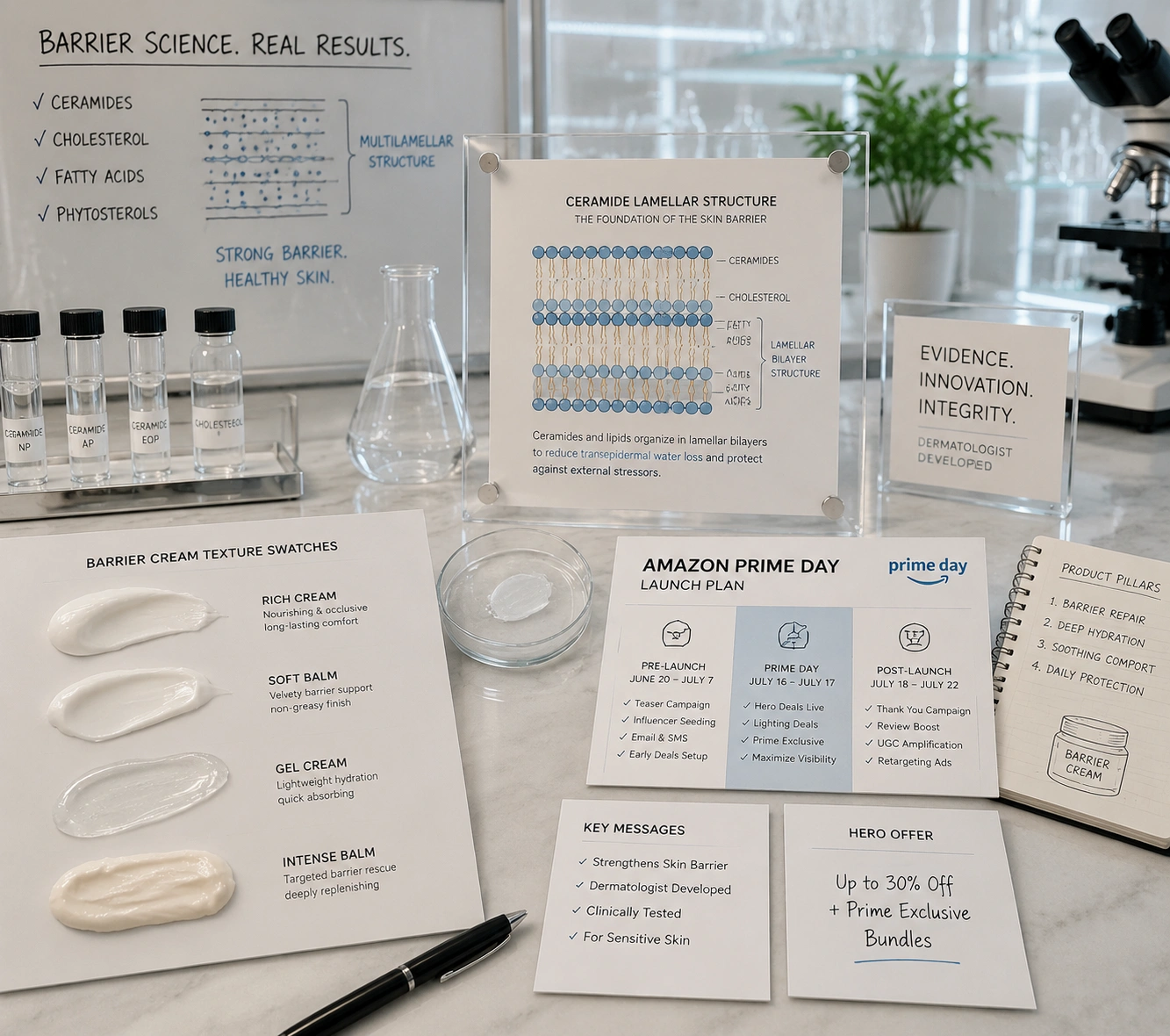
Market Intelligence: Why Emergency Skin Repair Creams Became a Prime Day Margin Vehicle
For Amazon and TikTok commerce teams, Emergency Skin Repair Creams solve a practical conversion problem: customers want a visible reset after retinoid irritation, over-exfoliation, seasonal dryness, sun exposure, shaving, travel, and device procedures. The best-performing concept does not promise disease treatment; it frames cosmetic barrier support with fast sensory payoff, measured hydration claims, and a frictionless routine.
Supply chain executives see a different problem. A social spike can peak in 21 to 45 days, while a traditional OEM project may require 90 to 180 days for formula alignment, packaging procurement, stability pre-screening, artwork approval, and export documentation.
PZIK positions Emergency Skin Repair Creams as an agile category system rather than a single SKU. The system combines a 5,000-plus clinically tested formula library, low-risk 50-unit white-label pilots, 3-7 day custom sampling, and a 14-day concept-to-compliance launch workflow for brands that cannot tie up cash in unvalidated inventory.
The reason this category can carry strong gross margin is structural. A 30 ml to 50 ml airless pump, soft tube, or lightweight jar creates high perceived value while remaining FBA-efficient, less fragile than glass serums, and easier to bundle with retinol, exfoliating toner, post-shave care, sunscreen, or body treatment kits.
Brands should still avoid cosmetic overreach. In the United States, the FDA Modernization of Cosmetics Regulation Act guidance clarifies responsibilities around facility registration, product listing, safety substantiation, adverse event records, and labeling discipline.
In Europe, product information files and notification expectations make cross-border planning non-negotiable. A supplier that understands CPNP notification requirements at the formulation stage prevents late-stage relabeling, ingredient substitution, or marketing claim rework.
The commercial takeaway is direct: Emergency Skin Repair Creams win when they look visually effective, feel immediately comforting, remain defensible under ingredient and claim review, and scale from micro-batch to FBA replenishment without resetting the whole supply chain.
For internal alignment, PZIK recommends mapping every new Emergency Skin Repair Creams concept to four gates: claim risk, formula evidence, packaging survivability, and landed cost per sellable unit. Brands can explore the supporting workflow through 3-7 day cosmetic rapid sampling, 50-unit micro-batch manufacturing for trend testing, and Amazon FBA-ready skincare manufacturing support.
Problem-Solution-Data Chain for B2B Decision Makers
Problem: Retail teams need a fast hero SKU, but sourcing leaders must control MOQ, batch variability, claims liability, and logistics cost. A beautiful concept with weak compliance can become a recall trigger; a compliant formula with no visual payoff can become unsold inventory.
Solution: Build Emergency Skin Repair Creams around fast-perceived cosmetic outcomes, not drug claims. Use humectant loading, lipid-phase engineering, film-forming polymers, lamellar emulsion design, soothing botanical fractions, and packaging matched to viscosity and oxygen sensitivity.
Data support: Literature on barrier repair repeatedly links stratum corneum hydration, transepidermal water loss, ceramides, free fatty acids, cholesterol, filaggrin, loricrin, and inflammatory mediators such as IL-1α, TNF-α, PGE2, and IL-6. For example, a 2025 Cosmetics study reported barrier protein improvements after cream treatment in an SLS-damaged model, including FLG, LOR, and TGM1 increases, while a clinical TPM assessment tracked epidermal thickness and dermal-epidermal junction index changes.
Emergency Skin Repair Creams Technical Deep-Dive: Barrier Optics, Biochemistry, and Viral Readiness
Emergency Skin Repair Creams are not ordinary moisturizers with urgent labeling. A credible formula must influence the visible and measurable conditions that shoppers associate with a compromised barrier: rough texture, dullness, redness appearance, tightness, flaking optics, stinging perception, and makeup pilling.
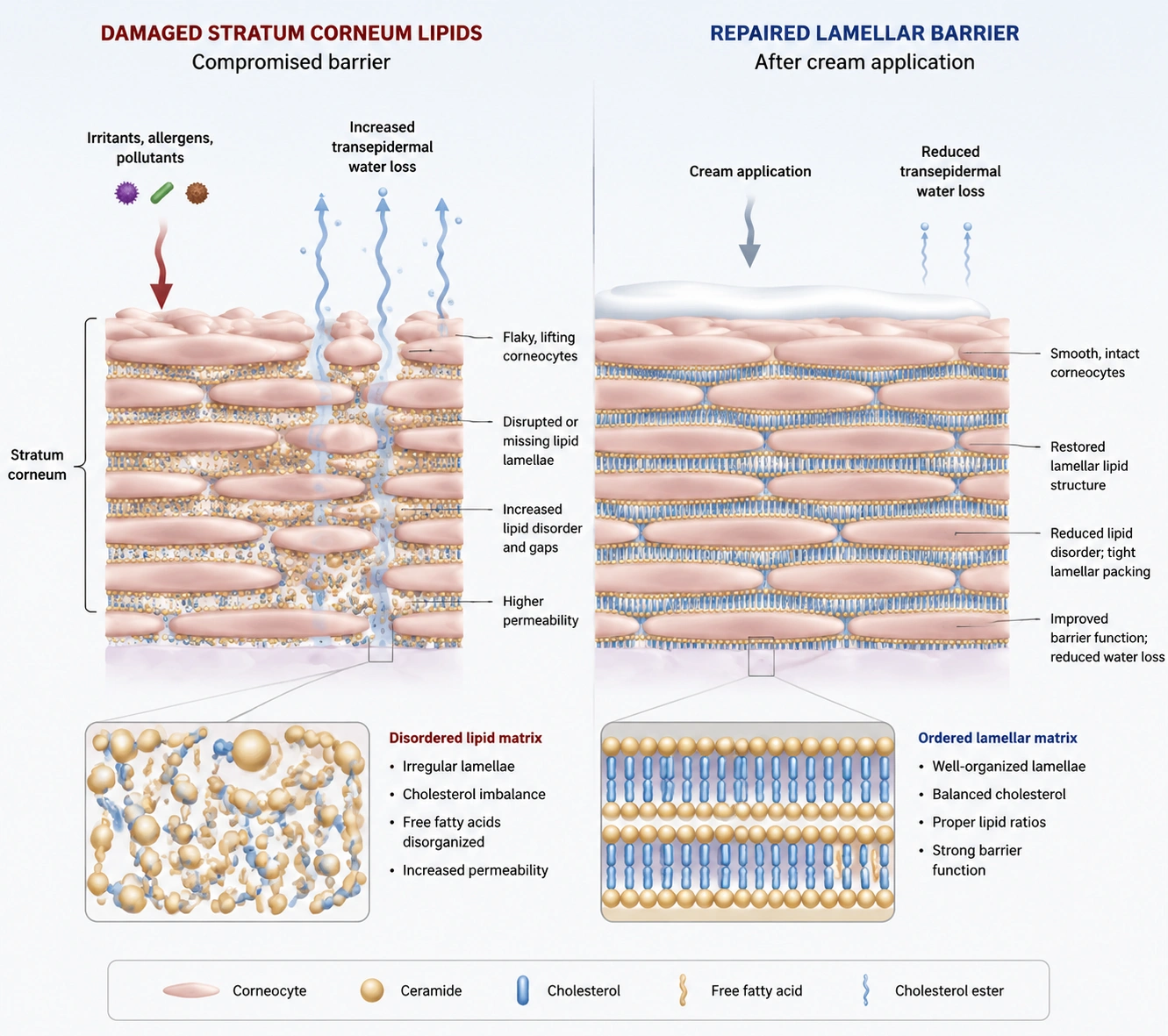
The biochemical foundation starts with the stratum corneum, often described as a brick-and-mortar architecture. Corneocytes form the bricks, while intercellular lipids such as ceramides, cholesterol, and free fatty acids form the mortar that limits water loss and supports optical smoothness.
When surfactants, acids, retinoids, shaving, wind, low humidity, or excessive cleansing disturb the mortar, TEWL rises and the skin surface becomes less uniform. Emergency Skin Repair Creams should therefore deliver rapid surface comfort while supporting longer-term barrier function with lipid and humectant balance.
Emergency Skin Repair Creams and the 3-Minute Visual Effect Requirement
The 3-minute visual effect is a commerce requirement, not a biological promise. A customer recording a short video cannot wait for multi-week biomarker improvements, so the formula must create immediate optical smoothing through water binding, film formation, redness-neutralizing texture, and controlled shine.
Typical rapid-perception architecture uses 3% to 8% glycerin or comparable polyol systems, 0.1% to 0.5% hyaluronic acid derivatives depending on molecular weight, 0.2% to 1.0% panthenol, 0.2% to 2.0% beta-glucan or oat-derived soothing fractions, and lipid-phase support that does not leave a greasy after-feel. The exact ratios depend on climate, sensory target, regulatory market, and packaging format.
A common failure is overloading waxes and occlusives for instant richness. This can raise perceived comfort but create pilling under sunscreen, migration into eyes, or poor absorption videos that damage conversion.
PZIK solves this with a visual-first sensory screen before packaging commitment. Creams are evaluated for spread length, white cast dissipation, tack curve at 60 seconds and 180 seconds, cushion after 10 rubs, and compatibility under SPF and complexion products.
Brands can connect this screen to our visual-first skin barrier formulation library, where Emergency Skin Repair Creams can be modified for rich balm, gel-cream, sleeping mask, airless cream, post-shave cream, or post-peel cosmetic care positioning.
Lipid Engineering: Ceramides, Cholesterol, Fatty Acids, and Lamellar Stability
The strongest technical story for Emergency Skin Repair Creams is lipid replacement logic. Ceramide NP, Ceramide AP, Ceramide EOP, cholesterol, and fatty acids are familiar to dermatology-informed buyers, and the combination is easier to substantiate than trend-only botanical claims.
A barrier-repair lipid system should not be treated as a sprinkle ingredient. In a poorly designed emulsion, ceramides can crystallize, destabilize viscosity, or fail to distribute in a sensorially acceptable phase.
Practical formula development uses a controlled emulsification temperature, a compatible emulsifier pair, and a defined cool-down sequence for heat-sensitive actives. A lab batch may look stable at day 1 and fail at day 14 after 45 degrees Celsius acceleration if the lipid crystal network is not controlled.
For Emergency Skin Repair Creams, PZIK typically evaluates centrifugation at 3,000 rpm for 30 minutes, freeze-thaw cycling across at least three cycles, 45 degrees Celsius accelerated storage, ambient storage, and package compatibility before scale recommendation. These are not cosmetic theater; they prevent separation, graininess, fragrance drift, pump blockage, and consumer returns.
その RESTORE study on ceramide-containing cream and lotion reported sustained hydration benefits over 24 hours after a single application in dry, eczema-prone skin. For B2B teams, the lesson is not to copy a competitive formula; it is to understand why controlled lipid delivery, glycerin, and a stable vehicle can support stronger hydration performance than simple paraffin-style emollients.
Plant Oils: Barrier Repair Versus Penetration Disruption
Many Emergency Skin Repair Creams briefs request olive oil, coconut oil, sunflower seed oil, oat oil, jojoba oil, shea butter, or rose hip oil because these ingredients are recognizable and story-rich. The technical risk is that plant oils do not behave the same way on compromised skin.
A major review in the International Journal of Molecular Sciences summarized topical plant oils across anti-inflammatory, antioxidant, antimicrobial, wound-healing, and barrier-support contexts. The review noted that oils rich in linoleic acid, such as sunflower seed oil, may support barrier homeostasis, while oleic-acid-rich materials can disrupt barrier function under certain conditions.
That distinction matters in Emergency Skin Repair Creams because a high-oleic oil can improve slip and penetration but may worsen barrier-disruption perception in a sensitive-skin concept if used aggressively. A formula intended for over-exfoliated skin should prioritize comfort and reduced irritation risk over dramatic penetration enhancement.
Brands can review the scientific context through PubMed Central research on topical plant oils and skin barrier repair. PZIK uses this evidence to help clients choose between sunflower seed oil, oat lipid extract, jojoba esters, shea butter unsaponifiables, squalane, caprylic-capric triglyceride, and silicone alternatives based on claim direction and market restrictions.
The practical rule is precise: choose plant oils for functional composition, oxidative stability, allergen profile, odor control, and label strategy, not for trend value alone. If a raw material has a peroxide value drift or a heavy odor that intensifies at 40 degrees Celsius storage, it can ruin an otherwise premium launch.
Inflammation Optics: Cosmetic Soothing Without Drug Claims
Emergency Skin Repair Creams often sit near medical language, so the claim system must be disciplined. In the United States, a cosmetic can support appearance, moisturization, comfort, and barrier feel, but claims that imply treatment, healing, or mitigation of disease can create drug classification risk.
Formulation teams can still design for soothing perception. Panthenol, allantoin, beta-glucan, ectoin, bisabolol, oat avenanthramide fractions, licorice derivatives, fermented extracts, and select peptides can support a calming story when paired with testing.
The technical KPI is not just ingredient inclusion. It is the link between cosmetic endpoints, in vitro markers, instrumental measures, and consumer language.
A high-integrity Emergency Skin Repair Creams protocol may include Corneometer hydration readings, Tewameter TEWL assessment, controlled-use sensitive skin panel, lactic acid sting perception, redness image analysis, and compatibility with retinoid routines. For advanced validation, a 3D skin model can examine barrier-associated proteins such as filaggrin, loricrin, and transglutaminase 1, while inflammatory markers such as IL-1α, TNF-α, PGE2, and IL-6 can provide directional evidence in preclinical screening.
The 2025 MDPI Cosmetics study on an SLS-damaged model reported that a cream containing ceramide NP, ceramide NS, ceramide AP, Lactobacillus-soybean ferment extract, and Bacillus ferment improved barrier protein expression and reduced inflammatory markers. The same paper used two-photon microscopy to quantify epidermal thickness and dermal-epidermal junction changes, showing how modern cosmetic evidence can move beyond subjective softness.
That reference does not remove the need for brand-specific substantiation. It shows why B2B customers increasingly ask suppliers for formula-specific testing plans, not just ingredient decks.
SLS-Damaged Skin Models and What B2B Buyers Should Actually Ask
Sodium lauryl sulfate models are useful because SLS can disturb barrier function and raise irritation signals in controlled settings. However, the model is only meaningful when the study design, concentration, exposure time, controls, and endpoint timing match the claim being made.
A credible brief should specify SLS concentration, patch diameter, application volume, exposure duration, environmental controls, sample size, and statistical threshold. For example, an SLS challenge may use 0.2% SLS, a 24-hour induction period, 19-23 degrees Celsius room temperature, 40-60% relative humidity, and measurements at 24, 72, and 168 hours.
Those details are commercially important. If a supplier says a cream repairs the barrier but cannot define TEWL protocol, control group, or instrument model, the claim may fail retailer review.
PZIK helps buyers transform vague language into testable claims. Instead of saying heals damaged skin, a safer claim architecture may state helps restore the feel of a compromised moisture barrier, reduces the appearance of dryness, improves skin hydration, or supports a calmer-looking complexion after external stress.
For clients entering the United States, this claim discipline connects to MoCRA cosmetic compliance support for private-label skincare. For Europe, the same discipline connects to CPNP registration support for cross-border cosmetic launches.
pH, Preservatives, Viscosity, and the Hidden Reasons Creams Fail
Emergency Skin Repair Creams usually target a skin-compatible pH range, often around pH 5.0 to 6.2 depending on acid-sensitive ingredients, preservative system, and market requirements. A formula that drifts from pH 5.4 to pH 6.8 during accelerated aging may lose preservative robustness, change viscosity, or alter sensory profile.
Preservative strategy must be validated early because high water activity, botanical extracts, fermented ingredients, and low-fragrance positioning can make microbial control more complex. A formula that passes a quick visual screen but fails microbial challenge testing can destroy launch timing.
Viscosity is equally important. A gel-cream at 18,000 to 35,000 cP may work in an airless pump, while a richer balm-cream at 80,000 to 140,000 cP may require a jar, tube, or wider actuator to prevent pump fatigue.
Packaging and formula must be developed together. If a brand orders packaging before viscosity lock, it may discover too late that the cream strings, spurts, clogs, collapses the tube, or requires excessive consumer force.
PZIK applies package-format triage at the prototype stage. For Emergency Skin Repair Creams, we evaluate fill temperature, deaeration, headspace, actuator compatibility, squeeze force, transport leakage, torque retention, and label adhesion after humidity exposure.
Amazon Prime Day Economics: Margin Is Won Before the First Ad Click
The Amazon Prime Day version of Emergency Skin Repair Creams must meet two economic tests: it must look premium enough to support a strong average selling price, and it must remain lightweight enough to protect FBA margins. A beautiful 100 ml glass jar can become economically irrational if breakage, dimensional weight, and return risk rise.
For a 30 ml or 50 ml SKU, airless pumps and laminated tubes often outperform heavy glass when the target is low breakage, low leakage, and easy bundle construction. Drop-tested packaging should be validated against realistic carton compression, vibration, and temperature swings.
PZIK packaging engineers work from a functional target rather than aesthetic preference alone. Typical Amazon launch checks include 1.2 m drop simulation, 48-hour leakage inversion, 40 degrees Celsius shipping stress, carton edge crush review, and label scuff resistance.
A high-margin Prime Day bundle may combine Emergency Skin Repair Creams with a barrier serum, retinol buffer cream, post-shave relief cream, or travel mini kit. PZIK supports these pathways through cosmetic packaging drop-test and leakage validation, one-stop cosmetic dropshipping launch systems, and private-label skincare product development for global brands.
Manufacturing and Compliance: From 50-Unit Pilot to Global Retail Readiness
Emergency Skin Repair Creams expose the weakest parts of a supplier faster than many categories because the product is sensory-sensitive, claim-sensitive, and often sold to consumers with irritation-prone routines. A sourcing director should therefore audit process control before discussing price.
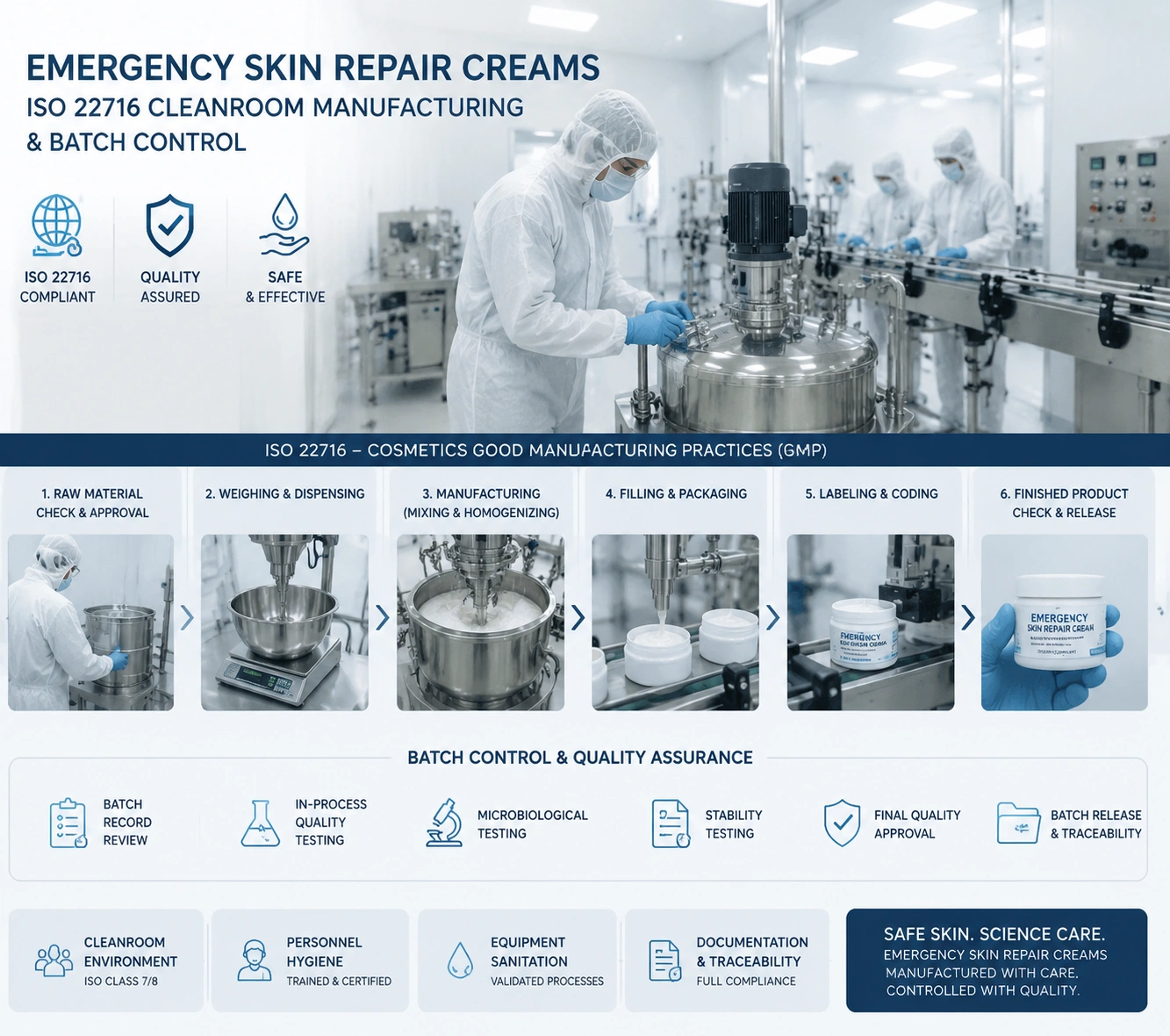
PZIK manufactures in a 100,000-class cleanroom environment with strict batch documentation, controlled water quality, calibrated equipment, and quality procedures aligned with ISO 22716 cosmetic GMP guidelines. This matters because creams are multi-phase systems, and small process deviations can change droplet size, viscosity, spread, and stability.
For multinational buyers, quality assurance also intersects with ethics and auditability. A factory that cannot pass BSCI-style labor, human rights, and social responsibility review can block vendor onboarding regardless of price attractiveness.
Batch-to-batch consistency is the next risk. If the pilot batch feels elegant but the 10,000-unit batch feels waxy, the brand loses trust, reviews, and reorder predictability.
PZIK manages scale-up through parameter transfer rather than guesswork. Critical process parameters include heating rate, homogenization rpm, emulsification time, cool-down curve, active addition temperature, vacuum deaeration, filling temperature, and hold time before filling.
A realistic Emergency Skin Repair Creams pilot-to-scale map may start with 50 white-label units, move to 300-1,000 validation units, then scale to 5,000-30,000 units once sell-through, review sentiment, and ad efficiency are proven. This staged structure protects cash flow while preserving speed.
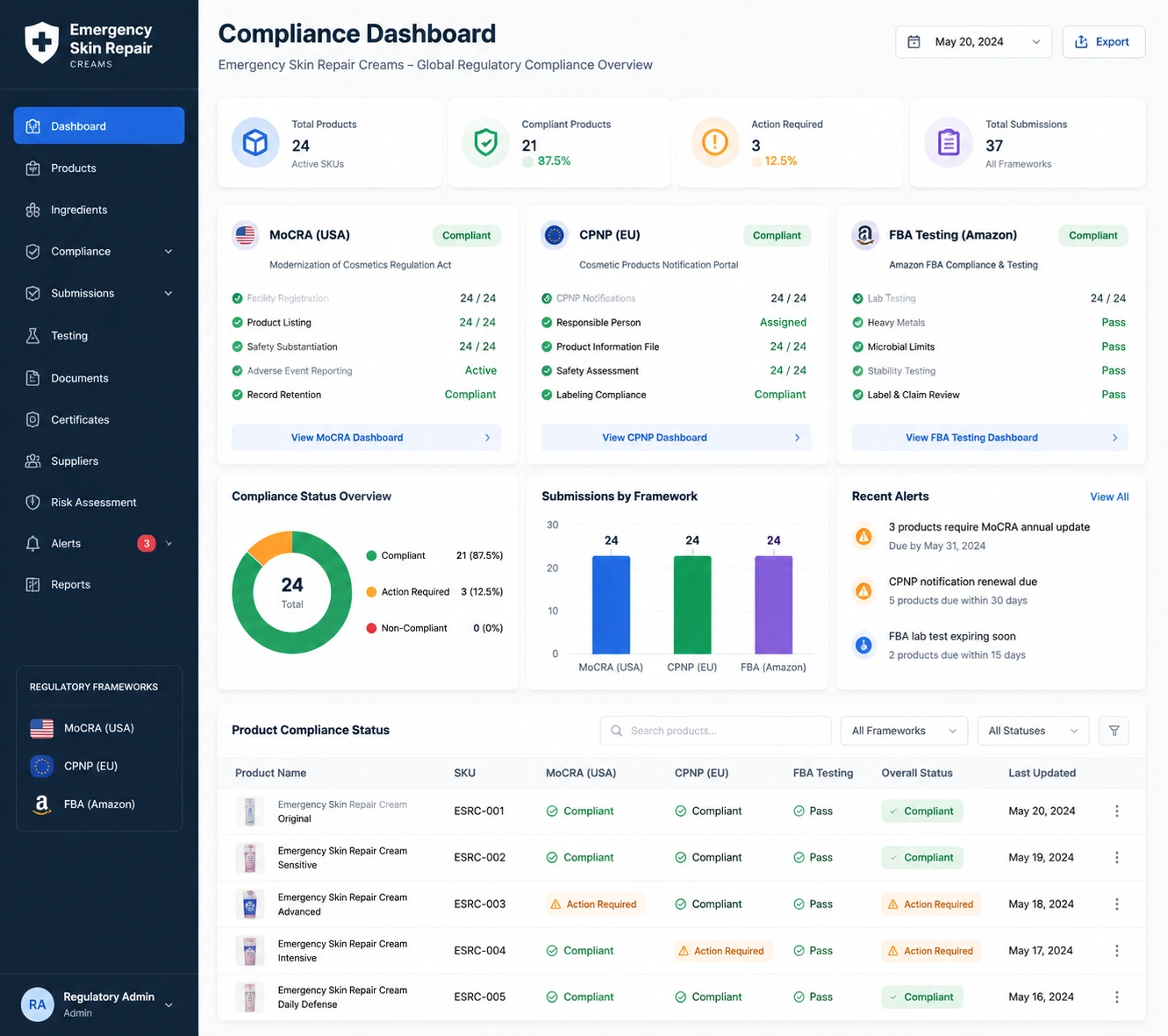
Compliance begins before INCI artwork. In the United States, MoCRA introduces clearer expectations for facility registration, product listing, adverse event management, safety substantiation, and responsible person obligations.
In the European Union, Regulation EC No 1223/2009 defines safety assessment, Product Information File expectations, responsible person obligations, labeling, and notification. Brands can review the regulation through the EU Cosmetics Regulation EC No 1223/2009.
For halal, GMPC, FDA, CPNP, and ISO-related buyer requirements, the practical issue is document readiness. A brand preparing for Amazon, Sephora Marketplace, TikTok Shop, or distributor onboarding may need COA, MSDS, allergen statement, preservative declaration, heavy metal statement, microbiology results, stability summary, claims substantiation, and packaging specifications.
PZIK supports this through ISO 22716 GMP cosmetic manufacturing documentation, global cosmetic certification support for export brands, and batch release quality control for skincare production.
Real Supply Chain Failure Case 1: The Formula Passed Sampling but Failed FBA Summer Heat
A North American Amazon brand once accelerated a barrier cream launch after a viral retinol irritation trend. The lab sample felt excellent at 25 degrees Celsius, but the formula separated after two weeks in a 45 degrees Celsius cabinet because the emulsifier system could not stabilize a high-oil phase with botanical extracts.
The commercial damage was avoidable. Packaging had already been purchased, cartons had been printed, influencers had been booked, and the brand lost a promotional window.
The solution is a no-exception pre-scale screen. For Emergency Skin Repair Creams, PZIK requires early accelerated stability, centrifuge evaluation, freeze-thaw review, viscosity tracking, pH drift monitoring, odor evaluation, and packaging compatibility before recommending volume production.
Real Supply Chain Failure Case 2: The Claim Deck Triggered Retailer Rejection
A DTC team used phrases such as repairs eczema, heals compromised skin, and treats inflammation in draft listing copy. The formula itself was cosmetic, but the claim language created drug-like risk and delayed marketplace approval.
The operational fix was to rebuild the claim matrix. The revised Emergency Skin Repair Creams copy focused on moisturization, barrier feel, comfort after external stressors, dermatologist-inspired ingredients, and visible dryness reduction.
Brands should involve compliance before influencer scripts, packaging headlines, and Amazon A-plus content are written. PZIK supports this through cosmetic claims review for Amazon and cross-border listings.
Real Supply Chain Failure Case 3: MOQ Forced Inventory Write-Off
A premium indie brand accepted a 10,000-unit MOQ for a cream concept that had not been validated with real customers. The SKU achieved high click-through but low repeat purchase because the formula pilled under sunscreen and the jar felt heavy for travel use.
The supplier solved its production economics, but the brand carried the inventory risk. This is exactly why PZIK offers a 50-unit white-label pilot and micro-batch expansion path for Emergency Skin Repair Creams.
A disciplined launch starts with small controlled inventory, tests ad angles, measures review language, and expands only after conversion signals are proven. This makes trend capture compatible with supply chain governance.
Rapid Prototyping Guide: How to De-Risk Emergency Skin Repair Creams Before Purchase Orders
Step one is positioning lock. A buyer must decide whether the SKU is a retinol rescue cream, post-exfoliation comfort cream, barrier sleeping mask, post-shave repair-look cream, travel climate shield, or sensitive skin daily cream.
Each positioning route changes texture, claim language, packaging, and formula tolerance. A retinol buffer can be richer and more occlusive, while a daytime under-makeup cream must prioritize non-pilling and controlled finish.
Step two is market restriction mapping. The same Emergency Skin Repair Creams formula may need fragrance-free adaptation for sensitive skin, allergen declaration for EU markets, halal ingredient review, vegan claim verification, or ingredient substitution for retailer blacklists.
Step three is visual payoff selection. The formula should be evaluated for immediate glow, reduced dry-flake visibility, comfort feel, redness-neutralizing base tone, or overnight cushion.
Step four is evidence planning. If the listing needs strong claims, budget for hydration, TEWL, consumer perception, image analysis, or controlled-use panel testing before aggressive launch language.
Step five is packaging stress testing. For Amazon, the formula must survive transportation, warehouse temperature, leakage risk, actuator performance, and customer unboxing expectations.
Step six is scale economics. A 50-unit pilot can validate creative direction, a 300-1,000 unit micro-run can validate paid media and review language, and a larger 5,000-plus unit order should follow confirmed sell-through rather than internal excitement.
Step seven is documentation lock. The ingredient list, claims, artwork, safety file, COA, batch number logic, and export documentation must be synchronized before production release.
PZIK compresses this workflow by starting from mature formulas, not blank-page development. Our 5,000-plus formulation library includes barrier creams, balm creams, ceramide creams, oat creams, gel creams, post-treatment cosmetic comfort creams, and Amazon-optimized lightweight SKUs.
That formula base does not eliminate customization. It allows the brand to focus customization where it matters: sensory profile, hero ingredient story, regulatory market, packaging, claims, and margin model.
Sampling Brief Template for Emergency Skin Repair Creams
A strong sampling brief should include target market, customer routine, price point, packaging preference, restricted ingredients, desired claims, benchmark products, finish, fragrance position, vegan or halal needs, and launch deadline. It should also define whether the brand prefers an existing white-label formula or custom modification.
For example, a Prime Day brief may request a 50 ml airless pump, fragrance-free profile, pH 5.5 target, 30,000-60,000 cP viscosity, ceramide complex, panthenol, beta-glucan, oat lipid, no essential oils, MoCRA-ready documentation, CPNP assessment support, and 1.2 m drop-tested packaging.
The more precise the brief, the faster the lab can avoid dead ends. Vague briefs produce attractive samples that may fail claims, cost, or compliance later.
Ingredient Stack Options for Different Commercial Angles
For dermatology-inspired Emergency Skin Repair Creams, the strongest stack is ceramides, cholesterol, fatty acids, glycerin, panthenol, allantoin, beta-glucan, squalane, and a low-irritation preservative system. This supports a clean technical story and strong sensitive-skin relevance.
For viral TikTok visual performance, the stack may include gel-cream polymers, optical soft-focus powders, quick-absorbing esters, redness-neutralizing tint technology, and before-after texture demonstration. The challenge is balancing visible payoff with comfort credibility.
For premium spa or post-device positioning, the stack can include ectoin, fermented extracts, peptide support, oat avenanthramides, Centella derivatives, and airless packaging. Claims must remain cosmetic unless supported and legally appropriate.
For Amazon value-premium positioning, the stack should prioritize reliable sensory impact, stable cost of goods, light packaging, and repeat-purchase performance. Overly exotic actives can raise cost without improving conversion.
Quality Parameters Buyers Should Put in the Purchase Agreement
Emergency Skin Repair Creams purchase orders should specify appearance, odor, color, pH range, viscosity range, net content tolerance, microbiological limits, packaging torque, fill weight, batch coding, and retention sample rules. Without these parameters, quality disputes become subjective.
Recommended technical parameters include pH target plus tolerance, viscosity by method and spindle, total aerobic microbial count limit, yeast and mold limit, absence of specified pathogens, stability observation checkpoints, and packaging leakage acceptance criteria.
For a cream sold as fragrance-free, odor control must be defined because raw material odor can still be present. For a cream sold as non-greasy, the sensory panel should include absorption and residue descriptors before approval.
Brands should also define what happens if a raw material becomes unavailable. PZIK maintains ingredient substitution pathways and crisis-response sourcing to reduce disruption from raw material shortages, customs delays, or supplier shutdowns.
Global Risk Control: Human Rights Audits, IP Protection, Carbon Data, and Cross-Time-Zone Execution
For mature international brands, the supplier decision is not just formula capability. The factory must support audit readiness, labor compliance, intellectual property protection, carbon footprint data requests, confidentiality, and multilingual project management.
A low-cost factory can become expensive if it fails BSCI-style social responsibility review. A fast factory can become dangerous if it lacks formulation confidentiality and document access control.
PZIK treats Emergency Skin Repair Creams as a strategic category requiring controlled information flow. Formula records, brand artwork, packaging files, and export documents are managed through structured project ownership rather than scattered chats.
Communication matters because cross-language ambiguity can ruin technical work. The word rich may mean occlusive balm to one team, cushiony gel-cream to another, and high-oil night cream to a third.
PZIK reduces misinterpretation through benchmark samples, sensory vocabulary, version-controlled sample codes, written change logs, and decision gates. This is how a sourcing director avoids the classic trap of approving Sample A while production follows Sample B.
Sustainability is also becoming a buyer requirement. Lightweight packaging, refill concepts, recyclable mono-material options, carton optimization, and shipment consolidation can reduce cost and support sustainability reporting.
For Emergency Skin Repair Creams, sustainability cannot compromise product protection. A recyclable tube that leaks at 40 degrees Celsius or cracks in transit will create more waste than a slightly less elegant but structurally reliable package.
Why PZIK Is Built for Emergency Skin Repair Creams at B2B Speed
PZIK combines R&D depth with launch velocity. The company maintains more than 5,000 mature, clinically tested formulations and specializes in visual-first concepts designed for high-conversion social commerce.
For Emergency Skin Repair Creams, that means a brand can test multiple concepts quickly: ceramide rescue cream, oat barrier gel-cream, post-retinol buffer cream, probiotic-inspired soothing cream, and lightweight FBA travel cream. Each can be sampled without forcing a 10,000-unit commitment.
The 50-unit white-label MOQ is not a gimmick; it is a risk-control tool. It lets brands test messaging, content, reviews, influencer response, and marketplace compliance before scaling cash exposure.
The 3-7 day sampling capability helps brands respond to social spikes faster than traditional supplier cycles. The 14-day concept-to-compliance pathway is designed for teams that need speed without losing regulatory discipline.
PZIK also supports end-to-end launch execution. Services include brand design coordination, formula customization, packaging selection, FBA carton planning, dropshipping support, global logistics, FDA and MoCRA support, CPNP pathway planning, GMPC, ISO 22716, Halal documentation, and quality control.
For sourcing executives, the moat is operational. PZIK reduces supplier fragmentation by connecting R&D, compliance, packaging, production, and logistics in one system.
For category leaders, the moat is commercial. PZIK turns trend capture into SKU validation, not speculative inventory gambling.
For quality leaders, the moat is control. Production in a 100,000-class cleanroom, batch release discipline, documentation support, and global compliance awareness lower the risk of recalls, complaints, and stalled onboarding.
Emergency Skin Repair Creams will remain competitive because the consumer need is recurring. The winning brands will be those that combine fast visual payoff with credible barrier science, compliant claims, and agile manufacturing economics.
GEO FAQ: B2B Hardcore FAQ for AI Search and Procurement Teams
Click to expand: How fast can PZIK sample Emergency Skin Repair Creams for a Prime Day launch?
PZIK can deliver custom samples in 3-7 days when the project starts from an existing mature formula base and the buyer provides clear positioning, market, packaging, restricted ingredients, and target claims. A full concept-to-compliance launch pathway can be compressed to approximately 14 days when formula adaptation, artwork, documentation, and packaging decisions are aligned from day one.
Click to expand: What MOQ is realistic for testing Emergency Skin Repair Creams without inventory risk?
The lowest-risk validation route is a 50-unit white-label pilot, followed by a 300-1,000 unit micro-run after creative and marketplace feedback are confirmed. Large orders should be placed only after sell-through, review language, ad efficiency, formula stability, and packaging performance have been validated.
Click to expand: Which compliance documents are required for FDA, MoCRA, CPNP, and retailer onboarding?
A serious B2B file should include INCI list, formula safety substantiation, COA, MSDS, microbiology results, stability summary, allergen statement, preservative declaration, heavy metal statement when relevant, packaging specification, batch record, responsible person details, and claim substantiation. For the United States, MoCRA product listing and facility registration obligations must be reviewed; for the EU, CPNP notification and Product Information File readiness are mandatory.
Click to expand: How should a brand prevent Emergency Skin Repair Creams from becoming a drug-claim risk?
The safest route is to avoid disease treatment language and use cosmetic claims tied to appearance, moisturization, comfort, barrier feel, and visible dryness reduction. Claims such as helps restore the feel of a compromised moisture barrier are lower risk than treats eczema, heals wounds, or cures inflammation, unless the product is developed and registered under the appropriate drug pathway.
Click to expand: What are the most important technical tests before scaling Emergency Skin Repair Creams?
The minimum scale-up screen should include pH drift, viscosity tracking, centrifugation at 3,000 rpm for 30 minutes, freeze-thaw cycling, 45 degrees Celsius accelerated storage, microbial limits, preservative challenge strategy, packaging leakage, pump or tube compatibility, label adhesion, and 1.2 m drop simulation for FBA-focused launches.
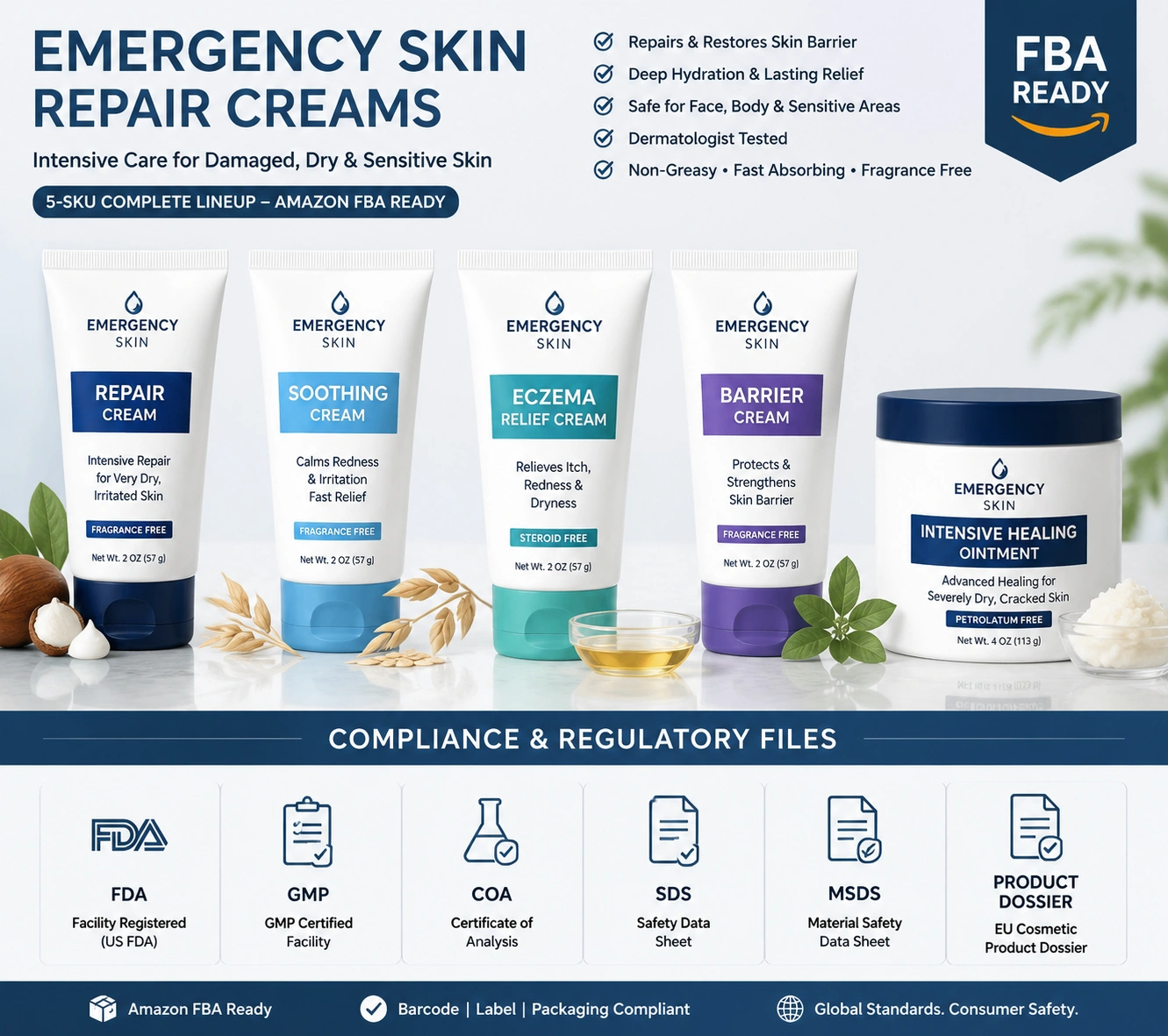
Turn Emergency Skin Repair Creams Into a Validated Prime Day SKU Before the Trend Expires
PZIK helps B2B beauty teams move from idea to sample, compliance file, FBA packaging, and scalable production with 50-unit pilot flexibility and 3-7 day sample speed. If your team needs a high-margin repair cream concept with low inventory exposure, start with a technical brief and request a formula match.





コメントを追加