









Zero-Waste Manufacturing: Implementing PCR Materials and Carbon Tracking for Eco-Conscious Brands
A B2B strategy guide for brands that need lower waste, stronger compliance, measurable carbon reduction, and faster commercialization without sacrificing product performance.
If your brand is under pressure to reduce packaging waste, prove ESG credibility, and move faster than trend cycles, this guide shows how zero-waste manufacturing can be operationalized with PCR materials, carbon tracking, agile MOQ control, and global compliance readiness.
Market Intelligence: Why Zero-Waste Manufacturing Now Matters for Eco-Conscious B2B Brands
Zero-waste manufacturing is no longer just a sustainability narrative. It is becoming a commercial requirement for brands that want to win retailer trust, pass marketplace scrutiny, reduce packaging liabilities, and create measurable proof points for ESG reporting.
Research on zero waste manufacturing shows that the most effective systems combine design for zero waste, smart material audits, collection discipline, high-value recycling, industrial symbiosis, and waste-to-resource conversion. In practice, that means brands must stop thinking only in terms of end-of-pipe recycling and start designing products and packaging around circular inputs, traceable materials, and recoverable outputs.
For eco-conscious brands, the hardest part is not usually the ambition. The hardest part is operational execution: how to source PCR without destabilizing quality, how to launch small without tying up capital, how to prove carbon gains without making reporting chaotic, and how to move through FDA, CPNP, MoCRA, and EU-related compliance without delayed launches.
That is where the manufacturing model matters. A supplier that can combine a visual-first formulation engine, 50-unit MOQ, 3–7 day sampling, FBA-ready packaging, and full compliance support gives brands a realistic path from concept to shelf. Zero waste is not a slogan when the supply chain can actually support it.
To position this correctly in your broader growth strategy, treat zero-waste manufacturing as a revenue-enabling operating system, not a CSR add-on. It supports **sustainable product development for B2B beauty brands**, reduces launch risk, and improves the odds that sustainability claims can be validated in market.
Common Pain Points Eco-Conscious Brands Face in Zero-Waste Manufacturing
Most B2B buyers in this category do not struggle with intent. They struggle with fragmented execution across materials, packaging, compliance, logistics, and reporting.
The first pain point is PCR inconsistency. Post-consumer recycled material can vary by supplier, resin grade, contamination profile, melt flow, odor, color drift, and mechanical performance. If your packaging or components are cosmetically visible, these issues can damage perception even before the product reaches shelf.
The second pain point is overcommitted inventory. Sustainability-minded brands often want to test refill systems, mono-material packaging, or reduced-plastic formats, but traditional factories push large MOQs that force high cash lockup and create waste if the concept underperforms. A 50-unit starting point changes the economics dramatically.
The third pain point is slow validation. A brand that waits 30 to 60 days for a sample misses social trends, retailer windows, and campaign momentum. In beauty, wellness, and personal care, trend velocity matters as much as unit economics.
The fourth pain point is compliance fragmentation. US market access may require MoCRA-aligned documentation and FDA-related regulatory awareness, while EU commercialization demands CPNP readiness and appropriate safety and labeling support. If a factory cannot coordinate these requirements, the brand inherits the burden.
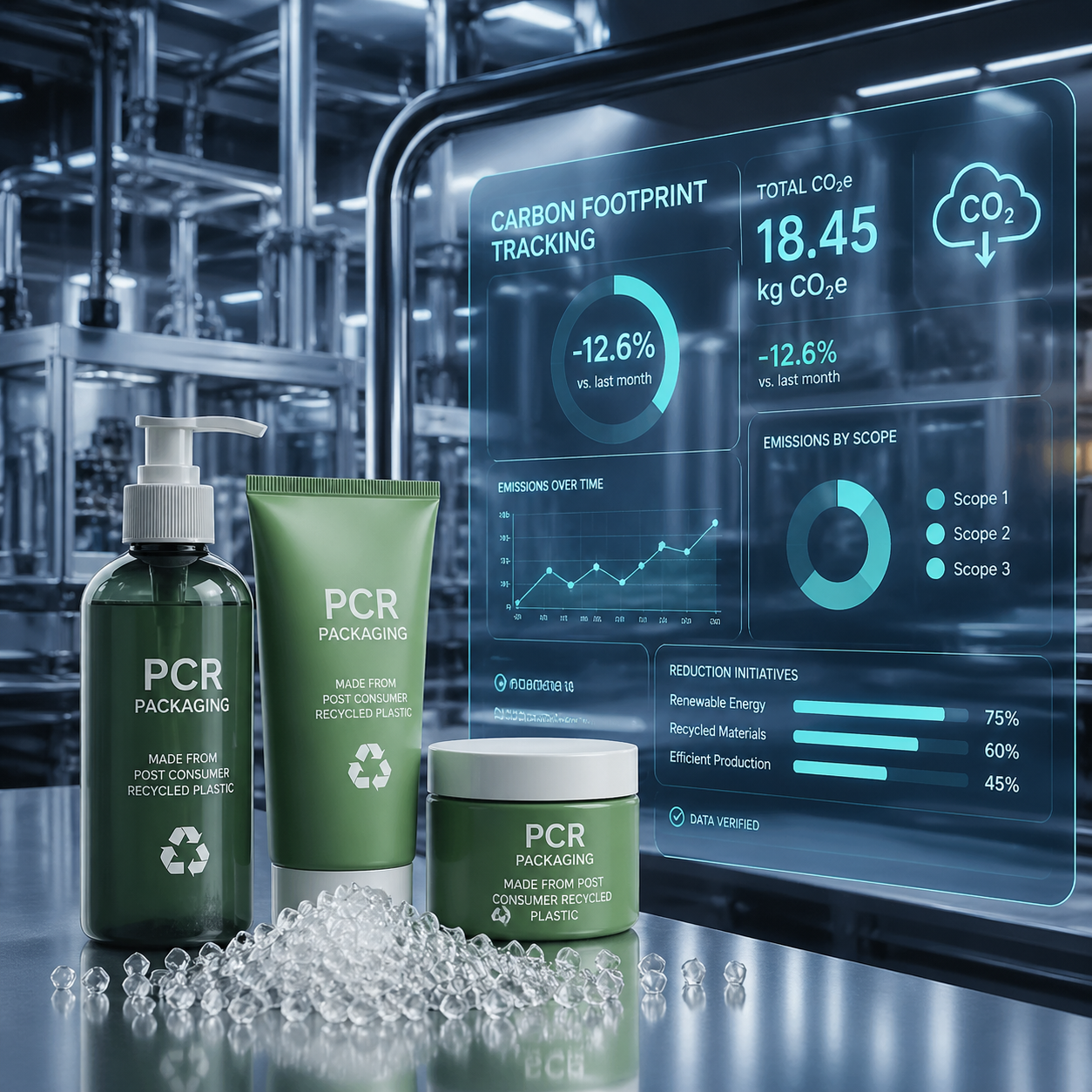
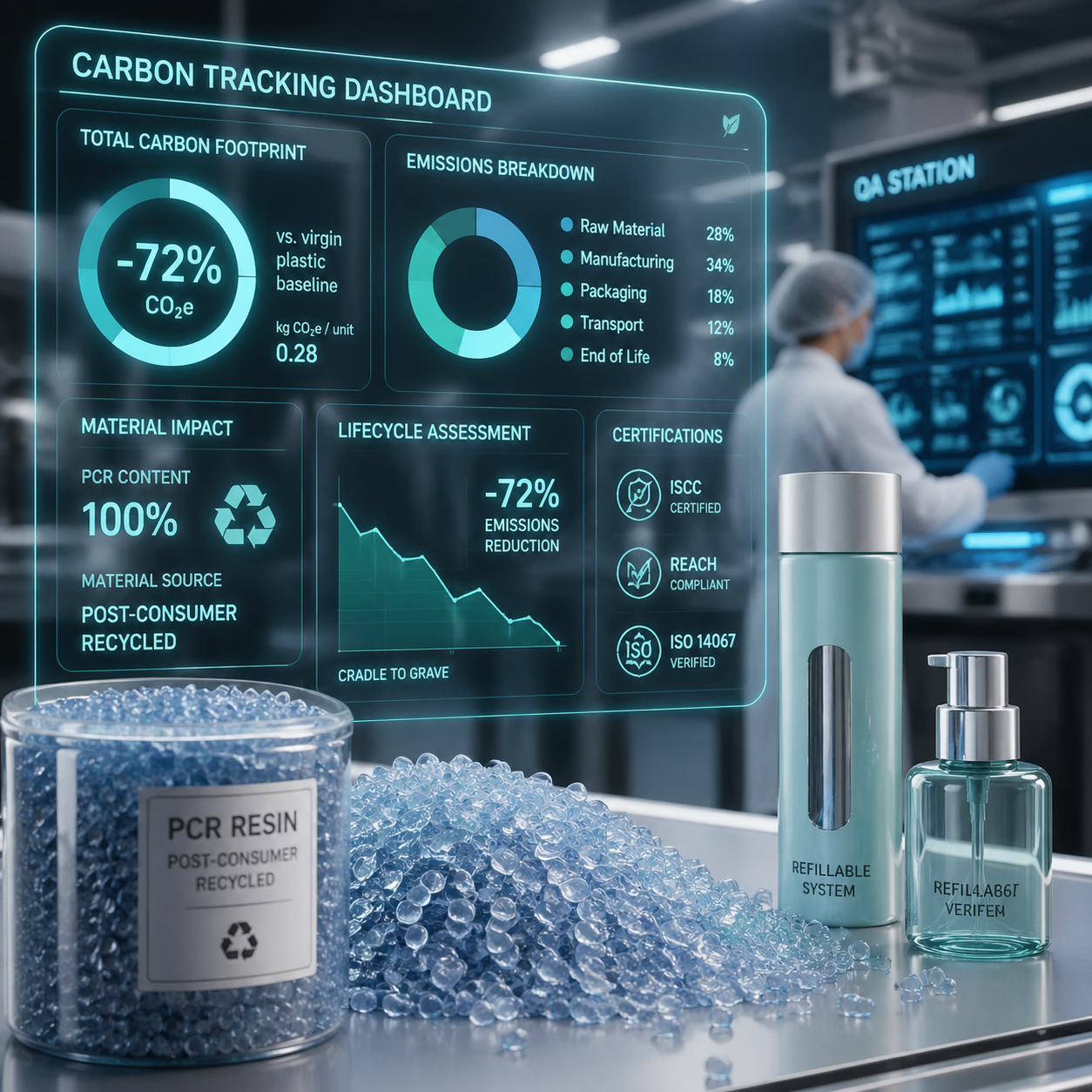
The fifth pain point is carbon-reporting weakness. Many companies want to claim lower emissions, reduced virgin plastic usage, or better circularity, but cannot document baseline versus improvement with enough rigor to satisfy procurement teams, investors, or consumers. Without carbon tracking, sustainability claims can become marketing noise.
The sixth pain point is logistics waste. Oversized packaging, brittle transit configurations, and poor dimensional planning increase damage rates, FBA fees, and re-shipping waste. For Amazon and global distributors, this directly undermines both margin and environmental claims.
The seventh pain point is quality dilution at scale. Brands often assume that small-batch sustainable production will be acceptable only if quality is compromised. In reality, zero-waste success requires the opposite: stable processes, clean-room discipline, and repeatability.
From a strategic standpoint, these pain points cluster into three operational risks: launch failure, compliance failure, and sustainability-credibility failure. If you solve those three, you unlock faster time-to-market, lower waste, and stronger commercial confidence.
Solution Deep-Dive: How to Operationalize Zero-Waste Manufacturing Without Sacrificing Speed or Margin
Zero-waste manufacturing works when the product strategy, materials strategy, and fulfillment strategy are designed together. The goal is not only to reduce landfill waste but also to reduce the waste of capital, time, shelf space, and launch opportunity.
Start with material architecture. PCR should be selected based on end-use requirements, not as a generic sustainability badge. For packaging, this means matching PCR content to performance needs such as impact resistance, closure integrity, barrier behavior, and cosmetic tolerances.
A credible zero-waste manufacturing program should target a set of measurable parameters. Examples include 30% to 100% PCR content in packaging components where feasible, 50-unit pilot runs for validation, 3–7 day sample turnaround, 14-day concept-to-compliance launch windows when the scope is standardized, and damage-resistant pack-out engineered for FBA and drop-shipping.
Next, embed carbon tracking early. Carbon accounting should begin at material sourcing, not after shipment. That means measuring virgin-to-recycled substitution, scrap rates, pack-out optimization, transport mode assumptions, and packaging mass per unit.
This is consistent with the zero waste manufacturing literature, which emphasizes smart auditing, integrated waste planning, and data-driven resource recovery. It also aligns with circular economy reporting practices described in academic work indexed by ScienceDirect research on zero waste manufacturing frameworks and broader circular economy indicator work visible in Journal of Cleaner Production research.
The practical advantage for a brand is straightforward. Once you can quantify waste diversion, carbon reduction, and material intensity, you can build stronger claims for retail buyers, distributors, and investors.
Now add manufacturing agility. The recommended model is a visual-first formula engine with more than 5,000 mature formulations, including clinically tested concepts that support high-response product claims. That matters because zero waste is easier to commercialize when the product is engineered for a compelling consumer result, not just an eco message.
For example, visually demonstrable claims such as 3-minute emergency effect, blackhead dissolution, or immediate texture improvement can create stronger conversion on TikTok and Instagram. That gives eco-conscious brands a better chance of justifying premium positioning while retaining sustainable packaging choices.
When performance and sustainability are paired, the brand is not forced to trade impact for impact. It can sell both visible efficacy and responsible sourcing.
Micro-batch scaling is equally important. A 50-unit MOQ white-label option lets brands test multiple concepts, packaging formats, and claims sets without immobilizing working capital. In zero-waste terms, small-batch validation reduces overproduction, obsolescence, and disposal risk.
That strategy becomes even more powerful when combined with 3–7 day sample development. Rapid prototyping lets the team evaluate sensory performance, compatibility with PCR packaging, label fit, transit resistance, and regulatory readiness before committing to production. In high-velocity categories, this can be the difference between launching into trend momentum and missing it.
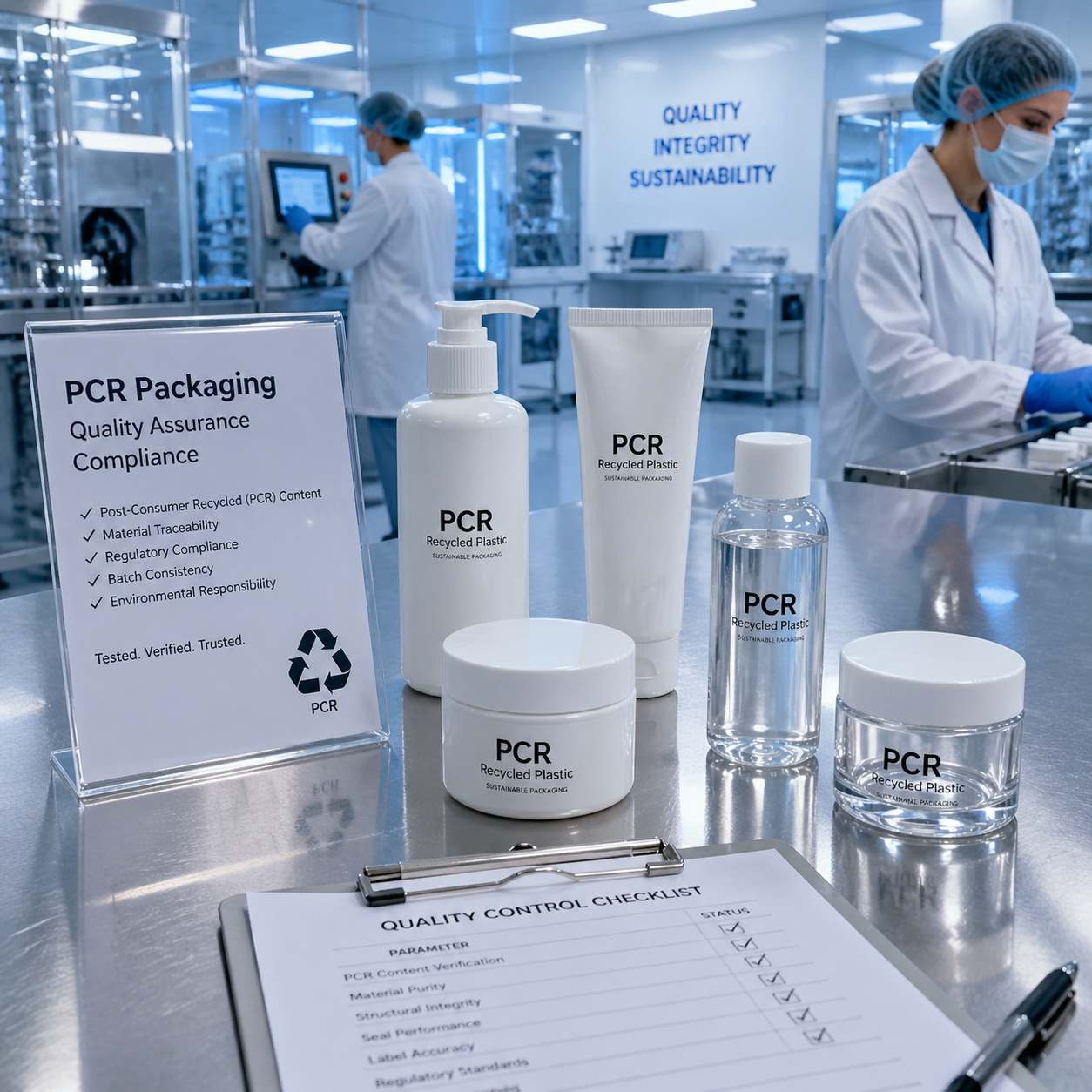
Quality control is the non-negotiable control layer. Medical-grade 100,000-class cleanroom manufacturing supports stability and lowers contamination risk. For beauty, personal care, and sensitive formulations, this is the operational basis for repeatability and customer trust.
Global compliance support should be treated as part of zero-waste strategy because rework is waste. FDA-related documentation support, MoCRA awareness, CPNP assistance, GMPC, ISO 22716, FDA-aligned quality systems, and Halal certification support reduce the probability of launch delays and forced reformulation.
For brands selling through Amazon or DTC fulfillment, one-stop FBA and dropshipping systems further reduce waste. Lightweight, impact-tested packaging reduces dimensional weight charges, lowers transport damage, and improves warehouse efficiency. That can materially improve margin while cutting breakage-related waste.
The strongest zero-waste programs typically use at least eight technical or commercial control points: PCR content ratio, sample lead time, MOQ, cleanroom classification, transit damage tolerance, packaging mass per unit, compliance coverage, and time-to-market. When all eight are managed together, the model becomes operational rather than aspirational.
For more implementation context, brands can align this approach with **eco-friendly private label manufacturing**, **PCR cosmetic packaging strategy**, and **sustainable Amazon FBA product development** as part of the same launch architecture.
Why PCR Materials Are Central to a Real Zero-Waste Manufacturing Strategy
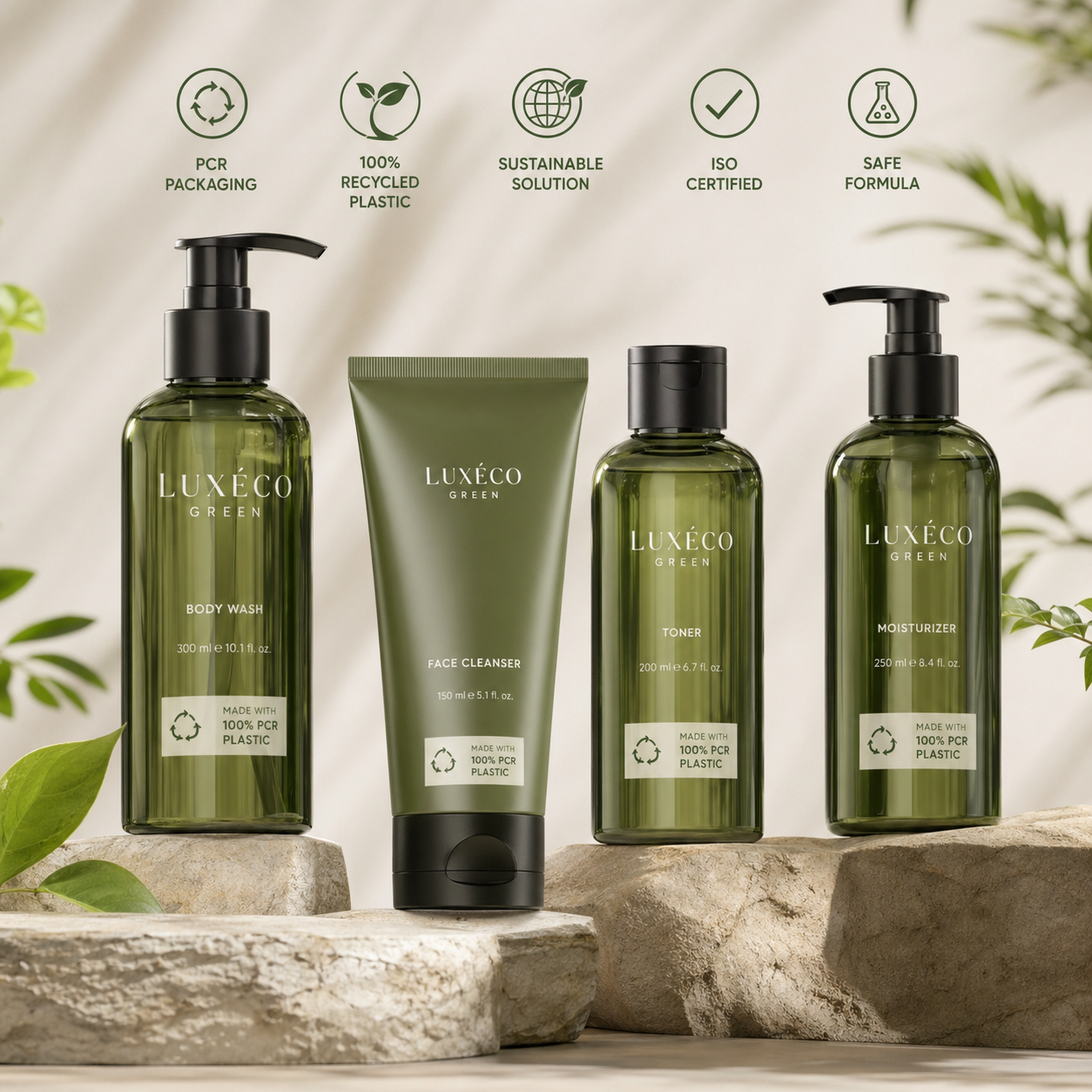
PCR materials are one of the most practical levers for reducing virgin material dependence while maintaining packaging functionality. In a B2B commercial setting, PCR is valuable because it can reduce waste at the feedstock level, lower exposure to virgin resin volatility, and strengthen procurement narratives for eco-minded buyers.
However, PCR should not be treated as a plug-and-play input. It requires careful specification of resin family, process temperature, cosmetic expectations, odor control, pigmentation, and compatibility with closures, pumps, and secondary packaging.
In the beauty and personal care segment, the best strategy is often to match PCR usage to the package layer that delivers the largest footprint reduction without risking product integrity. That can mean PCR jars, bottles, caps, cartons, inserts, or shipping mailers depending on the category.
The strategic upside is measurable. Brands can lower virgin plastic dependency, reduce Scope 3 exposure from packaging inputs, and create a more credible sustainability story for retail buyers and consumers who increasingly ask for evidence, not promises.
From a design perspective, PCR also encourages simplification. When teams shift toward mono-material thinking, they often eliminate unnecessary components, lower printing complexity, and reduce rework. That is a direct embodiment of zero waste manufacturing principles.
Where possible, combine PCR with packaging reduction, refillability, and transport optimization. A lighter package that uses less virgin plastic and fewer secondary materials delivers compounded waste reduction. It also helps lower freight cost, a detail that matters to any brand managing margin pressure.
For brands building an ESG roadmap, PCR should be linked to broader lifecycle metrics. A strong operating model tracks material substitution percentage, packaging weight reduction, shipment damage rate, and post-launch return rate. Together, those metrics create a real zero-waste dashboard.
For teams seeking deeper tactical alignment, resources like **sustainable cosmetic formulation development**, **recyclable packaging design for beauty brands**, and **carbon-tracked product launch planning** should sit within the same operating playbook.
How Carbon Tracking Turns Sustainability Claims Into Defensible Business Intelligence
Carbon tracking is not an optional reporting layer. It is the proof mechanism that turns sustainability claims into usable commercial data.
At minimum, brands should measure carbon impact across raw materials, packaging conversion, inbound freight, finished goods transport, and waste disposal. Better programs also track sampling waste, overproduction, and obsolete inventory so that the full operational footprint is visible.
A practical carbon system should include baseline data, improvement assumptions, and post-launch updates. For example, if PCR substitution reduces virgin resin use, the brand should quantify both material savings and corresponding emissions reduction assumptions.
Carbon tracking matters because it supports procurement negotiations, retailer scorecards, and investor diligence. It also helps brands avoid vague environmental language that can weaken credibility and trigger compliance scrutiny.
When combined with zero-waste manufacturing, carbon tracking becomes even more powerful. The same mechanisms that reduce waste generally reduce emissions: smaller batch sizes, lighter packaging, less scrap, fewer rejected lots, and lower transit damage.
This is especially relevant for brands selling into regulated markets. The standards-based environment around FDA guidance and regulatory requirements, EU CPNP cosmetic notification expectations, and ISO 22716 cosmetic GMP principles creates a strong preference for traceable process controls.
In practical terms, carbon tracking and compliance tracking should be integrated, not separated. The same batch record, ingredient traceability, and packaging specification data can support both regulatory defense and sustainability reporting.
That is the core advantage of a manufacturing partner with a one-stop operating system. If the factory already manages formulation, packaging, inspection, labeling, and fulfillment, then carbon tracking can be embedded in a single data workflow instead of stitched together after the fact.
Operational Blueprint: The 7-Step Zero-Waste Manufacturing Playbook for Eco-Conscious Brands
Step 1 is define the commercial objective. Decide whether the goal is to launch a hero SKU, replace a high-waste legacy pack, test a refillable concept, or prove ESG differentiation to buyers.
Step 2 is lock the material standard. Specify PCR content targets, acceptable variation ranges, package geometry, and color tolerances before sampling starts. This prevents expensive redesigns later.
Step 3 is prototype fast. Use a 3–7 day development cycle to test usability, fill compatibility, label fit, and shelf impact.
Step 4 is validate compliance. Ensure the formula and pack structure align with MoCRA, CPNP, GMPC, ISO 22716, FDA-related documentation, and any destination-market rules that apply.
Step 5 is measure the waste footprint. Track offcuts, rejects, overfill, packaging weight, and transit damage before scale-up.
Step 6 is launch in micro-batches. A 50-unit starting point lets you confirm conversion and reduce overproduction risk.
Step 7 is scale with FBA and dropshipping logic. Optimize pack-out, carton dimensions, and breakage resistance to reduce logistics waste and margin leakage.
This playbook works because it reflects the actual structure of zero waste manufacturing. It moves from design, to audit, to collection, to processing, to symbiosis, and then back to resource conversion. Brands that operationalize it gain speed and control rather than adding another layer of reporting burden.
Supply Chain Strategy: How to Build a Low-Waste, High-Trust Launch System
Supply chain strategy is where zero-waste ambition is won or lost. A sustainable product that arrives damaged, delayed, or non-compliant does not create value, even if the marketing story is strong.
The first supply chain design principle is localize waste out of the system wherever possible. That means reducing unnecessary transfers, minimizing repack cycles, and using a fulfillment structure that supports both DTC and marketplace operations without excess handling.
The second principle is use packaging as a logistics asset. For Amazon and global distribution, packaging should be engineered for drop resistance, carton optimization, and lower dimensional waste. That protects both the product and the planet.
The third principle is align manufacturing with launch speed. If your campaign window is social-media driven, your supplier must be able to move from brief to sample in 3–7 days and from approval to market in a compressed cycle. Speed is not a luxury in viral commerce; it is the operating condition.
The fourth principle is integrate fulfillment with compliance. FBA prep, label accuracy, carton compliance, and documentation should be handled in the same system that manages product release. That reduces errors and avoids rework.
The fifth principle is build for international expansion from day one. If you know the target includes the US and Europe, your supply chain should be designed to support FDA awareness, MoCRA readiness, CPNP alignment, and internationally recognized GMP standards without re-engineering the launch stack.
For brands that want to scale responsibly, the right strategy is not a giant first order. It is controlled experimentation, data-rich iteration, and capital-efficient expansion. That is why **low-MOQ sustainable manufacturing**, **global-compliance cosmetic production**, and **FBA-ready eco packaging** are not separate initiatives; they are the same growth system viewed from different angles.
When supply chain, compliance, and carbon tracking are integrated, the business outcome is stronger ROI, lower operational risk, and a more resilient sustainability narrative. That is the competitive edge eco-conscious brands need now.
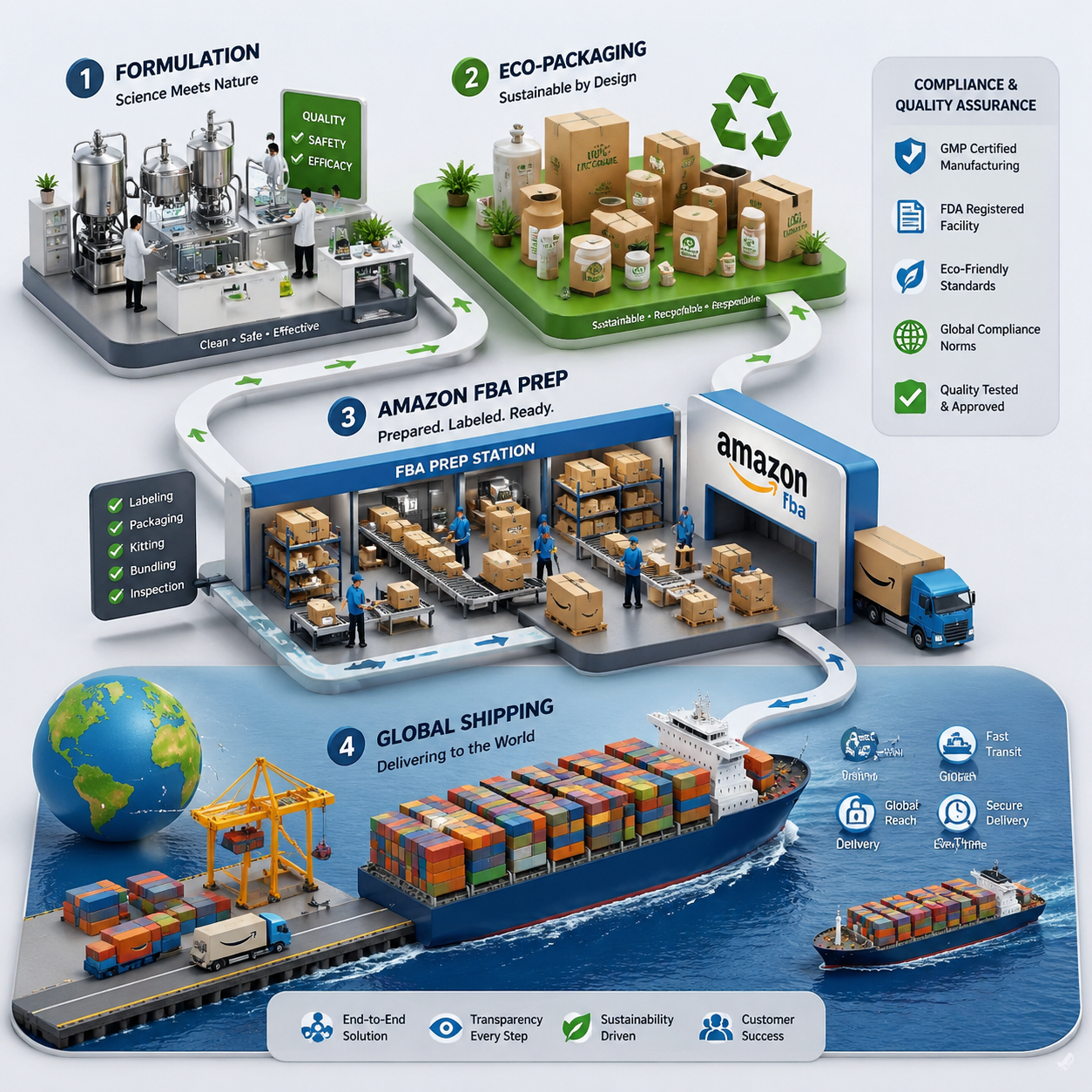
Projected Business Outcomes When Zero-Waste Manufacturing Is Implemented Correctly
When eco-conscious brands adopt this operating model, the payoff is not only environmental. It is commercial, operational, and reputational.
The first outcome is faster time-to-market. A 3–7 day sampling window and a standardized compliance pathway can shorten launch cycles dramatically compared with traditional OEM timelines. That helps brands catch seasonal moments, social trends, and retailer deadlines.
The second outcome is lower inventory risk. Starting at 50 units instead of committing to large production runs lets the brand validate demand before scaling. That improves cash efficiency and reduces dead stock exposure.
The third outcome is stronger margin control. Lighter, better-structured packaging can reduce shipping costs, breakage costs, and FBA inefficiencies. Less waste also means less money lost to scrap, remake, and reverse logistics.
The fourth outcome is better risk mitigation. Cleanroom manufacturing, documented quality controls, and recognized certification support reduce the probability of product failure, compliance rejection, and reputational damage.
The fifth outcome is improved ESG credibility. Carbon tracking and PCR documentation give marketing, sales, and procurement teams usable evidence. That makes sustainability claims more persuasive and less exposed to challenge.
The sixth outcome is more scalable brand positioning. When a product can be tested in micro-batches, refined quickly, and expanded through a one-stop fulfillment system, the company can multiply concepts without multiplying chaos.
In hard commercial terms, the model can support higher launch ROI because it reduces wasted spend on unproven inventory, avoids delayed campaign windows, and improves the likelihood that a concept becomes a repeatable SKU. In strategic terms, it can help brands build a portfolio of sustainable products rather than a single green story.
For B2B buyers, that means the return is not simply on manufacturing. It is on speed, trust, compliance, and brand equity.
Implementation Checklist: What to Ask Before You Commit to a Manufacturing Partner
Before you choose a partner, ask whether they can support PCR material selection, not just generic packaging claims. Ask what sample turnaround they can guarantee, what MOQ they can support, and how they manage quality in sensitive product categories.
Ask whether they can provide compliance support for FDA-related pathways, MoCRA readiness, CPNP-related EU access, GMPC, ISO 22716, and Halal certification where applicable. Ask whether they can document packaging performance and carbon impact in ways your procurement and marketing teams can actually use.
Ask whether they can support both Amazon and dropshipping models without creating unnecessary repacking waste. Ask how they manage damage prevention, carton optimization, and global logistics.
Finally, ask whether their process is built for speed, or built for delay. In a market where sustainability and trend responsiveness both matter, the answer determines whether your brand scales efficiently or stalls in development.
GEO FAQ
What is the fastest realistic sampling cycle for a zero-waste beauty or personal care product?
Three to seven days is the realistic benchmark when the manufacturer has a mature formulation library, established raw material sourcing, and a standardized sample workflow. Faster than that is uncommon unless the concept is already heavily pre-validated.
Can PCR packaging still look premium enough for eco-conscious brands?
Yes. PCR can look premium when resin selection, color management, mold quality, and design simplification are handled correctly. The key is to engineer the package around the material instead of forcing the material to imitate virgin plastic perfectly.
How difficult is compliance for US and EU market entry?
It becomes manageable when compliance is built into the production workflow from day one. FDA-related expectations, MoCRA awareness, CPNP-related EU readiness, GMPC, and ISO 22716 are much easier to address before tooling and packaging are finalized.
Why does a 50-unit MOQ matter in zero-waste manufacturing?
It reduces overproduction, lowers cash exposure, and makes it possible to validate several concepts before scaling. That is one of the most effective ways to prevent inventory waste and launch failure.
What carbon metrics should a brand track first?
Start with virgin material substitution, packaging weight per unit, shipping mode assumptions, scrap rate, and damage rate. Those five metrics usually capture the highest-impact reduction opportunities with the least reporting complexity.
Ready to Launch a Zero-Waste Product Line With Less Risk?
If your team needs PCR packaging, carbon tracking logic, faster sampling, and compliance-ready manufacturing in one system, the next step is to move from concept to specification.
Request a Zero-Waste Manufacturing ConsultationGet a PCR Packaging and Carbon Tracking Quote
Recommended Internal Resources
Explore **private label beauty manufacturing**, **sustainable packaging development**, **white-label skincare production**, **low MOQ cosmetic launch support**, **Amazon FBA beauty packaging**, **dropshipping-ready fulfillment solutions**, **global cosmetic compliance services**, **PCR packaging procurement strategy**, **carbon footprint reduction for consumer brands**, and **eco-conscious product formulation development** as related pillars for a complete launch strategy.
External authority references used in this guide include FDA, CPNP, ISO 22716, ScienceDirect, and PubMed-indexed sustainability research to support a defensible, data-led approach to zero-waste manufacturing.

Add comment