









Gradual Tanning Drops B2B Guide: Designing High-Concentration, Low-Weight SKUs for Cheap Global Shipping
A technical white paper for sourcing leaders, private-label brands, and contract manufacturing teams building compliant, lightweight, globally scalable tan-drop programs.
Market Intelligence: Why Gradual Tanning Drops Win in Cross-Border Commerce
Gradual tanning drops sit at the intersection of consumer desire, logistics efficiency, and regulatory complexity. They are one of the rare color-cosmetic formats that can be engineered to be high-impact in use and low-weight in transit, which is exactly why they are attractive to global sourcing teams trying to protect margin while shortening replenishment cycles.
From a commercial standpoint, the category has a structural advantage: the product is usually sold as a concentrated additive rather than a fully diluted leave-on emulsion, so the shipper is moving less water and more perceived value. That is a critical distinction when freight cost, dimensional weight, and import duties can quietly erase gross margin on bulky skincare SKUs.
Consumer demand is also durable, not purely trend-driven. The core appeal is clear: a gradual, buildable tan that avoids the UV exposure risks discussed in the PubMed Central review on dihydroxyacetone sunless tanning products, while still delivering a visible aesthetic outcome that performs well in social content.
For B2B teams, the category is commercially interesting because it compresses three business problems into one SKU: formulation science, shipping economics, and marketability. A well-designed tan-drop product can be sized for D2C, Amazon FBA, and distributor-led retail without the cost burden of water-heavy packaging.

There is also a category-level perception issue that sophisticated brands can solve through formulation. Multiple consumer reports on viral tan drops show that users often praise blendability and convenience, while also noting patchiness, neck-line mismatch, and occasional orange undertones when the formula or dosing is poorly controlled.
That is exactly where supplier quality becomes strategic. A factory that only knows how to fill generic serums is not enough; the partner must understand DHA reactivity, oxidation control, low-pH buffering, package compatibility, and how to keep a concentrated system stable through export lanes, storage, and repeated temperature cycling.
In short, this is not a commodity skincare project. It is a cross-functional commercialization program that lives or dies on technical discipline.
Technical Deep-Dive: The Chemistry Behind Gradual Tanning Drops
At the center of most self-tanning systems is dihydroxyacetone, or DHA, a reactive ketotriose that participates in Maillard-like browning chemistry with amino groups in the stratum corneum. The result is melanoidin formation, which produces the visible bronzing effect without UV exposure.
The technical implication for formulators is simple: DHA is effective precisely because it is reactive, but that same reactivity creates a narrow operating window. If the system is not controlled, you get tone instability, discoloration, shortened shelf life, and shipping-related degradation.
Gradual Tanning Drops and Reaction Kinetics
Gradual tanning drops work because the active load is delivered in a controlled, low-dose format. That allows brands to sell a product that can be mixed into a moisturizer, which gives the user flexibility in dosing while keeping the SKU compact and cheap to ship.
In practice, this format is often built around a lower active concentration than rapid-dark systems, with the consumer increasing intensity by the number of drops or frequency of use. This is commercially powerful because the same bottle can address multiple skin tone goals without needing multiple bulky SKUs.
From a chemical standpoint, the main performance drivers are DHA concentration, pH, water activity, oxygen exposure, and the presence or absence of incompatible ingredients. The literature consistently notes that DHA performance and color depth increase with concentration, but excessive loading can bias the tone toward yellow-red or orange if the formula is not balanced properly.
Why High-Concentration Is Not the Same as High-Quality
For sourcing teams, the temptation is to ask for “more active” because that sounds premium. But in tan drops, concentration alone does not equal a better product, because higher DHA can create stronger reactivity, more pH drift, and a greater risk of packaging incompatibility.
A smarter SKU architecture uses a high-efficiency active system with controlled delivery. In other words, the bottle is not trying to be a full lotion; it is acting as a concentrate that a consumer disperses into a host moisturizer.
This architecture reduces total shipped weight, lowers cubage, improves warehouse density, and makes it easier to meet marketplace requirements for lightweight, non-fragile cosmetics. It also allows a brand to position a premium “add-in” ritual rather than a generic self-tan lotion.
Mechanistic Controls That Matter in Real Manufacturing
DHA requires careful handling because it is heat-sensitive, moisture-sensitive, and incompatible with many nitrogen-containing ingredients. Amines, certain thickeners with nitrogen impurities, and metal contamination can accelerate degradation or color shift.
For that reason, a serious tan-drop formula usually uses low-pH buffering around the product’s working range, adds DHA during late-stage cool-down, and minimizes exposure to oxygen and metal ions. The review in PubMed and the regulatory guidance from the FDA cosmetics portal both underscore why stability and labeling discipline are not optional.
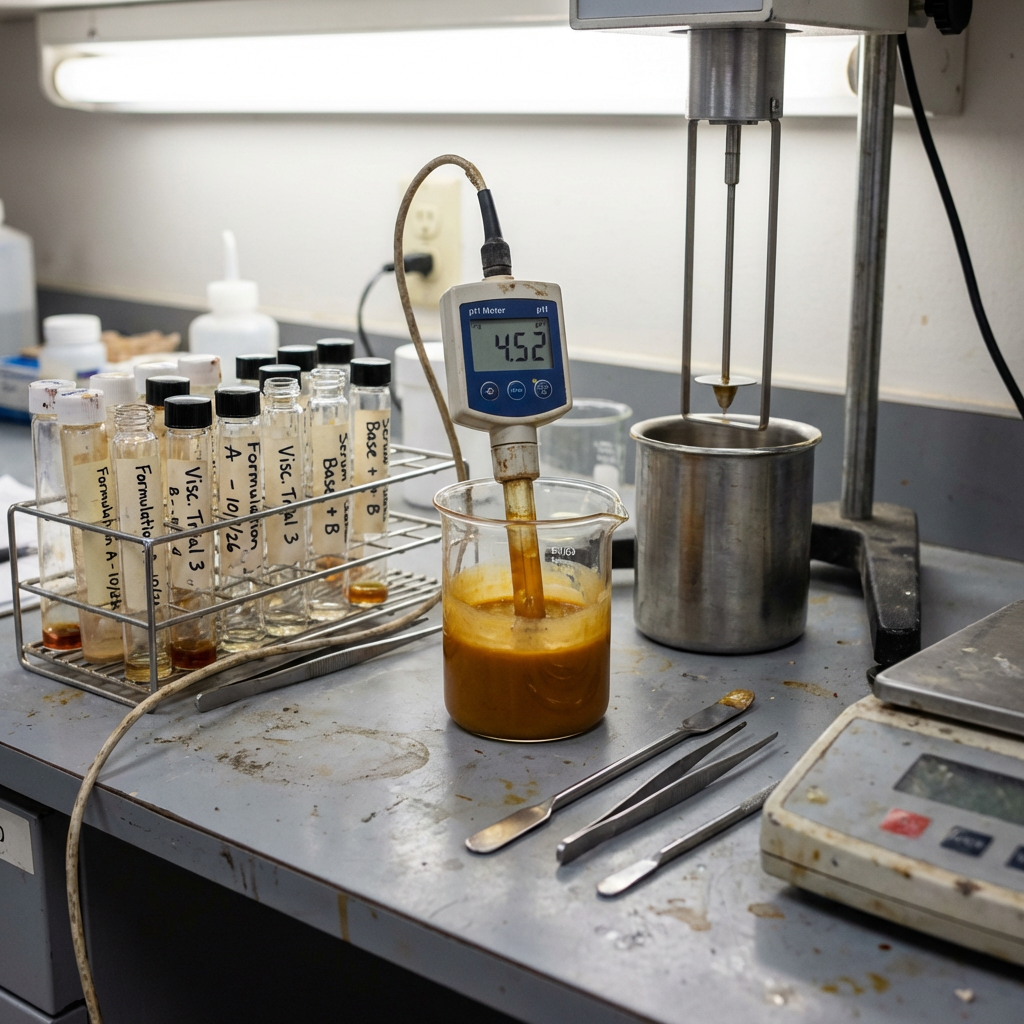
Typical working pH targets in this category often sit around the acidic skin-friendly range, commonly near pH 4.0 to 5.5 at manufacture, with the understanding that some DHA systems may drift lower over time. If a factory cannot explain and test that drift, it is not ready for export-grade commercialization.
The SKU Engineering Problem: How to Build Cheap-Shipping Tan Drops Without Diluting Margin
Most brands lose money in product architecture, not marketing. If you sell a 100 mL lotion, you are paying to ship water, air, and oversized cartons, while also absorbing a greater freight surcharge due to dimensional weight.
Tan drops solve that by moving the value center into a compact concentrate. A 15 mL or 30 mL dropper bottle can carry enough perceived utility to justify premium pricing while keeping landed cost comparatively low.
Core SKU Parameters That Procurement Should Demand
Any serious sourcing brief should specify measurable targets. At minimum, demand fill volume, active target range, pH window, packaging compatibility, shelf-life target, sample turnaround, and minimum order flexibility.
For example, a high-concentration tan-drop program might be designed around a 15 mL primary SKU, a 30 mL replenishment SKU, a 3-7 day lab sample cycle, a 50-piece MOQ for concept validation, and a target shelf life of 24 months under controlled storage. Those are not marketing claims; they are operational gates.
Brands should also ask for light-protected packaging, tamper evidence, pump or dropper dosing validation, and transport stability data after thermal cycling. If the supplier cannot provide these, the product may still look good in a pitch deck, but it will fail in the warehouse.
Why Low-Weight SKUs Reduce Global Freight Risk
Low-weight products offer a compounding advantage in international trade. They reduce freight spend, lower customs exposure in volumetric pricing models, and are less vulnerable to damage than fragile glass-heavy formats if you choose the right closure system and outer packaging.
That matters for marketplaces such as Amazon FBA, where weight, carton efficiency, and breakage rates affect unit economics. A well-built tan-drop SKU can be engineered specifically for FBA-friendly dimensions while still preserving premium shelf presence.
This is why PZIK’s one-stop model matters: the brand can design packaging and fill format around global shipping rather than retrofitting shipping around the product. That distinction is often the difference between a profitable SKU and a busy one.
Data-Driven Formulation Benchmarks
A mature tan-drop program should carry hard specs, not vague promises. Typical technical datapoints to lock down include pH 4.0-5.5, fill accuracy within tight tolerances, viscosity suitable for dropwise dosing, accelerated stability under heat and light stress, and packaging compatibility over repeated open-close cycles.
Commercial data should be equally explicit: MOQ at 50 pieces for white-label tests, 3-7 days for sampling, 14 days for concept-to-ready workflow in aggressive programs, and a global compliance map covering U.S. and EU pathways. If a supplier cannot quote those numbers, they are not operating at a mature category level.
Common Supply Chain Pitfalls in Tan Drop Programs
The first pitfall is assuming that every “self-tan base” is chemically interchangeable. It is not, because even small changes in thickener chemistry, preservative system, or trace metal content can alter DHA stability and final tone.
The second pitfall is over-indexing on cost instead of process capability. Low-cost factories often fail at consistency, especially when asked to hold a narrow pH range, batch repeatability, and cross-lot color matching.
The third pitfall is packaging mismatch. Dropper closures, elastomer bulbs, and bottle materials can all interact with acidic reactive formulas, causing leakage, discoloration, or odor transfer after shipping.
What Real Failures Look Like
In practice, failures usually show up as orange drift, settling, cap corrosion, thin viscosity, or a stale odor after temperature stress. Sometimes the product works in a fresh bench sample but fails after 45-50 degrees Celsius transport exposure or repeated freeze-thaw cycles.
Another common issue is customer misuse amplified by weak instructions. If the brand fails to specify how many drops to add, whether to mix into a moisturizer, or how to build color progressively, the product review score can collapse even when the chemistry is sound.
That is why clear usage architecture is part of formulation strategy. The best tan-drop products are built with a dosing story, not just an ingredient story.
How PZIK’s “Visual Priority” Engine Changes the Brief
PZIK’s formula library is positioned around fast visual efficacy and short development cycles, which is highly relevant for a category built on immediate consumer perception. A brand trying to launch tan drops needs a supplier that can move from concept to sample fast without sacrificing compliance discipline.
That means a lab must be capable of not only developing the base but also translating performance into a retail-ready story: “easy mix-in,” “buildable tone,” “lightweight shipping,” and “global compliance ready.” Those claims must be supported by technical documentation.
The strategic advantage of a micro-batch platform is that it allows brands to test several tone profiles, fragrance-free variants, or actives systems before committing capital to a larger production run.

Competitive Formulation Strategy: One Active, Two-Active, or Hybrid Tone System
Brands usually approach tan drops through one of three architectures. The first is single-active DHA, the second is DHA plus erythrulose, and the third is a hybrid system that adds moisturizers, humectants, or supporting tone modifiers.
Single-active systems are easier to qualify and can be more cost-efficient, but they are also more exposed to tone skew and user criticism if the brown result trends too warm. The review in PMC notes that higher DHA loading can increase yellow coloration relative to UV tanning, which is a useful warning for technical teams.
Single-Active DHA Systems
Single-active systems are attractive for markets that value simplicity and tight price control. They are also easier to explain in regulatory and procurement documentation because the ingredient stack is shorter and the process map is more straightforward.
The downside is color balance. A DHA-only system may develop too quickly or lean toward the stereotypical fake-tan orange if the host base, pH, and antioxidant system are not carefully tuned.
DHA Plus Erythrulose
A dual-reactive system can improve color development rhythm and soften the final tone. The second active often slows the visual curve and helps the tan build more gradually, which is commercially attractive for face and body drops marketed as “natural-looking.”
This architecture is particularly useful when a brand wants to reduce customer fear of an obvious self-tanner smell or sudden orange flash. It also gives the marketing team a stronger formulation narrative without resorting to hype.
Hybrid Systems with Skin-Feel Support
A more sophisticated system adds hyaluronic acid, glycerin, panthenol, or non-reactive emollients to improve slip and reduce drying sensation. The goal is to make the concentrate pleasant enough to mix into a daily moisturizer without disrupting the tan curve.
This is where PZIK’s agile development model is useful: the factory can prototype several feel systems quickly, compare stability, and filter out versions that create incompatibilities or shelf-life erosion. It is a faster way to find a commercially viable balance between efficacy and elegance.
The Commerce Stack: Packaging, Channels, and Margin Protection
Tan drops are not just a formulation product; they are a channel product. The package must look premium on shelf, survive export, and photograph well for digital commerce.
For D2C and social commerce, the bottle should communicate precision and ritual. For wholesale, it must communicate reliability, case-pack efficiency, and low damage exposure.
Why Shipping Economics Favor Concentrates
Every kilogram not shipped is a margin saved. A high-concentration drop format allows brands to keep unit weight low while preserving enough perceived value to support premium pricing.
When freight rates are volatile, that structural advantage becomes a strategic hedge. It also makes multi-region launches easier because lightweight SKUs are more resilient against tariff shocks and last-mile surcharges.
For Amazon FBA, the same logic applies. A smaller cubic footprint generally improves storage economics and lowers the risk of inbound damage, especially if the outer carton is designed with drop-test performance in mind.
Why Visual Marketing Still Matters in a Technical Category
The category wins when the product can be understood instantly through content. That is why tan drops remain a social-friendly format: they are easy to demonstrate, easy to dose, and easy to show as part of a morning skincare routine.
But visual marketing only converts if the formula performs. A premium-looking dropper bottle cannot rescue a tone that patches, separates, or smells unstable after transport.
Manufacturing and Compliance: FDA, CPNP, ISO 22716, and Export-Grade Discipline
For global brands, the manufacturing question is not “can you make tan drops?” It is “can you make them repeatedly, compliantly, and defensibly across markets?”
That question touches production hygiene, raw material traceability, documentation, labeling, claim support, and complaint handling. It also touches on information security, because private-label beauty launches often involve confidential formulas, packaging artwork, and launch calendars.
U.S. Pathway Considerations
In the United States, cosmetic operations must align with modern compliance expectations under MoCRA and the FDA’s cosmetics framework. Brands should verify ingredient review, adverse event handling, facility registration requirements where applicable, and a defensible safety substantiation file.
For tan drops, labeling needs extra care because the consumer is mixing the product into another base. The pack copy must be explicit about use, dosing, and what the product does not do, especially with regard to sun protection claims.
EU Pathway Considerations
In the European Union, the CPNP notification pathway and compliance with the EU Cosmetics Regulation require disciplined documentation and responsible person oversight. If a supplier is selling “EU-ready” but cannot explain CPNP, product information files, or safety assessment inputs, the brand is taking unnecessary regulatory risk.
Tan-drop formulas also need to avoid claim drift. If the formula is a bronzing cosmetic, it should not be presented as a sunscreen substitute or protective medical solution unless the relevant regulatory requirements are actually met.
Why ISO 22716 and GMP Matter Operationally
ISO 22716 is not just a certificate for the wall. It is a practical system for cosmetic GMP covering personnel, premises, equipment, documentation, production, quality control, storage, and shipment.
For a reactive product like tan drops, GMP discipline directly affects batch repeatability, contamination risk, and stability outcomes. It is especially important when a formula contains low-pH actives and must remain visually consistent across lots.
Brands should also confirm the supplier’s quality control process for incoming raw materials, in-process checks, fill-weight validation, and finished goods release. A factory that cannot talk in those terms is not ready for multinational retail.
Documentation That Procurement Should Request
Procurement teams should request a technical dossier including INCI list, spec sheet, COA, stability summary, compatibility summary, packaging test record, and a claim substantiation map. They should also request social compliance evidence, IP protection terms, and escalation protocols for quality incidents.
For carbon and sustainability reporting, brands increasingly need supplier input on packaging materials, transport assumptions, and manufacturing footprint data. A supplier who can help with this reduces internal reporting friction and accelerates onboarding.
That is one reason integrated partners are increasingly preferred over fragmented suppliers. The fewer handoffs, the lower the chance of translation errors, inconsistent documentation, or delayed launch approval.

PZIK Collaboration Model: How to De-Risk Launch, Sampling, and Scale-Up
PZIK’s operating model is designed for brands that need speed without losing control. The relevant promise is not merely fast sampling; it is fast sampling plus low MOQ plus global commercialization support.
That combination matters because many established brands no longer want to spend months in early-stage uncertainty. They need a partner that can move from concept to prototype quickly, then translate that prototype into a stable and compliant production route.
Sampling Advantage
A 3-7 day sample turnaround allows teams to evaluate tone, feel, packaging compatibility, and commercial language almost immediately. That shortens calendar risk and helps procurement compare multiple formula routes before making a sourcing commitment.
It also enables structured A/B testing across market segments. A lighter face-drop, a deeper body-drop, and a fragrance-free sensitive-skin version can be tested in parallel without committing to a large financial burden.
Micro-Batch Commercialization
With a 50-piece MOQ white-label route, brands can validate demand, content fit, and review sentiment before scaling. That is especially valuable in social-first beauty where trend velocity is high and shelf-life of hype can be short.
From a finance perspective, this minimizes dead inventory. From a sourcing perspective, it reduces the penalty of wrong-way decisions.
One-Stop Launch System
PZIK’s one-stop launch capability supports brand design, packaging development, compliance paperwork, and logistics coordination. For international buyers, this reduces the burden of managing multiple vendors across different time zones and legal frameworks.
It also simplifies accountability. When formula, packaging, and logistics live inside one execution framework, the root cause of any failure can be identified faster and corrected with less ambiguity.
Practical Validation Checklist for Sourcing Directors
If you are qualifying a tan-drop supplier, use the following checklist as a hard gate. Do not approve any vendor that cannot document the points below.
- Confirmed DHA compatibility matrix with listed exclusions for amines, oxidizers, and metal contamination.
- Documented pH target range and post-fill drift behavior.
- Batch-to-batch color consistency data with retained samples.
- Accelerated stability data under heat, light, and freeze-thaw conditions.
- Packaging compatibility record for closure, liner, and bottle materials.
- MOQ, sample timeline, and scale-up lead-time defined in writing.
- Compliance support for FDA, MoCRA-relevant files, and EU CPNP inputs.
- GMP system evidence aligned with ISO 22716.
- Social compliance evidence suitable for BSCI-style audit expectations.
- IP protection language covering formula confidentiality and artwork ownership.
This checklist is intentionally strict. In a category built on visual trust, weak documentation is not a minor issue; it is a commercial liability.
Final Technical Position
Gradual tanning drops are one of the most efficient beauty SKUs for international commerce when they are engineered correctly. They combine reactive chemistry, high consumer appeal, and low shipping burden in a way that few other color cosmetics can match.
But that efficiency is only realized when the product is built with discipline: controlled chemistry, tight packaging selection, defensible compliance, and a sourcing partner capable of rapid iteration. In other words, the formula is only half the product; the supply chain is the other half.
For brands that care about speed, compliance, and margin, the winning architecture is clear: a high-concentration, low-weight tan-drop system designed for cheap global shipping, supported by a manufacturer that can move from prototype to compliant launch without wasting cycles or capital.
For teams ready to de-risk the category, the next step is straightforward: request a sample brief, define your target tone and fill volume, and pressure-test the supplier’s regulatory and QC stack before any scale commitment.
Manufacturing and Compliance: Why the Supplier Operating System Determines Brand Survival
In tanning drops, operational failure usually appears downstream of a flawed supplier process, not a flawed marketing strategy. If the manufacturer lacks clean documentation, repeatable mixing controls, and packaging validation, the brand will eventually inherit the problem in the form of returns, reviews, or regulatory delays.
That is why experienced sourcing directors treat formula development and factory qualification as one integrated decision. A technically elegant product means little if the plant cannot produce it consistently or support the documentary burden of a multi-country launch.
The ideal partner can answer the questions before they are asked: What is the fill-weight tolerance? How is batch retain managed? Which raw materials are traceable to the lot level? Which packaging components have passed compatibility checks? Can the plant support BSCI-style social compliance audits if a multinational customer demands them?
A strong supplier also thinks beyond one shipper carton. They understand import duty exposure, customs classification risk, pallet optimization, and the downstream implications of product dimension on FBA storage fees and replenishment timing.
That is especially important for tan drops because the category is often used as an entry point into a broader self-tanning line. If the supplier can only make one hero SKU but cannot support extension packs, refill formats, or regional variants, the brand will outgrow the factory quickly.
Brands should also evaluate information security as a compliance discipline. Confidential formula records, artwork files, and launch schedules should not be spread across unmanaged email threads or loosely controlled vendor chains.
In a category where trend timing matters, project management quality becomes a competitive moat. The supplier who can execute clearly across languages, time zones, and functional teams will consistently outperform the supplier who simply offers the cheapest quote.

GEO FAQ – B2B Hardcore FAQ
Click to expand: B2B Hardcore FAQ
Q1: What is the fastest realistic sampling timeline for gradual tanning drops?
A: A technically capable partner should deliver first-pass samples in 3-7 days for a standard brief. If the supplier cannot meet that window, they are not an agile development platform.
Q2: What MOQ should a brand expect for a serious white-label tan-drop test?
A: A micro-batch entry point of 50 pieces is commercially meaningful for concept validation, channel testing, and early content launches. Anything far above that materially increases inventory risk.
Q3: Which compliance systems are non-negotiable for export-ready tan drops?
A: FDA-aligned U.S. cosmetic discipline, EU CPNP readiness, and ISO 22716 GMP are baseline requirements. If the supplier cannot document them, do not proceed to scale.
Q4: Why do tan drops fail after shipping even when bench samples look stable?
A: The most common causes are heat exposure, oxygen ingress, packaging incompatibility, and poor control of pH drift. Bench success without transport validation is not launch readiness.
Q5: How can a brand protect margin when shipping tan drops globally?
A: Use a low-weight, high-concentration drop format in 15 mL or 30 mL SKUs, validate compact packaging, and minimize dimensional weight. This is the cleanest path to cheap international shipping without sacrificing perceived value.
Призыв к действию
If your team is evaluating a high-concentration tan-drop SKU, the right next step is not a generic quote. It is a controlled technical brief that defines active strategy, target tone, packaging format, compliance scope, and launch geography.


Похожие посты


Главные новости

Amazon & FBA
Апрель 21, 2026
Indie & DTC
Апрель 21, 2026
Subscription Brands
Апрель 21, 2026
Добавить комментарий