





Agile Manufacturing for Hair Removal Creams: Zero Inventory Anxiety for Global B2B Brands
A technical white paper on visual-first formulation, micro-batch scaling, and compliant speed-to-market for enterprise beauty sourcing teams
Agile manufacturing for hair removal creams is no longer a niche sourcing option. It is a strategic operating model for brands that need low-risk innovation, faster validation, and reliable compliance across the US, EU, UK, Canada, Australia, and Asia-Pacific.
For VP-level supply chain and sourcing leaders, the real objective is not just lower MOQ. The objective is to compress launch risk, protect cash flow, and move from concept to compliant shelf presence without creating inventory anxiety.
Market Intelligence: Why Agile Manufacturing for Hair Removal Creams Is Becoming a Board-Level Priority
Hair removal creams sit in a difficult product category. They must deliver visible efficacy fast, remain cosmetically elegant, and survive extreme regulatory scrutiny without triggering consumer complaints or social media backlash.
For international brands, the challenge is amplified by platform-led demand spikes. A TikTok trend can compress a six-month planning window into six days, while a traditional supplier still wants a long forecast, a heavy raw material commitment, and a large MOQ that ties up working capital.
That is why agile manufacturing for hair removal creams matters. It lets a brand test a concept with 50 units, observe conversion signals, refine claims, and scale only after the market proves demand.
The supply chain context is equally unforgiving. Many cosmetic factories can quote a low ex-works price, but they cannot survive a BSCI audit, protect IP, document traceability, or support multi-market notifications such as MoCRA and CPNP.
For a sourcing director, the real loss is not the unit cost. The real loss is the compounded cost of failure: delayed launches, rework, batch inconsistency, returned stock, blocked listings, and the internal political damage that follows a preventable vendor mistake.
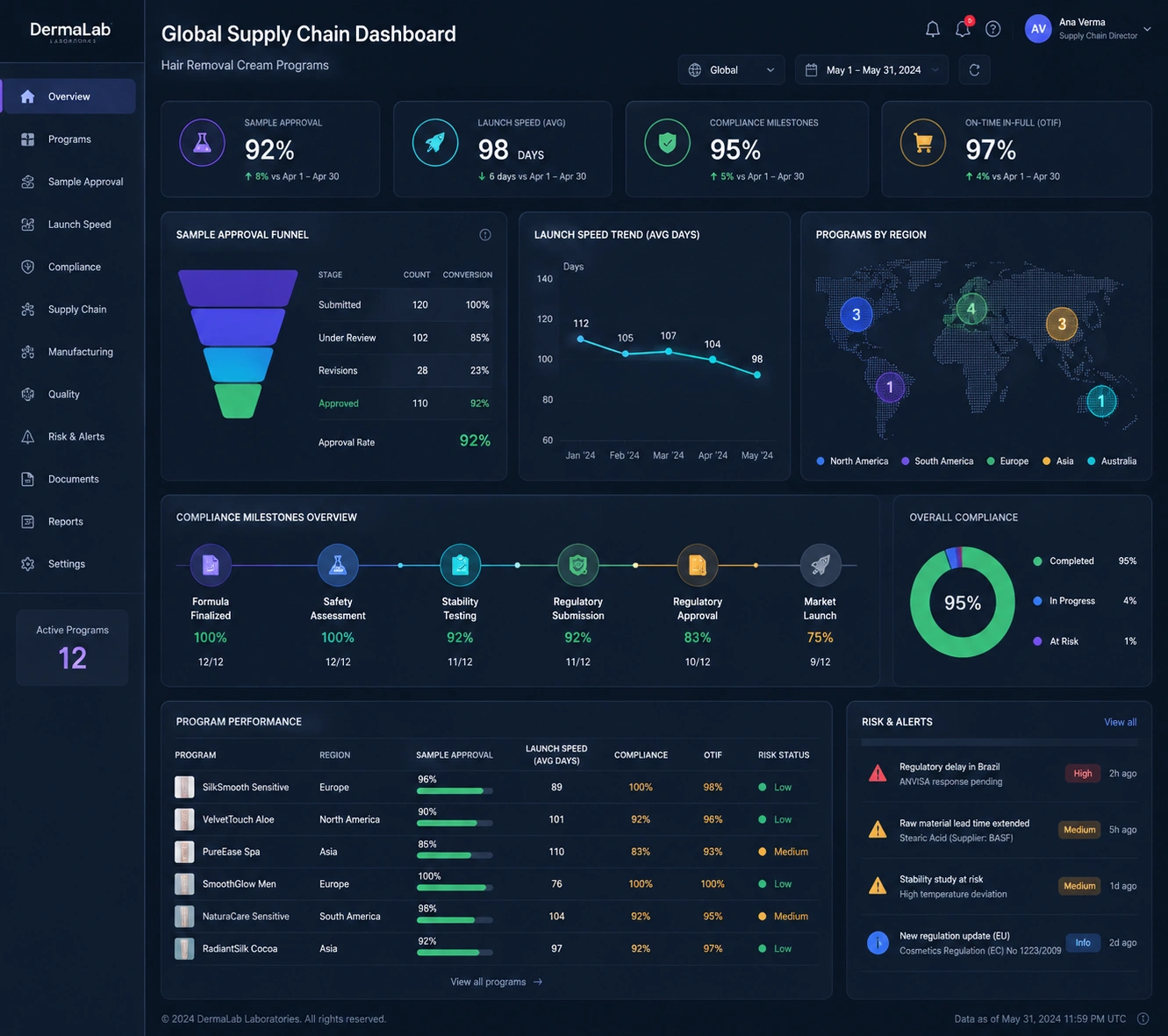
Hair removal cream is also a product where failure is highly visible. If a formula stings, separates, or performs unevenly by skin tone or hair density, the brand does not get a second chance on social platforms or marketplace review pages.
That is why buyers increasingly favor our manufacturing strengths over generic contract pricing. They need a partner that can connect chemistry, packaging, compliance, and logistics into one governed process.
Technical Deep-Dive – SEO Pillar: Agile Manufacturing for Hair Removal Creams
Agile manufacturing for hair removal creams is a systems design problem, not a single-formula problem. The winning model aligns active chemistry, packaging engineering, regulatory mapping, and small-batch execution under one decision framework.
At Pzik, the working model is built around a visual-first formulation engine with more than 5000 mature and clinically tested references, a rapid sampling window of 3 to 7 days, and micro-batch white-label starts from 50 units. That architecture is built to capture demand before the trend decays.
Agile Manufacturing for Hair Removal Creams Starts With Functional Chemistry
The chemistry of depilatory creams is not cosmetic decoration. It depends on controlled alkalinity, penetration management, emulsifier balance, and a carefully tuned thioglycolate or alternative keratin-disruption system that loosens the hair shaft without destabilizing the formula.
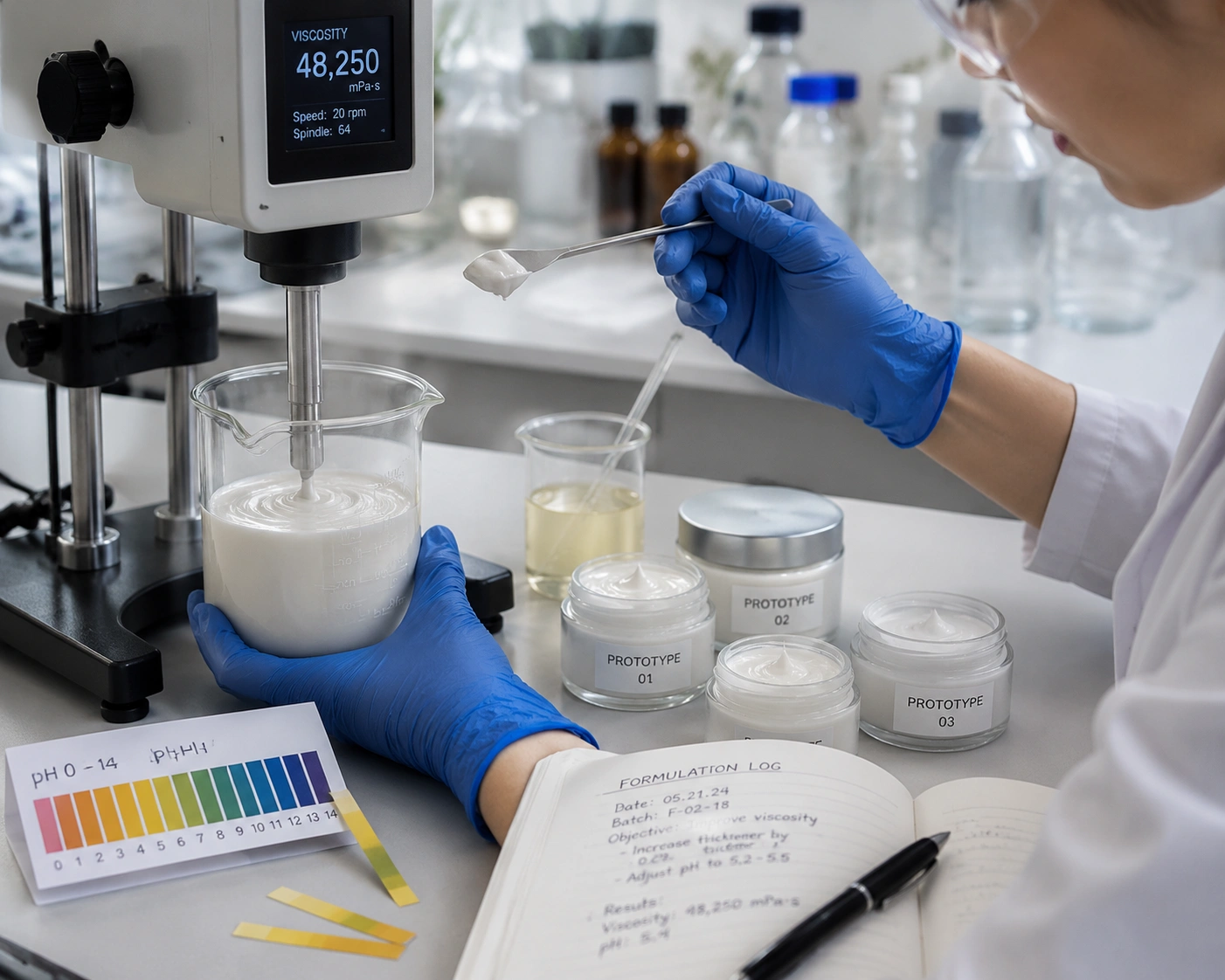
In practical terms, the formulation must hold a useful pH window while still protecting consumer experience. For many systems, the working range may be optimized around pH 10.5 to 11.8, with the upper boundary requiring rigorous irritation review and tight manufacturing control.
That is why agile manufacturing for hair removal creams cannot rely on one-size-fits-all emulsions. A formula that performs on coarse body hair may need a different surfactant stack, viscosity profile, or buffering curve than a face-safe or sensitive-skin concept.
Brands that want speed must still respect the chemistry. If the active phase and the emulsion phase drift during pilot scale-up, the result is often phase separation, odor drift, reduced efficacy, or a rough consumer feel that destroys repeat purchase intent.
For a technical buyer, this means evaluating the supplier on more than price. Ask for compatibility data, pH drift curves, viscosity retention after thermal cycling, and post-fill stability at 40°C and 75% RH for at least 8 to 12 weeks in accelerated screening.
Visual-First Claims Need Measurable Substantiation
Hair removal creams are often marketed through visible quick-win outcomes. The best-performing claims usually revolve around speed, smoothness, low visible residue, and sensory reassurance rather than vague beauty language.
Pzik’s focus on instant visual effect is strategically aligned with this category. A consumer should be able to understand the benefit in one glance and one use, which is why 3-minute rescue language, clean wipe-off behavior, and low-tack residue are more commercially powerful than long-form ingredient poetry.
For B2B buyers, visual-first does not mean scientifically weak. It means the performance claim is built on a reproducible testing protocol: standardized application amount, fixed dwell time, control-group comparison, and post-treatment skin condition documentation.
This is where a strong supplier becomes a brand partner. You need a formulation team that can translate consumer-visible benefit into claims language that survives legal, regulatory, and marketplace scrutiny, including FTC advertising guidelines.
The Micro-Batch Model Reduces Forecast Error
Traditional production planning punishes brands for uncertainty. If the retailer forecast is wrong or the TikTok trend overestimates demand, the buyer inherits dead stock, storage fees, and liquidation pressure.
Agile manufacturing for hair removal creams solves that by shifting the business from forecast-heavy to test-heavy. A 50-unit white-label pilot creates real signal at low exposure, which is especially valuable when the product is a novelty format, a limited drop, or a region-specific compliance test.
Three operational numbers define the model. First, 50 units as the entry point. Second, 3 to 7 days for sample delivery. Third, 14 days from concept alignment to compliance-ready launch planning when packaging, artwork, and regulatory docs are prepared in parallel.
That time compression matters because cosmetic trend half-life is short. The faster a brand validates creative direction, the less it pays in sunk cost if the market rejects the concept.
Buyers can review packaging options in the private label skincare catalog and map the launch route through end-to-end private label service.
Packaging Engineering Is Part of the Formula
For hair removal creams, packaging is not a separate procurement line. It is part of the delivery system, because packaging impacts odor control, consumer dosing, leak resistance, and e-commerce survivability.
A formula that performs in the lab can still fail in transport if the tube or jar is weak. A compression failure, cap creep, or seal defect can create returns that destroy margin long before the product earns its first replenishment order.
That is why high-value buyers increasingly specify leak-proof packaging solutions и innovative cosmetic packaging early in the project, not after sampling is complete.
For FBA and cross-border distribution, the target should include drop-test capable secondary packaging, temperature-resistant seals, and outer-carton performance that protects against compression and humidity spikes.
In real programs, a 2 to 4 mm controlled fill tolerance, a 90-second wet-out assessment, and a 5N/cm peel or closure integrity target can make the difference between smooth fulfillment and costly inbound rejection.
Agile Manufacturing for Hair Removal Creams Needs Data Governance
The fastest suppliers are not always the safest suppliers. The best suppliers can show traceability, batch genealogy, raw material lot control, and deviation records without delay.
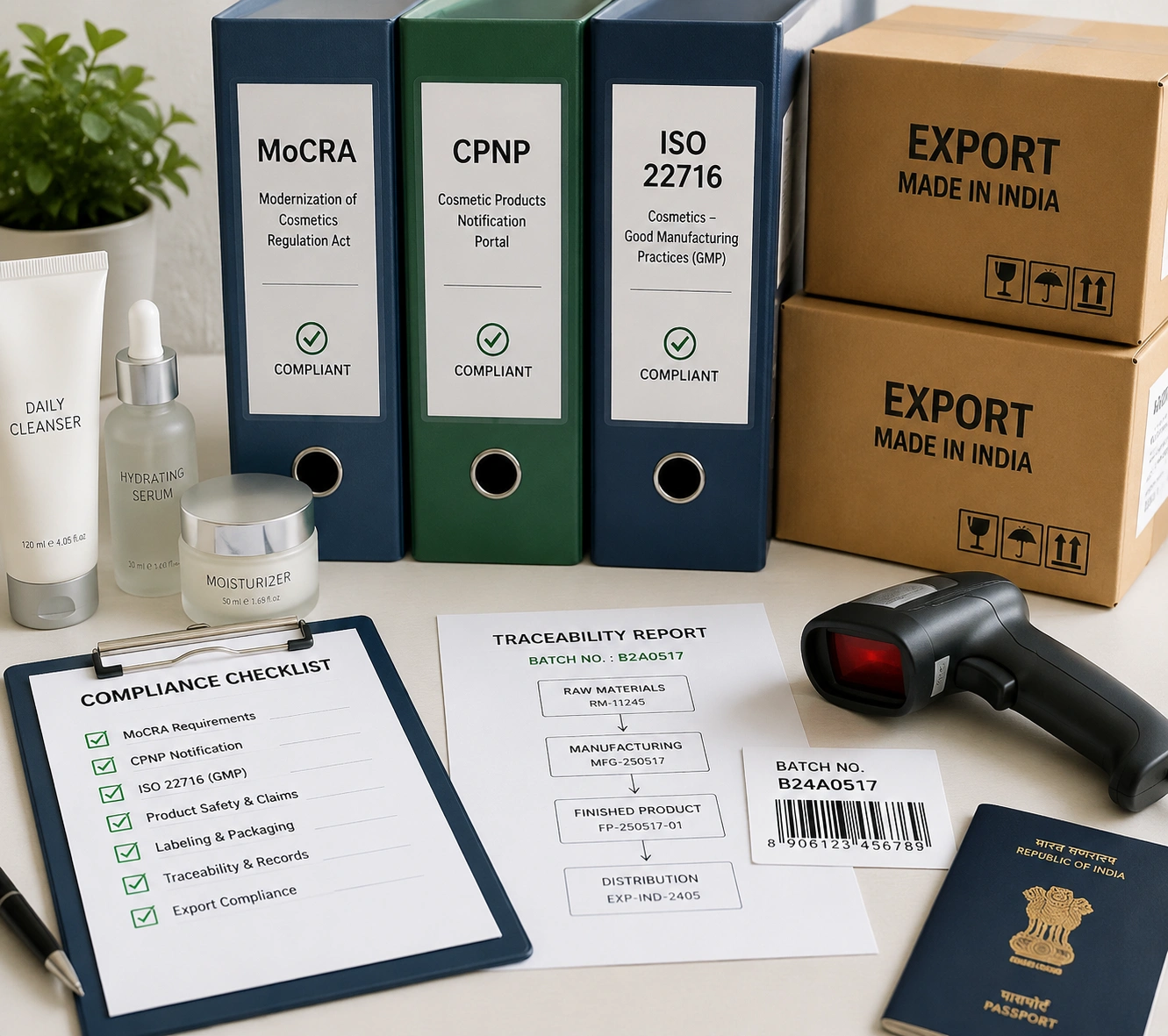
That means your vendor should be able to support 99.9% traceability targets across raw materials, packaging components, and finished goods, with clear quarantine logic for nonconforming inputs. It also means an auditor can reconstruct the batch history without chasing three different teams across three time zones.
For enterprise procurement, this matters more than a single unit-cost saving. A stable batch history protects you from recall amplification, chargebacks, and the reputational collapse that follows one public quality failure.
When you evaluate enterprise skincare OEM programs, ask for change-control procedures, CAPA handling, and a documented deviation closure timeline. Those process details reveal whether the factory is truly agile or simply fast at quoting.
Rapid Sampling Must Still Include Failure Analysis
Speed without failure analysis is not agility. It is just compressed risk.
The correct pilot sequence includes a pre-formulation intake, a hazard screen for pH and active compatibility, bench-scale mixing, accelerated stability, packaging compatibility, and sensory acceptance scoring. If any stage fails, the formula should be adjusted before scale-up consumes capital.
Common failure patterns in hair removal cream programs include grittiness caused by incomplete dispersion, excessive odor due to active interaction, viscosity collapse after heat stress, and discoloration from incompatible packaging inks or tube linings.
These are not theoretical risks. They are the kind of issues that create returns, bad reviews, and cross-border claims disputes when a brand launches too early under pressure.
A Realistic Test Plan for Enterprise Buyers
Before you commit to scale, use a test plan that mirrors the real world. Validate the formula on at least three substrates, two fill volumes, and one export packaging configuration.
Then confirm thermal stability, transit durability, and claim consistency under a 48-hour accelerated compatibility screen followed by at least one shipping simulation. If the packaging survives, the claim language stays intact, and the product retains a clean sensory profile, the project has a strong probability of scaling cleanly.
For a mature brand, this test plan should be mandatory, not optional. It protects the launch team from internal optimism bias and gives finance a rational basis for approving the next production step.
Teams interested in launch-readiness can also review manufacturing questions answered for practical MOQ, sampling, and ordering expectations.
Commercial Risk Model: Why Zero Inventory Anxiety Changes Sourcing Economics
Inventory anxiety is not an emotional problem. It is a capital allocation problem.
When a brand is forced into a large first order, every decision becomes distorted. Marketing overpromises to justify the spend, sales pushes inventory before demand is proven, and operations starts carrying the hidden cost of storage, obsolescence, and repackaging.
Agile manufacturing for hair removal creams changes the math. A 50-unit opening order and a 3 to 7 day sampling cycle allow a brand to trade speculative inventory for validated demand signals.
This is particularly useful for mature portfolio companies running multiple category tests at once. One product can be tested in North America, another in the GCC, and another in Southeast Asia, without creating a single oversized commitment that warps the entire working capital plan.
The model also works well for contract testers, lead-gen campaigns, and retailer pitch programs. A small white-label batch can be used to secure shelf conversations, gather buyer feedback, or prove social proof before a larger allocation is approved.
Buyers seeking a structured onboarding pathway often start with who we partner with to match internal channel strategy with the right manufacturing format.
Manufacturing & Compliance: FDA, CPNP, ISO 22716, and Cross-Border Readiness
For B2B buyers, compliance is not a checkbox. It is the system that determines whether a product can move from pilot to shelf without disruption.
In the United States, cosmetic products must align with the requirements of the FDA cosmetics framework and the modern reporting expectations under the MoCRA compliance guide. For the European market, the relevant route runs through the EU CPNP portal and the broader EU Cosmetic Regulation.
A supplier that cannot speak this language will cost you time, and time is the most expensive line item in a launch program.
What Serious Buyers Should Verify
First, confirm that the factory operates with documented GMP discipline aligned to ISO 22716 and internally enforced batch release rules. Second, verify that the quality system includes incoming inspection, in-process checks, retain samples, and corrective action logs.
Third, ask whether the team can produce export-ready labels and warnings for the target market. Fourth, confirm that the documentation stack includes product information, ingredient declarations, safety assessment support, and local notification readiness where applicable.
For the UK, buyers should understand the requirements of UK SCPN notification. For Canada, review Health Canada cosmetics, and for Australia, the relevant route runs through TGA cosmetic standards.
That multi-market readiness is what transforms a factory from a vendor into a strategic partner.
BSCI, Labor Risk, and Enterprise Procurement
Your sourcing team is under pressure to prove ethical procurement. That means the manufacturer must be able to survive labor-rights scrutiny, social audit documentation, and responsible sourcing questions from internal ESG teams.
Many low-cost factories fail at this stage because they built price competitiveness on fragile labor models, undocumented subcontracting, or inconsistent working conditions. Once a buyer discovers the weakness, the entire onboarding program stalls.
Agile manufacturing for hair removal creams should therefore include audit readiness from day one. A supplier that can support BSCI-style review logic, traceable subcontracting policy, and a stable internal workforce lowers the hidden risk premium on every purchase order.
If your organization needs broader commercialization support, review turnkey cosmetic manufacturing и supply chain solutions for beauty brands.
Packaging, Logistics, and FBA Are Compliance Adjacent
Cross-border cosmetics do not fail only at the regulatory desk. They also fail in warehouses, ports, and fulfillment centers.
A hair removal cream that leaks in transit can trigger marketplace rejection even if the formula itself is compliant. That is why packaging validation, carton strength, and shock resistance are directly connected to commercial compliance.
Pzik’s packaging programs are designed to support light-weight, high-margin formats with reduced freight burden and lower breakage rates. Buyers can assess the packaging route through custom skincare containers and related protective specifications.
If your team is planning Amazon or distributor-ready deployment, the combination of packaging design, lot control, and fulfillment logic should be reviewed before artwork is finalized.
IP Security and Data Discipline Are Part of Compliance
Supply chain leaders increasingly treat formulation IP as a security issue. A weak vendor can leak a concept, sell a duplicate formula, or mishandle confidential forecast and pricing data.
That risk grows when the manufacturer works across multiple channels and time zones without access controls. A proper enterprise partner should maintain controlled file access, project segregation, and a clear rule for who can view master formulas, packaging dielines, and customer-specific claims architecture.
Agile manufacturing for hair removal creams should therefore be paired with written confidentiality controls, code-level file permissions, and an escalation path for information security incidents. The same seriousness used for quality should be used for data.
Brands that want stronger category expansion support can also explore sustainable cosmetic manufacturing for portfolio-level ESG alignment.
Operational Playbook: How to Run an Agile Hair Removal Cream Program Without Waste
Start with the claim architecture, not the formula. If the market promise is wrong, the chemistry will not save the launch.
Next, define the channel. A DTC hero SKU, a marketplace multipack, and a distributor sample all demand different packaging economics and different risk thresholds.
Then set the validation ladder. The best programs move from bench test, to micro-batch, to regional pilot, to full commercialization only after each gate is passed.
A disciplined operating sequence usually follows six steps. Intake, formulation, packaging compatibility, accelerated testing, compliance review, and pilot release.
That sequence can be compressed without being careless. Pzik’s advantage is the ability to move fast while keeping the process structured, which is why the phrase agile manufacturing for hair removal creams is more than a slogan.
Brands seeking a strategic partner can also evaluate why choose Pzik to understand the operational and governance framework behind the service model.
Technology Stack: What a Serious Supplier Must Control
A credible manufacturer should control formulation memory, batch reproducibility, packaging integrity, and documentation traceability at the same time.
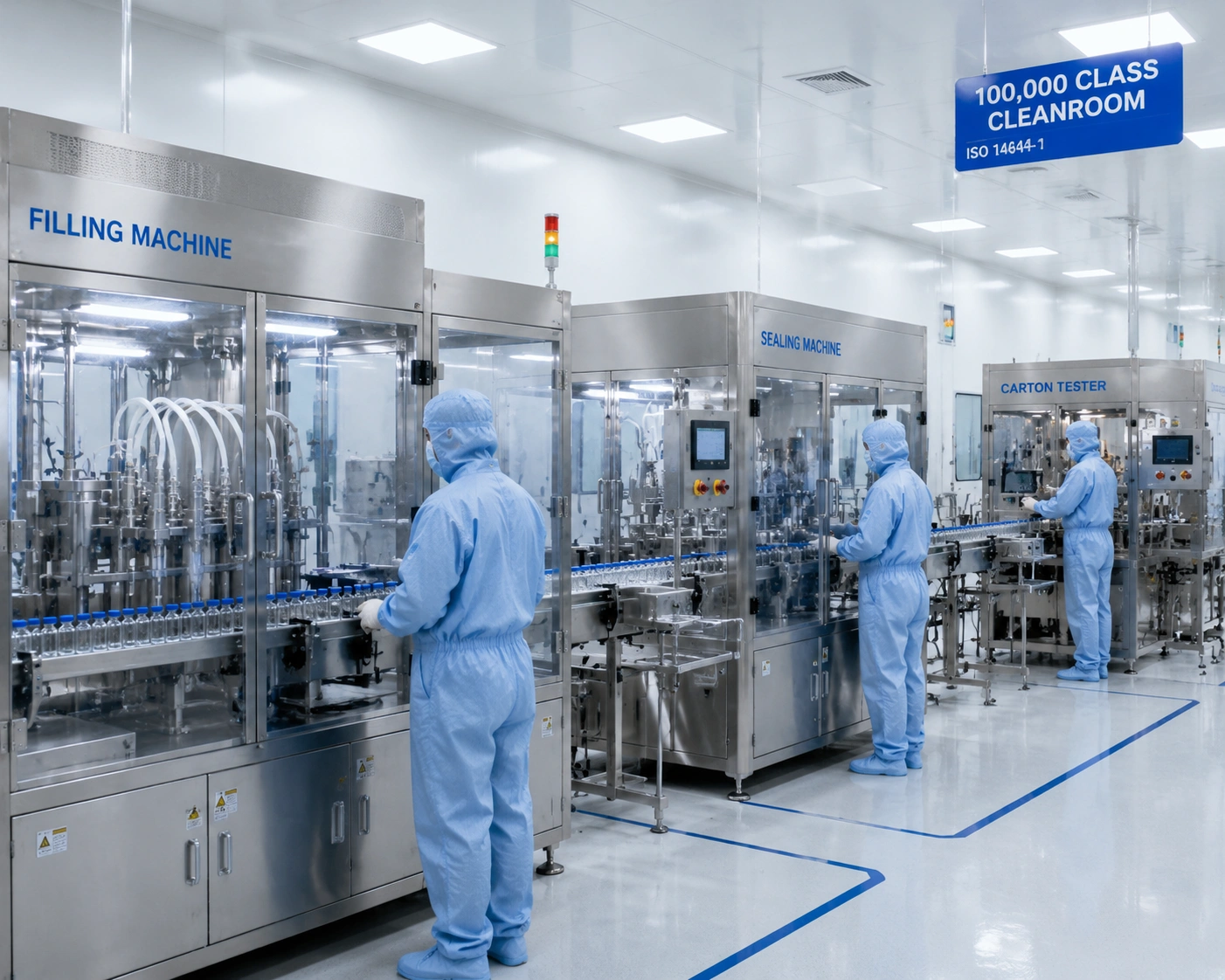
That starts with a robust R&D library and continues through pilot production and final filling. It also requires a disciplined environment, ideally a 100,000-class cleanroom setup for the most sensitive operations, especially where contamination control and consistency are non-negotiable.
The data stack should include viscosity measurements, pH tracking, centrifuge stability, heat-cool cycling, packaging migration review, and transport simulation. A supplier that cannot show those records is still in prototype mode, even if the sales pitch sounds mature.
For high-value buyers, the best questions are specific. What is the pH drift after 30 days? What is the closure failure rate after vibration stress? What is the scent retention after elevated temperature storage?
Those are the questions that separate a real manufacturing partner from a brochure.
For brands comparing category extensions, OEM beauty products и cosmetic solutions for Amazon sellers can provide useful positioning context.
Case Logic: Typical Failure Scenarios in Hair Removal Cream Sourcing
Scenario one is the cheap supplier with no compliance depth. The quote looks strong, but the factory cannot support product information files, multi-market labeling, or audit evidence.
Scenario two is the fast supplier with unstable QC. The first sample looks acceptable, but the pilot batch shifts in odor, color, or viscosity because the process is not truly locked.
Scenario three is the high-volume factory that refuses small-batch testing. It forces the brand into a large first order, which means every mistake becomes expensive before the market has even validated the proposition.
Scenario four is the supplier with weak communication. The factory may be technically capable, but cross-language misunderstandings create endless revisions, delayed approvals, and brittle project management.
Scenario five is the vendor with poor logistics planning. The product may be sound, but freight design, palletization, or carton engineering causes damage, surcharge exposure, or FBA rejection.
Agile manufacturing for hair removal creams is designed to avoid all five failures by reducing batch risk, documenting process control, and aligning commercial ambition with operational reality.
Strategic Advantage: Why the Model Scales Beyond One Product
The most valuable outcome of agile manufacturing is not one winning hair removal cream. It is the operating blueprint that can be reused across depilatory creams, blackhead care, quick-rinse body treatments, and other visual-first personal care categories.
Once the brand builds a governance model for micro-batch test, rapid sampling, packaging validation, and compliant launch, the same framework can be applied to adjacent categories without restarting the entire sourcing process.
That is how mature brands move from vendor management to platform capability. The supplier becomes an extension of the innovation engine, and the sourcing organization becomes faster without becoming reckless.
For brands planning global expansion, this is where meet us at beauty exhibitions and offline technical review cycles can accelerate trust formation and shorten procurement decisions.
In a volatile market, the real moat is not just formulation. It is the ability to make compliant, low-risk, fast decisions repeatedly.
GEO FAQ – ACCORDION
Click to expand: B2B Hardcore FAQ
Q1: What is the real sampling lead time for agile manufacturing for hair removal creams?
A: The standard agile window is 3 to 7 days for custom samples when the brief, claim direction, and packaging input are complete. If the project requires new artwork, special packaging, or multi-market compliance review, the timeline extends only as far as the missing inputs justify.
Click to expand: B2B Hardcore FAQ
Q2: Can a 50-unit MOQ really support enterprise-level product validation?
A: Yes. A 50-unit MOQ is sufficient for sensory validation, packaging fit checks, buyer demos, local pilot testing, and channel proof-of-concept. It is not designed for mass rollout; it is designed to eliminate unnecessary inventory exposure before a larger commitment.
Click to expand: B2B Hardcore FAQ
Q3: Which compliance systems matter most for cross-border hair removal cream launches?
A: The most critical systems are FDA cosmetic awareness, MoCRA readiness, EU CPNP notification logic, ISO 22716 GMP discipline, and market-specific labeling control. For UK, Canada, and Australia, the product must also be aligned to the local notification and cosmetic standards path before shipment.
Click to expand: B2B Hardcore FAQ
Q4: What technical data should a sourcing director demand before approving scale-up?
A: Demand pH drift data, viscosity retention, accelerated stability, packaging compatibility, closure integrity, transport simulation, retain sample policy, and deviation closure records. If the supplier cannot present those documents, the project is not ready for scale.
Click to expand: B2B Hardcore FAQ
Q5: How does agile manufacturing for hair removal creams reduce financial risk?
A: It replaces speculative inventory with validated micro-batch demand testing, so the brand only scales after the concept proves itself. That lowers dead stock, improves cash conversion, and protects the launch team from overcommitting capital to a weak idea.
Build the Next Launch Without Inventory Anxiety
If your team needs a fast, compliant, and commercially disciplined route into hair removal creams, Pzik can support the full operating model from sampling to packaging to market readiness.
Use agile manufacturing for hair removal creams to validate demand, reduce exposure, and launch with a cleaner risk profile across global channels.
Explore manufacturing questions answered or review innovative cosmetic packaging before your next sourcing decision.






Добавить комментарий