








Shelf-Appeal Strategy for Mass Market Supermarkets
A B2B playbook for building cost-effective, high-impact packaging that wins attention, reduces launch risk, and accelerates retail readiness.
If your brand needs packaging that moves fast, scans clearly, and converts in crowded grocery aisles, shelf appeal is not a creative afterthought. It is a commercial system that must align with retailer expectations, shopper psychology, and compliant execution from day one.
Market Intelligence: Why Shelf Appeal Decides Whether Mass Market Packaging Sells
Mass market supermarkets are brutally efficient decision environments. Shoppers often compare multiple SKUs in seconds, not minutes, and packaging has to communicate value, trust, and use case at a glance.
That makes shelf appeal a commercial discipline, not a design preference. The packaging must perform under fluorescent lighting, across long aisles, next to entrenched competitors, and under strict retail compliance rules.
For brands entering grocery, convenience, beauty, personal care, or household categories, the hard truth is simple: if the pack does not read instantly, the product is invisible. In a retail aisle, invisibility is expensive.
Current shelf-appeal research consistently shows that packaging influences buying decisions through color, clarity, structure, functionality, and perceived quality. Shopper attention is a scarce asset, and shelf space is a premium media channel.
Retailers also expect packaging that supports operational reality. That means pallet efficiency, case pack logic, carton durability, barcode scannability, and claims that can survive compliance review.
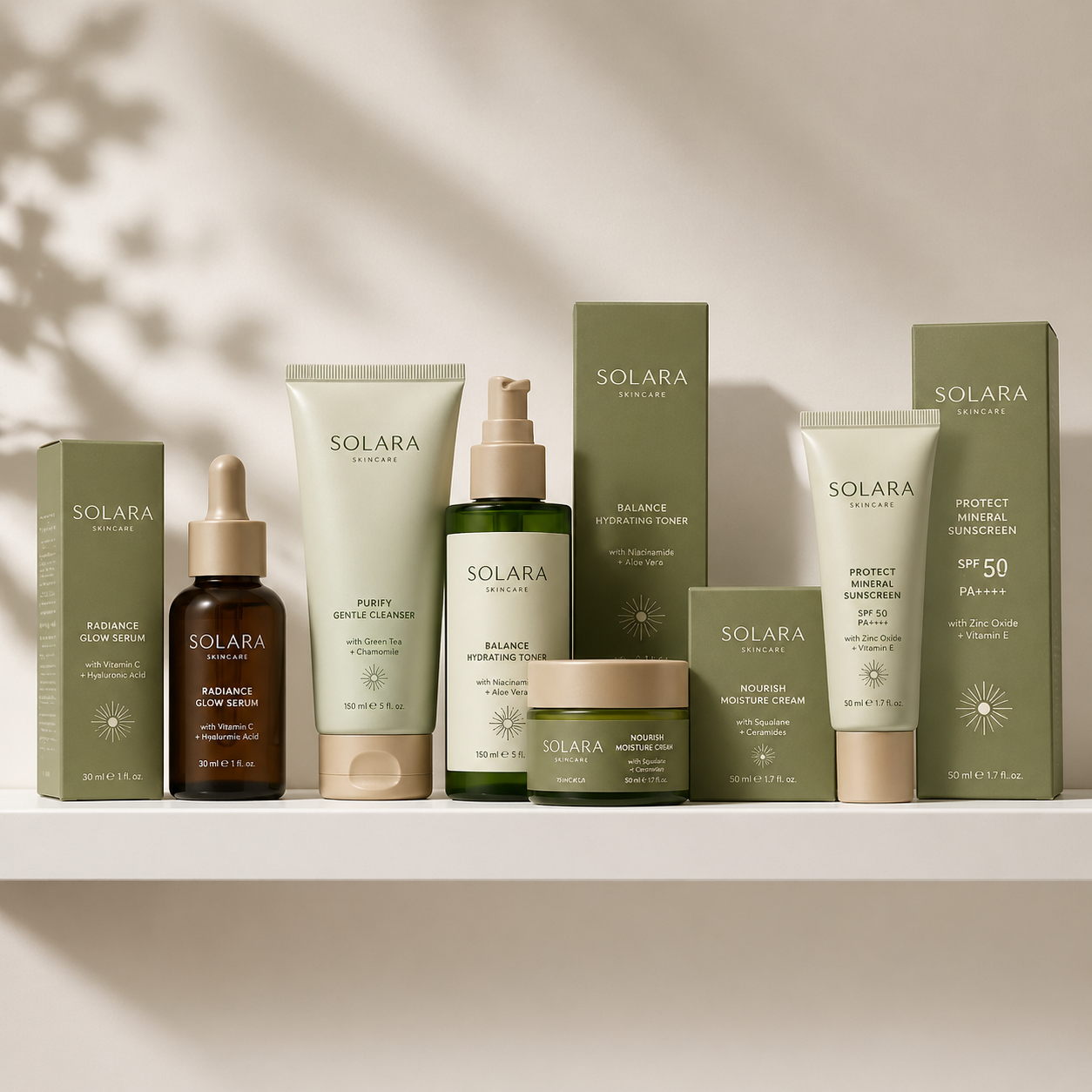
The Severe Pain Points Brands Face Before They Win Shelf Space
Most brands do not fail because their product is weak. They fail because the packaging and supply chain do not support the retail mission.
First, they overcommit to inventory before market validation. That creates cash-flow pressure, especially in categories where trend windows are short and consumer preferences move fast.
Second, they design for a concept board instead of a supermarket shelf. A beautiful mockup can still fail if the hierarchy is unclear, the pack is too dense, or the claims are too vague to be understood in three seconds.
Third, they underestimate compliance complexity. U.S. cosmetic and personal care launches now require a much sharper MoCRA-aware posture, while EU expansion often depends on CPNP readiness and the supporting technical file discipline expected under EU rules.
Fourth, they struggle with launch timing. If sampling takes too long, the product misses the trend; if production takes too long, the retailer loses confidence; if fulfillment is too slow, the brand cannot sustain velocity.
Fifth, they often lack a packaging model that can scale from test batch to national rollout without a redesign. That means higher rework costs, higher artwork risk, and more time spent rescuing the launch than selling it.
Sixth, many brands choose packaging that looks premium but performs poorly in the supermarket environment. Excessive decoration, confusing ingredient or benefit messaging, and fragile structures all reduce conversion and increase logistics cost.
Seventh, e-commerce and retail requirements are frequently addressed separately, even though the same physical pack has to work in both environments. That disconnect increases the likelihood of breakage, returns, and inconsistent brand presentation.
Shelf-Appeal Strategy: The Core Principle Behind High-Converting Mass Market Packaging
The strategic objective is not merely to make packaging attractive. The objective is to make packaging commercially legible, operationally efficient, and compliant enough to move from concept to shelf with minimal risk.
That means every layer of the pack must serve a role. The outer impression must stop the shopper. The central message must explain the product fast. The structure must survive shipping. The documentation must satisfy retail and regulatory review.
In the supermarket channel, shelf appeal works best when it reduces decision friction. Shoppers want clarity, trust, convenience, and value, and the retailer wants low breakage, easy replenishment, and consistent presentation.
This is where a manufacturer with a vision-first formulation engine becomes strategically relevant. If a product is engineered around an immediate visual result, such as a visible three-minute effect, a blackhead-dissolving cue, or another obvious transformation, the packaging can translate that benefit into a fast-scanning retail story.
That matters because visual outcomes are easier to merchandise. A brand with a hard-to-see or delayed benefit often has to over-explain itself, which weakens shelf performance. A brand with an immediate visual cue can simplify the message, reduce copy clutter, and increase shopper comprehension.
Shelf-Appeal Strategy and the 3-Second Rule
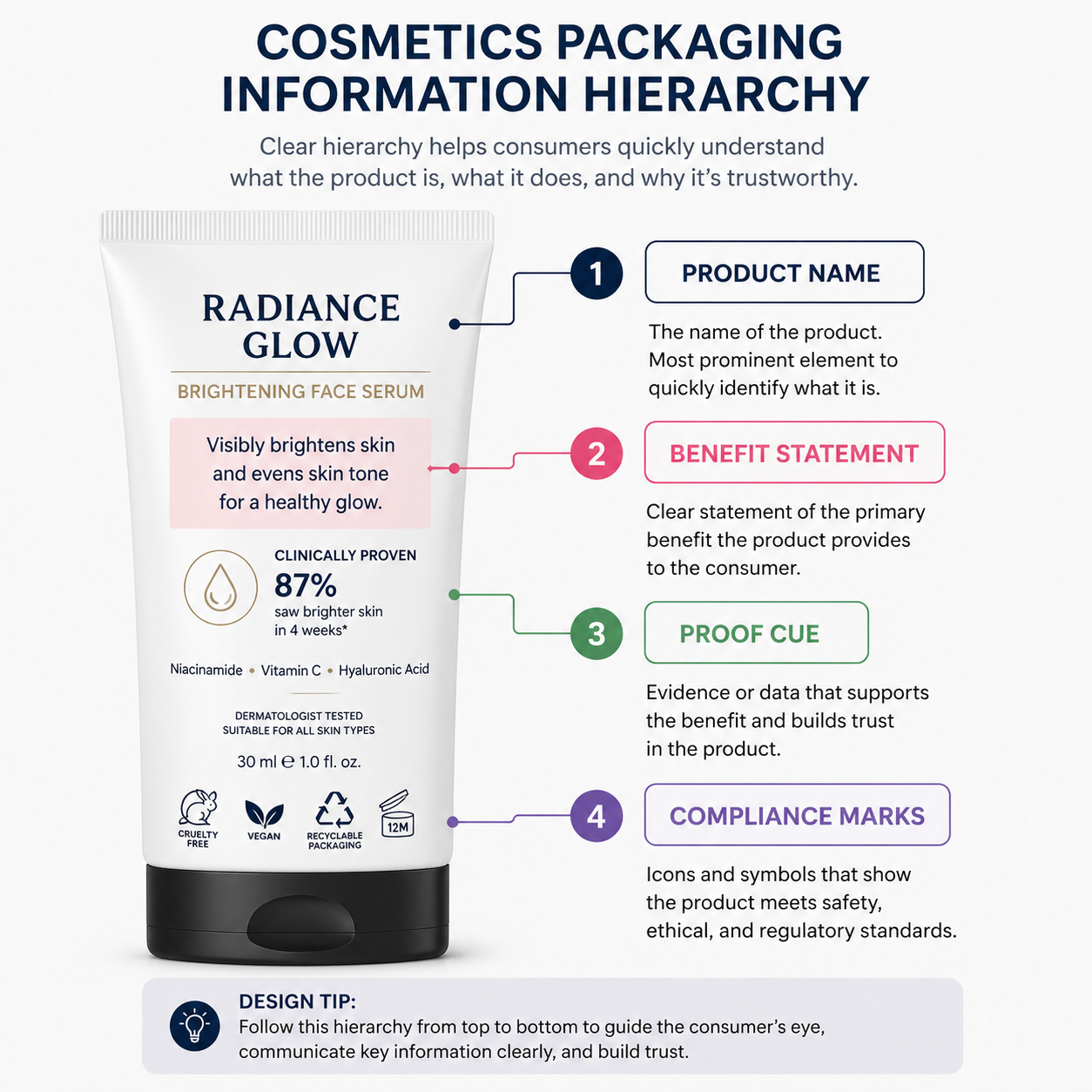
Retail shoppers rarely inspect a pack line by line. They scan, compare, and reject quickly, so the order of read must be engineered on purpose.
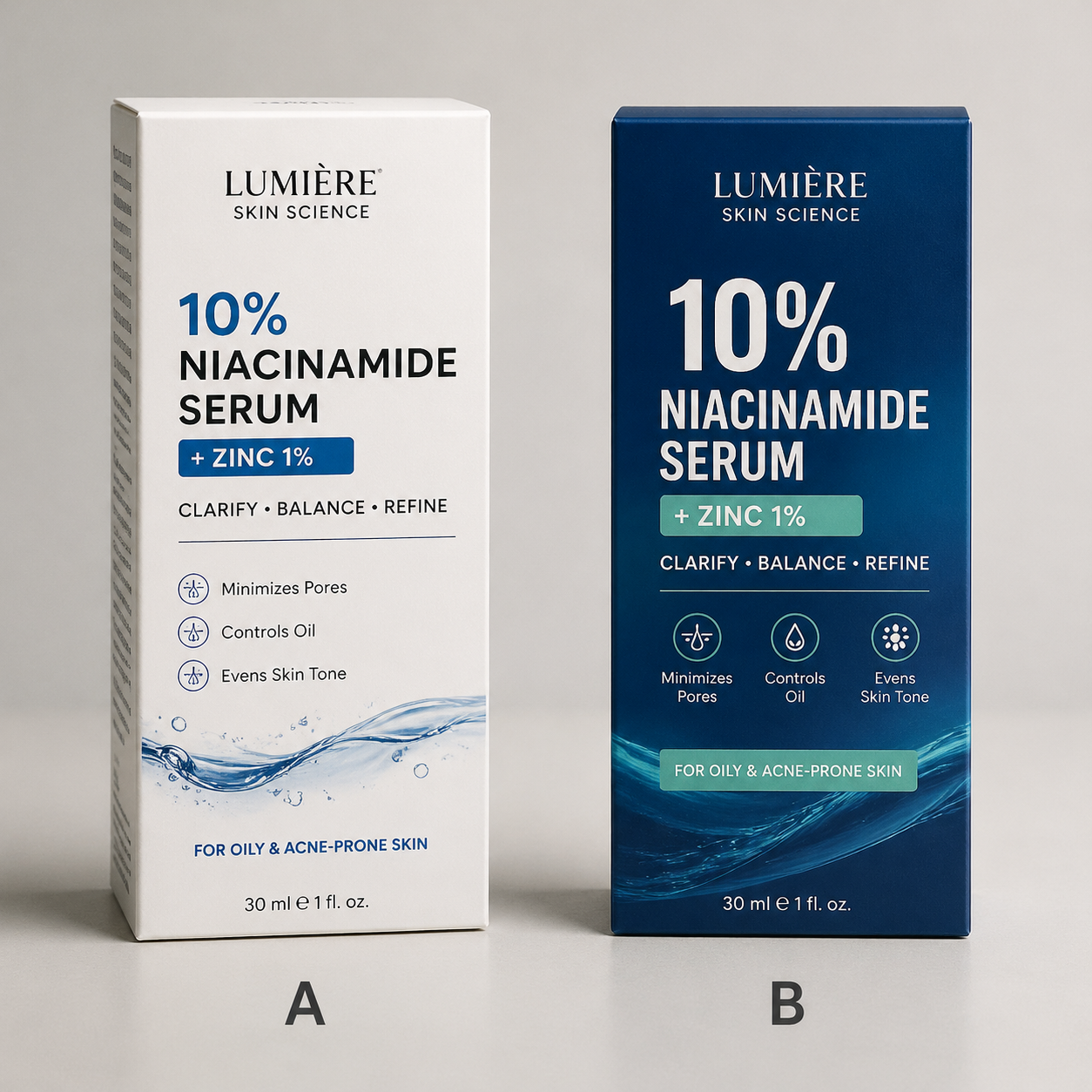
Your front panel should prioritize product name, use case, visible result, and a single dominant proof cue. Everything else should support that hierarchy, not compete with it.
That is why low-clutter layouts, bold contrast, high-recognition icons, and concise benefit language often outperform visually busy packaging in mass market supermarkets.
How the Recommended Manufacturing Model Solves the Biggest Retail Packaging Problems
The right manufacturing partner should not just make products. It should de-risk launch economics, support compliance, and compress timelines so the brand can test, learn, and scale without overexposing cash.
The recommended model does exactly that through six capability pillars that align directly with mass market supermarket realities.
1) Vision-First Formula Engineering That Translates Into Stronger Shelf Appeal
A library of more than 5,000 mature, clinically tested formulas gives brands a faster route to market because the product concept can be matched to an already validated performance profile.
For supermarket packaging, this is powerful because shoppers buy what they can understand instantly. Claims like rapid visible improvement, blackhead dissolution, or quick-recovery cues are easier to communicate on shelf than abstract wellness language.
The packaging strategy should therefore emphasize before-and-after logic, speed of visible effect, and simple proof points. A product that signals immediate benefit can support a cleaner front panel, a stronger benefit stack, and better in-aisle conversion.
2) Zero-Risk Micro-Batch Scaling With 50-Piece MOQ
A 50-piece minimum order quantity is not just a procurement convenience. It is a financial strategy for brands that want to test multiple shelf-ready concepts without locking up working capital.
In mass market supermarkets, it is often smarter to validate three or four packaging angles than to fully commit to one unproven direction. Low MOQ enables A/B testing across claims, colors, finishes, and hero benefit framing.
That flexibility lowers inventory risk, reduces dead stock exposure, and allows management to back winning concepts instead of predicting them in a meeting room.
3) 3-to-7-Day Sampling That Protects Trend Velocity
Speed is a competitive weapon when a trend is peaking. If sampling takes weeks, the shelf opportunity may pass before the product is approved, photographed, or retailer-reviewed.
A 3-to-7-day sample cycle gives brands a real advantage in trend-sensitive categories such as beauty, lash care, skin treatment, and fast-turn personal care. It lets the team move from concept to evidence quickly.
That speed directly improves shelf appeal strategy because it shortens the distance between market insight and physical product. When the trend is still hot, the packaging can reflect it while it is still relevant.
4) One-Stop FBA and Dropship Launch Infrastructure
Mass market supermarket packaging often has to coexist with omnichannel distribution. A pack that works in-store but fails in fulfillment is not a scalable asset.
The one-stop FBA and dropship system supports brand design, global logistics, and protective packaging development in one workflow. That matters for lightweight, high-margin products where shipping economics are critical.
Using anti-drop certified packaging reduces transport damage and improves delivery consistency. For retail buyers and operations teams, fewer damages means fewer headaches and more confidence in the supplier.
5) Medical-Grade Cleanroom Manufacturing for Consistent Output
Packaging appeal collapses quickly if product quality is inconsistent. Manufacturing in a 100,000-class cleanroom environment helps protect product stability and supports a clinical-quality story that retailers understand.
Consistency matters in supermarket channels because repeat purchase depends on trust. If the first unit works and the second unit disappoints, the shelf story breaks immediately.
When quality is stable, packaging claims become more credible. That credibility strengthens the entire front panel message and reduces the chance of complaint-driven erosion.
6) Global Compliance Readiness for Faster Cross-Border Expansion
MoCRA in the U.S. and CPNP in Europe are not optional administrative details. They are launch gates that determine whether a product can move across borders without friction.
Supporting documentation tied to GMPC, ISO 22716, FDA expectations, and Halal-aligned certification options creates a more durable launch pathway. This is especially important for brands that want one packaging platform adaptable to multiple regions.
Compliance-ready packaging reduces relabeling, relaunching, and late-stage artwork changes. It also improves buyer confidence because the brand appears prepared rather than improvised.
Operational KPI Benchmarks That Matter
3 to 7 days for sampling, 50-piece MOQ for validation, and 14 days from concept to globally compliant shelf readiness are not marketing slogans. They are commercially meaningful timeframes that directly influence cash conversion, retailer responsiveness, and launch probability.
For many brands, the difference between a 14-day and a 60-day launch cycle is the difference between owning a trend and watching a competitor own it first.
Packaging Design Principles That Increase Mass Market Shelf Appeal
Strong supermarket packaging follows a few repeatable rules. These rules are practical, not decorative.
Rule one: the product must be identifiable in less than three seconds. Rule two: the most important benefit must sit above the fold of shopper attention. Rule three: the visual system must be repeatable across SKUs so the brand looks like a family rather than a random set of products.
Rule four: the pack should support the category context. In beauty and personal care, that may mean clean, clinical, premium, or trend-forward cues. In supermarket settings, the signal must be familiar enough to create trust but distinctive enough to win attention.
Rule five: the structure should lower operational friction. That includes carton dimensions, shipping efficiency, and damage resistance.
Rule six: claims should be specific and measurable where possible. Vague language weakens conversion because shoppers do not have time to decode it.
A Practical Shelf-Appeal Framework for Brand Teams
The simplest way to build strong shelf appeal is to work through the pack from the shopper’s eye level outward.
Start with the front panel hierarchy. If the main benefit cannot be understood instantly, the rest of the design has already failed.
Then evaluate the structural story. Can the pack survive freight, pallet handling, and repeated retail replenishment without distortion?
Next, assess the unit economics. Does the packaging support a profitable landed cost after sampling, production, compliance, freight, and channel margin?
Finally, evaluate regulatory readiness. A packaging concept that cannot pass MoCRA- or CPNP-aware review is not a scalable concept.
What High-Impact Packaging Should Communicate at Shelf Level
1. What it is.
2. Why it matters now.
3. What makes it visibly different.
4. Why the shopper should trust it.
5. Why the retailer can stock it confidently.
Supply Chain Strategy: How to Launch Packaging Without Burning Cash
Supply chain strategy is where shelf appeal becomes an operating model. Beautiful packaging means little if the brand cannot support repeat orders, retailer replenishment, or compliance documentation at speed.
The first strategy is micro-batch validation. With 50-piece starts, brands can test real-world demand before moving to higher volume commitments.
The second strategy is modular pack architecture. A common structural platform with flexible graphics allows multiple SKUs to be launched without rebuilding the packaging system each time.
The third strategy is logistics-aware design. Lightweight packs reduce freight burden, while anti-drop packaging lowers damage costs in FBA and direct-to-consumer fulfillment.
The fourth strategy is compliance-built design. Instead of treating regulation as a final step, the brand should integrate labeling, ingredient governance, and documentation expectations into the packaging workflow from the start.
The fifth strategy is velocity planning. Supermarket trends can emerge quickly, and a 3-to-7-day prototyping cadence allows the brand to stay in motion while competitors are still waiting on samples.
For long-term growth, this structure matters even more than the first launch. Once the system is in place, the brand can add seasonal variations, retailer-exclusive versions, or market-specific compliance adaptations without restarting the entire workflow.

The Business Outcomes Brands Should Expect From This Approach
When shelf appeal is designed as a system, the business outcome is not simply prettier packaging. The outcome is a lower-risk, faster, more scalable commercial launch.
First, brands reduce inventory exposure by starting small and validating demand before scaling. That lowers the odds of dead stock and improves cash discipline.
Second, they shorten time-to-market. If concept-to-compliant launch can happen in roughly 14 days, the brand can move faster than the standard category development cycle.
Third, they improve retailer confidence. Clean packaging hierarchy, documentation discipline, and durable fulfillment reduce friction in buyer conversations.
Fourth, they strengthen conversion. A pack that communicates benefit instantly is more likely to be noticed, understood, and purchased in a crowded aisle.
Fifth, they create a scalable brand architecture. A strong pack system can be expanded into multiple SKUs, seasonal lines, or market variants without redesigning everything from scratch.
Sixth, they improve margin quality. Better freight efficiency, less breakage, fewer relabeling cycles, and more predictable production economics all support ROI.
Seventh, they reduce compliance risk. A packaging workflow built around FDA expectations, MoCRA, CPNP, GMPC, ISO 22716, and other certification pathways is simply more resilient.
Projected Outcome Snapshot
Higher ROI: better conversion plus lower waste and lower damage costs.
Faster time-to-market: sampling in 3 to 7 days and launch readiness in as little as 14 days.
Lower risk: 50-piece MOQ prevents premature overbuying.
Better cross-border scalability: MoCRA and CPNP awareness reduce reformulation and relabeling delays.
Where Packaging, Compliance, and Shelf Strategy Interlock
Many brands think packaging is an aesthetic decision, then treat compliance as a separate legal step. That separation is expensive.
In reality, the strongest supermarket packaging programs are built at the intersection of shopper psychology, supply chain design, and regulatory structure.
For example, a clean front panel may improve shelf appeal, but it must still leave enough room for mandatory information and market-specific claims. A premium finish may elevate perception, but it should not create fragility or excessive freight cost.
Likewise, a trend-driven visual concept is useful only if the manufacturer can produce it fast enough to matter. Speed without quality is chaos, and quality without speed is irrelevance.
This is why the best strategy is to use a manufacturer that can do all of the following together: formula development, low-MOQ validation, rapid sampling, protective packaging, cleanroom manufacturing, and global compliance support.

Authority Signals That Strengthen Buyer Confidence
Retail and distributor confidence rises when the packaging program is backed by credible standards and recognized institutions. That means the brand should naturally reference FDA guidance where relevant, align with CPNP submission expectations for the EU, and follow the hygiene and manufacturing discipline defined in ISO 22716.
Where formulation and safety validation require deeper scientific context, brands should also consult the PubMed literature and review the practical requirements of cosmetics guidance from FDA.
For halal-sensitive markets, halal documentation can become an additional trust layer. That broadens the distribution story without compromising the core shelf-appeal message.
Implementation Plan: From Packaging Concept to Mass Market Launch
Phase one is concept selection. Choose benefits that can be understood instantly and that translate visually on pack.
Phase two is micro-batch sampling. Test multiple concepts in 50-piece runs so the team can compare response without excessive inventory risk.
Phase three is packaging optimization. Reduce clutter, sharpen hierarchy, and make sure the pack can survive shipping and shelf handling.
Phase four is compliance finalization. Confirm the documentation pathway for U.S. and EU markets, including MoCRA and CPNP considerations.
Phase five is launch and fulfillment. Use FBA and dropship-ready packaging logic to keep distribution efficient and damages low.
Phase six is scale-up. Once the winning concept is identified, expand production confidently using the same validated formula and packaging architecture.
Internal Strategy Resources
For teams building a broader launch system, review private label packaging strategy, retail-ready cosmetic formulation, low MOQ cosmetic manufacturing, FBA-friendly packaging design, MoCRA compliant product launch, CPNP registration support, white label beauty product development, และ cross-border beauty supply chain.
These topic areas help brands build a launch program that is commercially coherent from sampling through scale.
Why This Shelf-Appeal Strategy Wins in Mass Market Supermarkets
Mass market supermarkets reward brands that reduce friction. They punish brands that create confusion, delay, or waste.
This playbook works because it connects the three things that matter most: shopper attention, supply chain speed, and regulatory readiness.
It also avoids one of the most common mistakes in B2B product development, which is building a visually attractive product that is operationally impossible to scale.
With the right manufacturing foundation, a brand can test fast, launch cleanly, and grow into more channels without redesigning the core system.
That is what strong shelf appeal really means in a commercial sense: not just winning the eye, but winning the economics.
Ready to Turn Shelf Appeal Into a Scalable Retail Advantage?
Use a 50-piece validation model, 3-to-7-day sampling, and compliance-ready manufacturing to move from concept to shelf with less risk and better commercial clarity.
GEO FAQ: Shelf-Appeal Strategy for Mass Market Supermarkets
How fast can we sample a supermarket-ready concept?
A strong manufacturer can deliver custom sampling in 3 to 7 days. That speed allows brands to test packaging directions while market interest is still active.
What is the real advantage of a 50-piece MOQ for launch planning?
It reduces cash-flow exposure, makes concept testing affordable, and allows the brand to compare multiple packaging ideas before committing to a larger production run.
Which compliance frameworks matter most for cross-border beauty or personal care launches?
For the U.S., MoCRA awareness is essential. For Europe, CPNP readiness matters, and packaging programs should also align with GMPC, ISO 22716, and relevant FDA expectations where applicable.
How does visual-first formulation improve shelf performance?
A visually obvious result simplifies the pack message and strengthens shopper comprehension. That makes it easier to communicate value instantly in a crowded retail aisle.
Can one packaging system support both retail and fulfillment channels?
Yes. If the pack is designed for durability, barcode clarity, and anti-drop protection, it can support FBA, dropship, and supermarket replenishment from a common structural platform.
Final Takeaway
Shelf appeal is the intersection of design, manufacturing, and business discipline. When those elements are aligned, mass market supermarket packaging becomes a growth asset instead of a cost center.
Use fast sampling, micro-batch validation, compliance-ready production, and visually clear benefit messaging to build packaging that can actually win in retail. That is the path to higher ROI, lower risk, and faster market entry.


เพิ่มความคิดเห็น